young june kim
Bio
Young June KIM studied Sculpture at Hongik University in Seoul and obtained the DNAP in Fine Arts from the École des Beaux-Arts in Rennes, and later completed a Bachelor’s and a Master’s degree in Photography and Contemporary Art at the University of Paris 8. His thesis, A Photographic Aesthetics of Sculpture, explored the relationship between sculpture and photography. Kim uses a large-format camera to convey sculptural density in his photographic work. By highlighting formal resemblances and structural contrasts between the human body and nature, he seeks to evoke sensory experiences that lie between vision and touch.
Selected for the new series Retour au Paradis at Les Photographiques Festival, Le Mans, France – 2026, and awarded the MH Talent Portfolio 2024/2025 (Korean Emerging Artist) at Museum Hanmi, Seoul (The Museum of Photography, Seoul – MoPS) for the series Ressemblance(2007-2023), he has been shortlisted for several international photography awards, including the LensCulture Black & White Photography Awards, the QPN Prize, and the HSBC Prize for Photography. His series Des Arbres et Des Hommes was exhibited at the first L’Évènement Photographique in Nancy, as well as in Nantes and Strasbourg, and is part of the permanent collection of Madeleine Millot-Durrenberger.
News:
Exhibition of Retour au Paradis at Les Photographiques Festival in Le Mans, France
March 7 to April 5, 2026
young june kim
Ressemblance
Project Statement
With a Focus on the Theory of Yin and Yang
I would like to begin by stating that my photographic gestures are, naturally, rooted in Asian sensibilities and ways of thinking. Nature and the human body both exist as microcosms within my work and symbolize and reflect aspects of the universe. Although all beings are in conflict with one another, they also supplement one another, forming a unified whole. This theory of Yin and Yang, which is at the core of Eastern philosophy, is visually represented in my work. As such, I aim to explore the link between humans and the world through the similarities in universal forms.
Having lived in France and Korea, my identity has formed as a result of a dual cultural experience. Furthermore, my tool of choice is the large 4×5 inch camera, which is a symbol of the New Objectivity (Neue Sachlichkeit) movement in German photography. This affords my work not only sharp clarity and precision but also breaks down the sheer psychological distance between myself and the subject. This approach encourages the discovery of formal similarities latent within living and non-living beings and thus contributes to uncovering and delayering the activities of the senses, which ordinarily go unnoticed.
My artistic endeavor begins from my meditations on the sculptural potential that is inherent in the world, and the photographic representation of sculptural artworks.
Meditations on the Sculptural Potential Inherent in the World
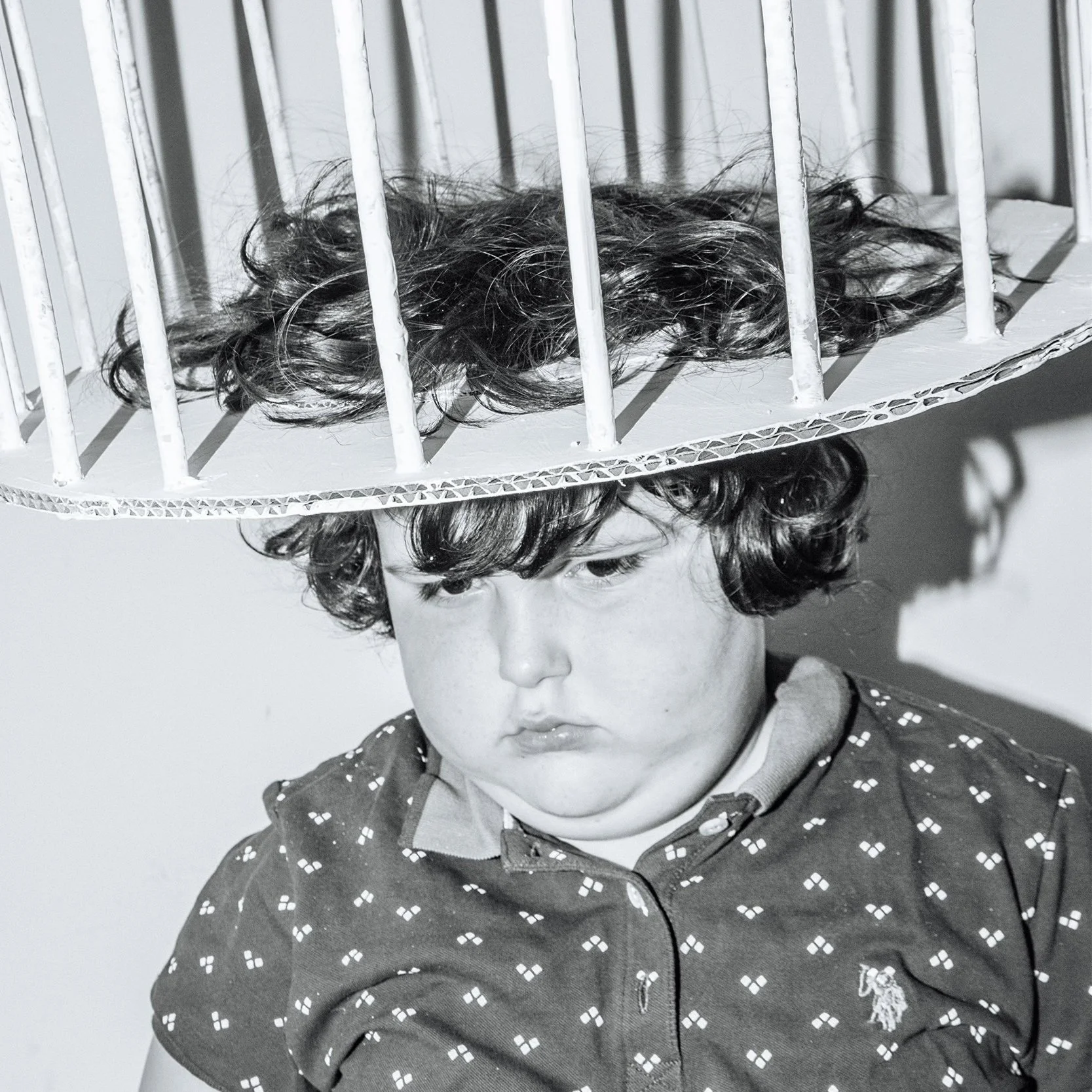
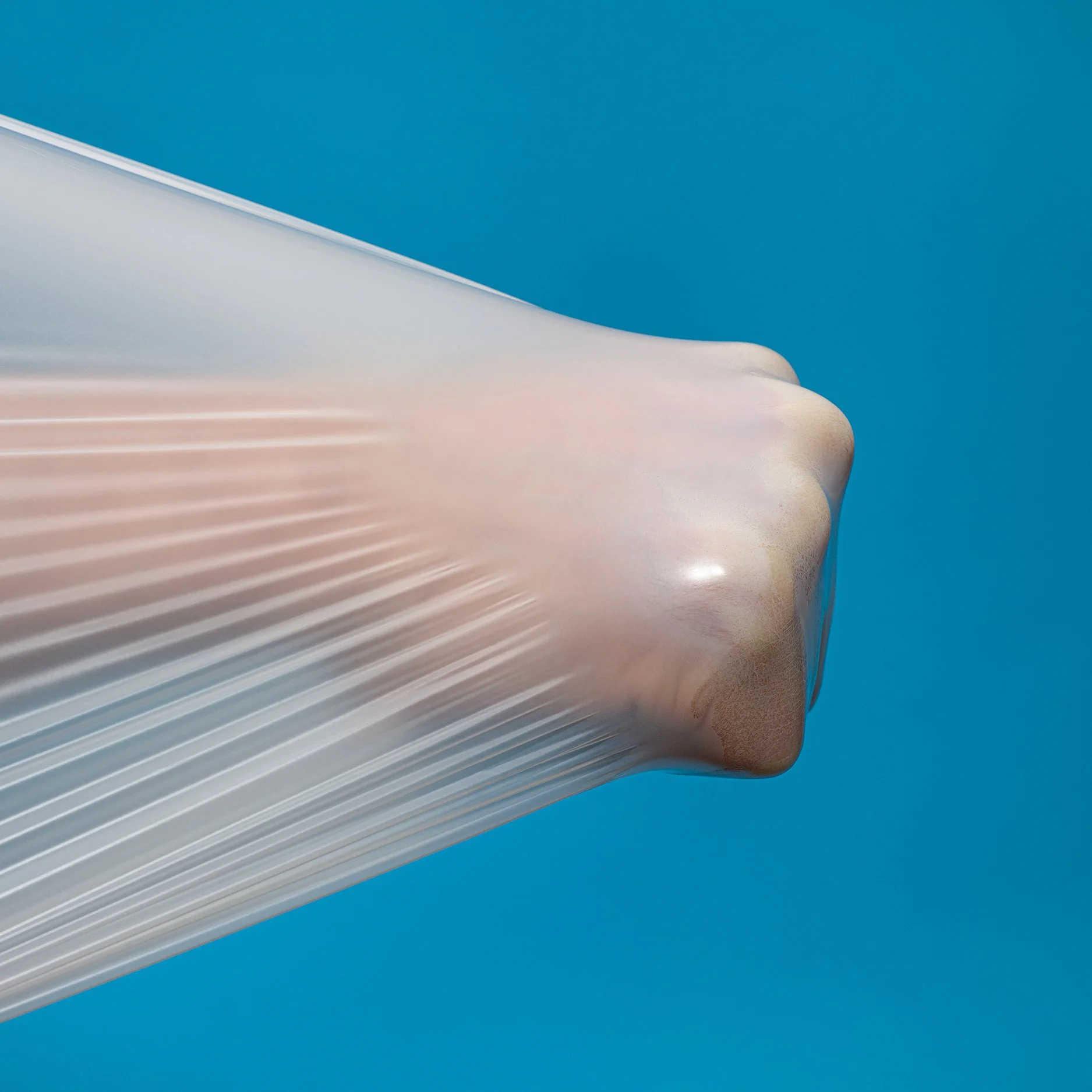
My work starts from a contemplation of the sculptural potential within objects that comprise the world. I especially focus on the tensions that arise from the similarities and differences found between similar-yet-different objects, aiming to instill a physical sense of presence into an image by combining symmetry and parallelism. This goes beyond simple visual representation, revealing a sculptural dimension that elicits haptic impressions that almost seem tangible.
This approach is clearly portrayed in the Resemblance (2007-2023) series, where the repetitive arrangement of similar abstract forms increasingly evokes horizontal and vertical sensations. Using a 4×5 camera to achieve high resolution, frontality, and extreme precision, the subjects are captured, revealed, and deconstructed while closely adhering to reality. By removing the subject from its background through tight close-up, the object gains formal freedom akin to ready-mades. Through this process, I seek equality among forms with no hierarchy and aim to shift perception with the concept of ‘similarity’ at the core – one that, through repetition, eventually affords the viewers an immersive retinal experience.
“When I photograph objects, I hope they are seen as living and breathing beings - as if they are alive - because I want to instill a sense of mild anxiety, terror, and ineffable emotional dissimilarity, much like the discomfort one feels upon seeing an artificial body that is almost human, but not quite. In the same vein, I tend to objectify human bodies whenever possible and freeze them as non-living objects; by suspending part of a living body within the frame, I aim to evoke anxiety through the suggestion of death.”
Young June KIM, “Une Esthétique Photographique de la Sculpture’’ (Master's thesis, Université Paris VIII, 2015)