francesca hummler


Bio

Francesca Hummler is a German-American visual artist and researcher working with photography, currently based between London, England, and San Diego, California. She received her B.A. in Media Arts and B.S. in Biochemistry from the University of California at San Diego in 2019. She earned a Master's in Photography with distinction for her dissertation, "American Identity and Photographic Healing", from The Royal College of Art in London, England, in 2022. Interested in issues regarding identity, she draws from her experience as the daughter of German immigrants in the United States to explore the archive, familial intimacy, and generational trauma. Influenced by the concept of photo-therapy Francesca utilizes self-portraiture to untangle her sense of self and expands her therapeutic practices to photograph others collaboratively.

In 2021, she was selected as one of the laureates of the Carte Blanche Étudiants award and displayed her work at Paris Photo. In 2022, she won the Young Talent Award from the Vonovia Award for Photography and had her work displayed in the Sprengel Museum. Her work was collected by the Odunpazarı Modern Museum in Türkiye, featured in the Hamburg-based magazine Photonews, Artforum magazine, and she was interviewed by Deutschlandfunk Kultur. In May 2023, she had her first gallery solo show in Erlangen, Germany, followed by presentations of Our Dollhouse in Gen Z. Shaping a New Gaze at Photo Elysée, Singapore International Photography Festival, and Les Photaumnales 2025.

News:
Group exhibition Gen Z. Shaping a New Gaze at Photo Elysée in Lausanne, Switzerland
until February 1, 2026
Group exhibition Ferahfeza / Wide Expanse at OMM - Odunpazarı Modern Museum in Eskişehir, Turkey
until September 13, 2026
Exhibition Family Stories at Hangar Gallery in Brussels, Belgium
January 23 - March 17, 2026 - Opening: January 22
Exhibition Unbinding Histories Collective at Kyushu University in Fukuoka, Japan
October 2026
Solo exhibition Habit: In Memoriam at The Fitzrovia Chapel in London UK 
March 30 -  April 1, 2026
francesca hummler
@fransangle


Artist Statement

For over a decade, my photographic self-portraiture has been a conduit for self-reflection, a lens through which I have navigated pivotal moments of psychological formation. While my images are created under the guise of art, they inevitably become a medium for exploring my identity and emotional landscape. My practice finds its roots in the intersections of art photography, cultural cognition, and therapeutic expression, echoing the visceral and self-empowered approach of Jo Spence.

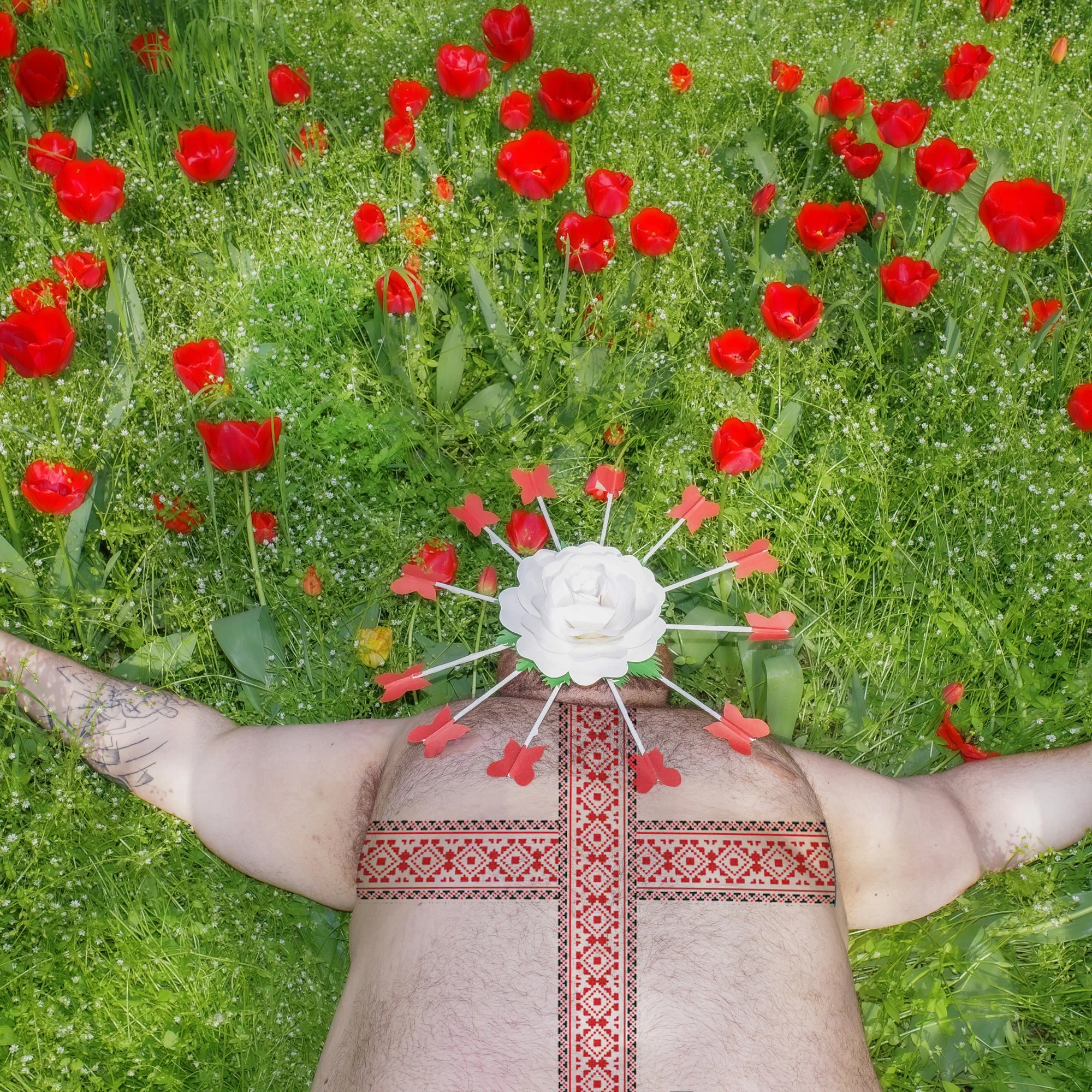
Through my work, I investigate the phenomenon of using photography therapeutically outside traditional institutional or clinical settings. My practice examines core themes of identity formation, the creation of a sense of home, and familial structures. I often use self-portraiture to untangle the complexities of my own sense of self in relation to my cultural, gender, and sexual identities. Influenced by the concept of “photo-therapy,” I have extended this practice to collaborate with family members, exploring collective traumas in shared visual narratives.

Drawing on my experience as the daughter of German immigrants in the United States, my work addresses the archive, familial intimacy, and generational trauma. I explore the psychological reception of perceived social groupings and labels on an individual level, grounding my work in the concept of postmemory as theorized by Marianne Hirsch. This framework considers how the “generation after” inherits the collective and cultural trauma of those before them. My body remembers experiences I have only encountered through the stories, images, and behaviors of my family, revealing how trauma lives not only in the archive but within the body itself.

In my research, I trace my family’s collective psyche through talk therapy sessions, unearthing narratives of the Second World War, racism, conservative religious beliefs, gendered patterns of abuse, and the presence of invisible psychological or physical illnesses. As a female photographer, these stories intertwine with broader questions about gender, societal norms, and how modern psychological treatment often prioritizes male-centered perspectives. My work seeks to interrogate the influence of these societal constructs on identity formation, asking how gendered experiences shape the ways we process trauma and form connections within ourselves and our communities.

While much of my work has focused on my immediate family, my most recent projects mark a significant evolution: I have expanded this practice to include photographing my chosen family. These individuals, who hold an important place in my life even if only temporarily, represent a broader spectrum of relationships and identities. As you will see in the pages that follow, this expansion deepens my exploration of shared narratives, blurring the lines between inherited and chosen connections, and examining how these relationships shape and redefine our understanding of family, home, and belonging.

Through this deeply personal and collaborative methodology, I aim to create a visual and emotional dialogue about the interconnectedness of past experiences, family dynamics, and psychological inheritance. My work invites further exploration into the ways societal influences, family histories, and personal narratives shape identity, memory, and the ongoing process of self-discovery.


Das Kuckucksei/Cuckoo's Egg

Project Statement

I returned to my maternal grandparents’ home in Plüderhausen, a small town in southern Germany, in 2021 to begin an ongoing exploration of family and memory. I had visited many times before as a child, spending a summer alone there when I was thirteen with a little pink camera my grandfather bought me, taking self-portraits throughout the house. Returning as an adult, I found myself listening differently. Since I grew up away from my extended German family in the United States, this project draws on my discoveries about my family during talk sessions with my grandparents. Their stories include history from the Second World War, family dynamics, conservative religious beliefs, customs around food, gendered patterns of abuse, and invisible psychological or physical illnesses. 


Engaging my grandparents in a form of photo-therapy, including photo-elecitation interviews, reaffirmed my belief that trauma is passed down through generations. For example, my grandfather’s experience of evacuation from Stuttgart due to heavy bombing, to live away from his parents in a family of strangers in the Schwabish Alps, directly impacted my mother’s upbringing. In turn, this affected how I was raised, inheriting wounds from a culture that I grew up outside of. Alongside these inherited traumas runs another recurring motif in my family history, the appearance of the cuckoo’s egg. My grandfather’s sister was a foster child, his brother later adopted a child from Korea, and decades afterward, my parents adopted my sister from Ethiopia. Each generation has, in its own way, expanded what family means, challenging traditional notions of bloodline and belonging. This sentiment reflects the fact that trauma lives on in the body, rather than solely in the archive. 


My photographic work relates to the concept of postmemory as theorized by Marianne Hirsch. Postmemory describes the relationship that the “generation after” bears to the personal, collective, and cultural trauma of those who came before. It explains how my body “remembers” experiences I only had through the stories, images, and behaviors of my family members. Das Kuckucksei fuses my therapeutic self-portraiture practice with the photo-therapy I use to engage my family. 

The series began as a way to highlight my grandparents and me, as characters with intertwined trajectories despite the physical distance between us for much of our lives. Now that my grandfather passed away in 2023, the narrative keeps extending, bringing in my sister Katherine, my father, and my mother, to think through all of our collective connection to German-ness at large. I have attached this work to the German preposition “zu”. Zu indicates where someone or something is headed and occurs both in Zufall, chance, and in Zukunft, future. As my family’s formation was an occurrence of zufall, so is my zukunft, and who becomes a part of my family now is completely up to chance. My work comes from a very personal place, yet it resonates with anyone who has ever felt like a cuckoo's egg—out of place in their own home, detached from their family, or grappling with their cultural identity. With my camera, I will continue to search for the source of this feeling within myself.


Unsere Puppenstube/Our Dollhouse
Project Statement


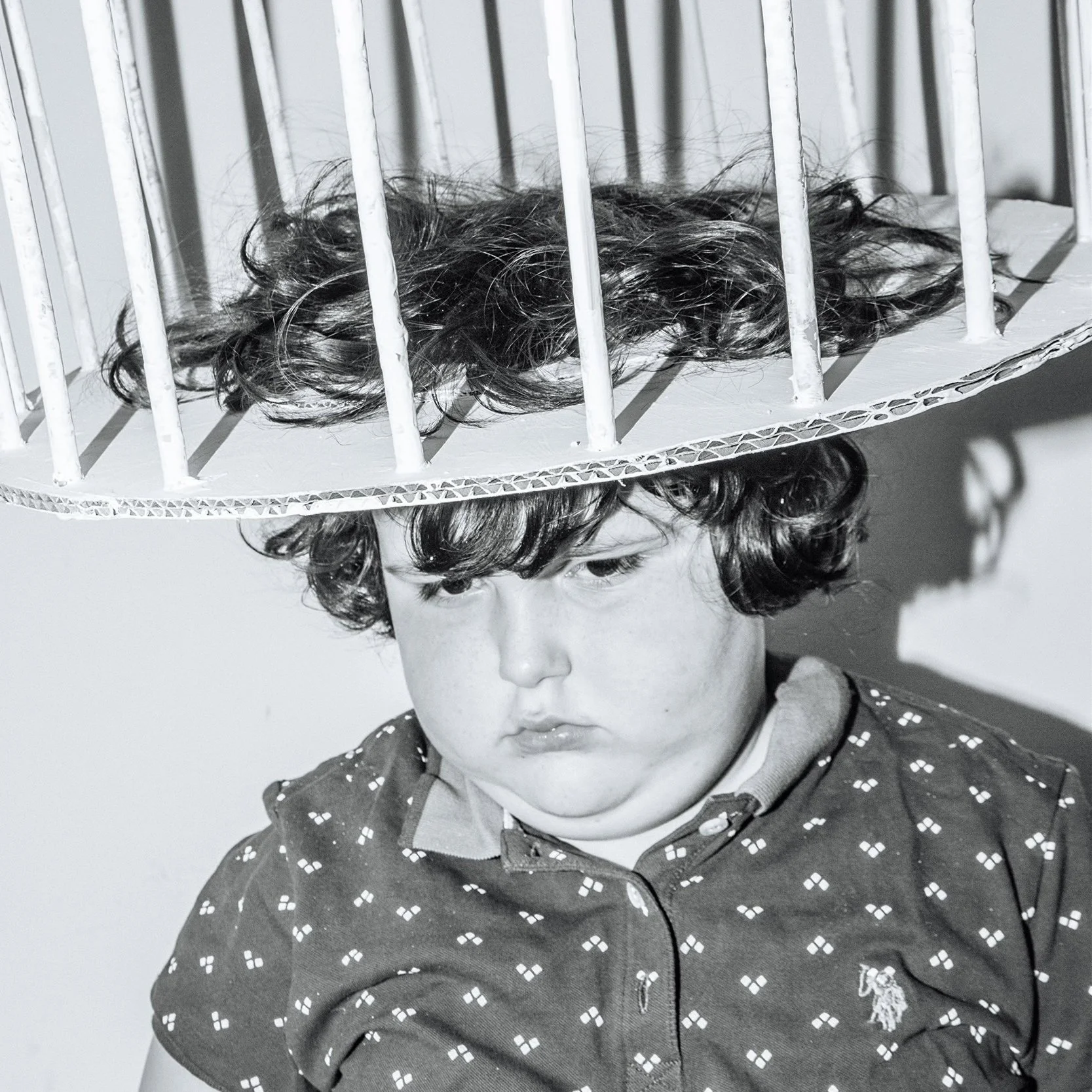
I have been photographing my younger sister for over thirteen years. I started taking it more seriously when she expressed to me her disappointment over not having any photographs of herself as a baby, from the time before our family adopted her. Our photography projects can be seen as photo-therapy, because the act of photographing helps build her self-confidence, untangle her identity as a young black girl in our German-American family, and battle any insecurities she, like many other adolescents, may have about her appearance. With a ten-year age gap between us and parents who are not American, I became a kind of cultural ambassador to my sister, almost like a third parent. Like many older sisters, I often found myself responsible for addressing topics too sensitive for her to bring to our parents.

This series in particular deals with the adverse and borderline racist reactions my parents received from our extended family in Germany when she was first adopted, and her need to remember what little knowledge she has about her biological family. Here she peers into a dollhouse that was first constructed by our great-grandparents, continued by our grandparents, and finished by our father. My sister and I furnished the dollhouse together with items that have been passed down through our family’s generations, including a clock handmade by my great-grandmother.

This act symbolizes the legitimacy of her claim to my family’s generational memory, despite possible objections from ignorant relatives. In fact, my great-grandmother, who never had the chance to meet my sister, also adopted a child who was orphaned during World War II. The way my sister interacts with the dollhouse mimics occurrences of situational feelings of outsideness. An example of which being when my mother and I converse in Schwäbisch, the dialect of German that we speak, around her. 

This work felt important to make because my relationship with my sister is often thrown into question, especially by strangers in public, who try to decode how we fit together. Photography allows me to express the responsibility I feel to emotionally support my sister through any challenges she may face as a result of growing up in a white family, especially as the United States continues to be divided along racial lines. The audience for this work is anyone who has ever felt out of place, although they belong. I expect that racial relations will come to be less foregrounded than they are now, as the love I have for my sister becomes more common.


the 10