
peter brandt and tomasz kawecki
a visual dialogue
A Visual Dialogue in this issue between Claudia Fuggetti from Italy and Lara Gilks from New Zealand unfolds as a chromatic and atmospheric conversation, and together they create a hybrid reality where the boundary between the natural environment and human intervention dissolves.
xxxxxxxxxxxxx
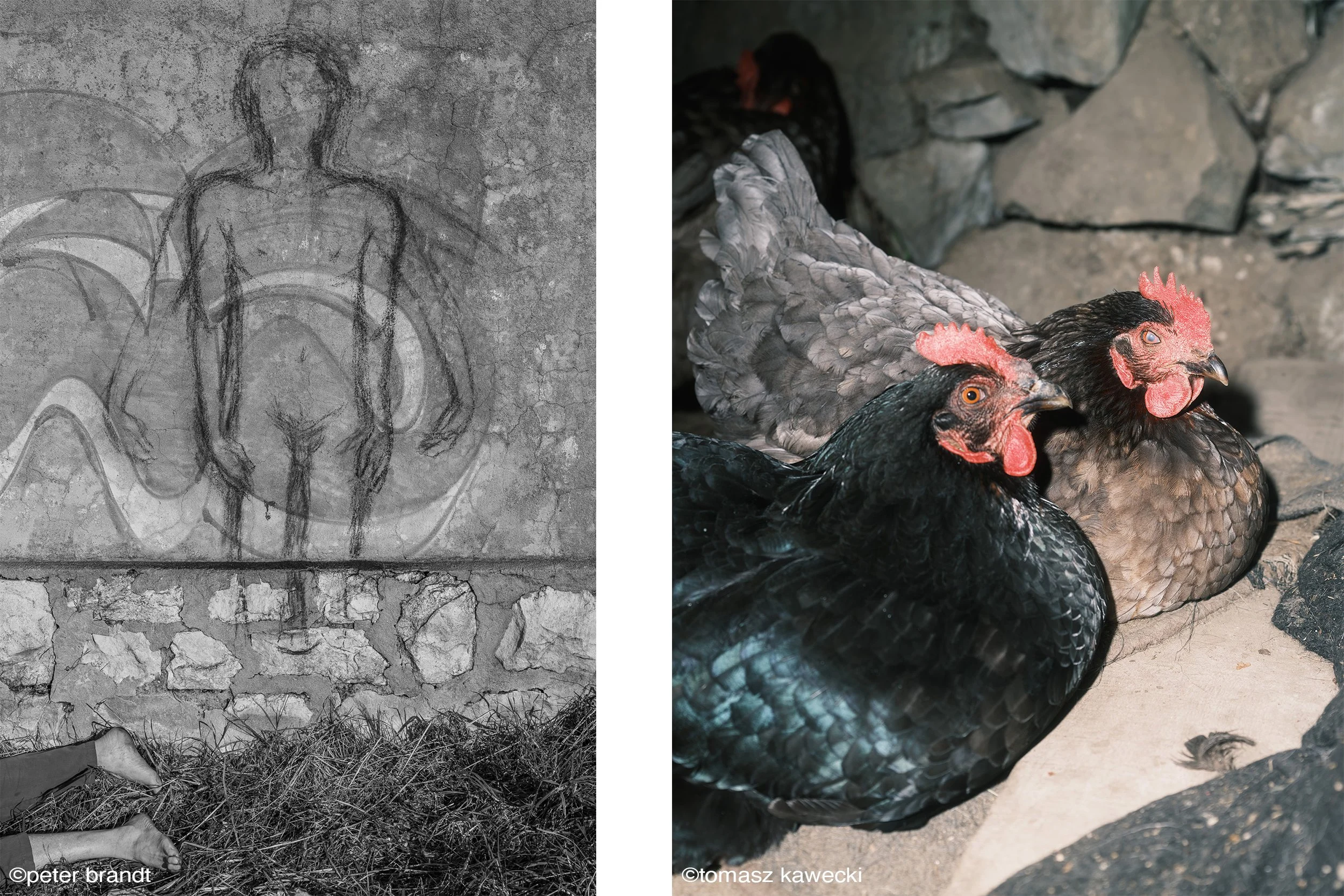
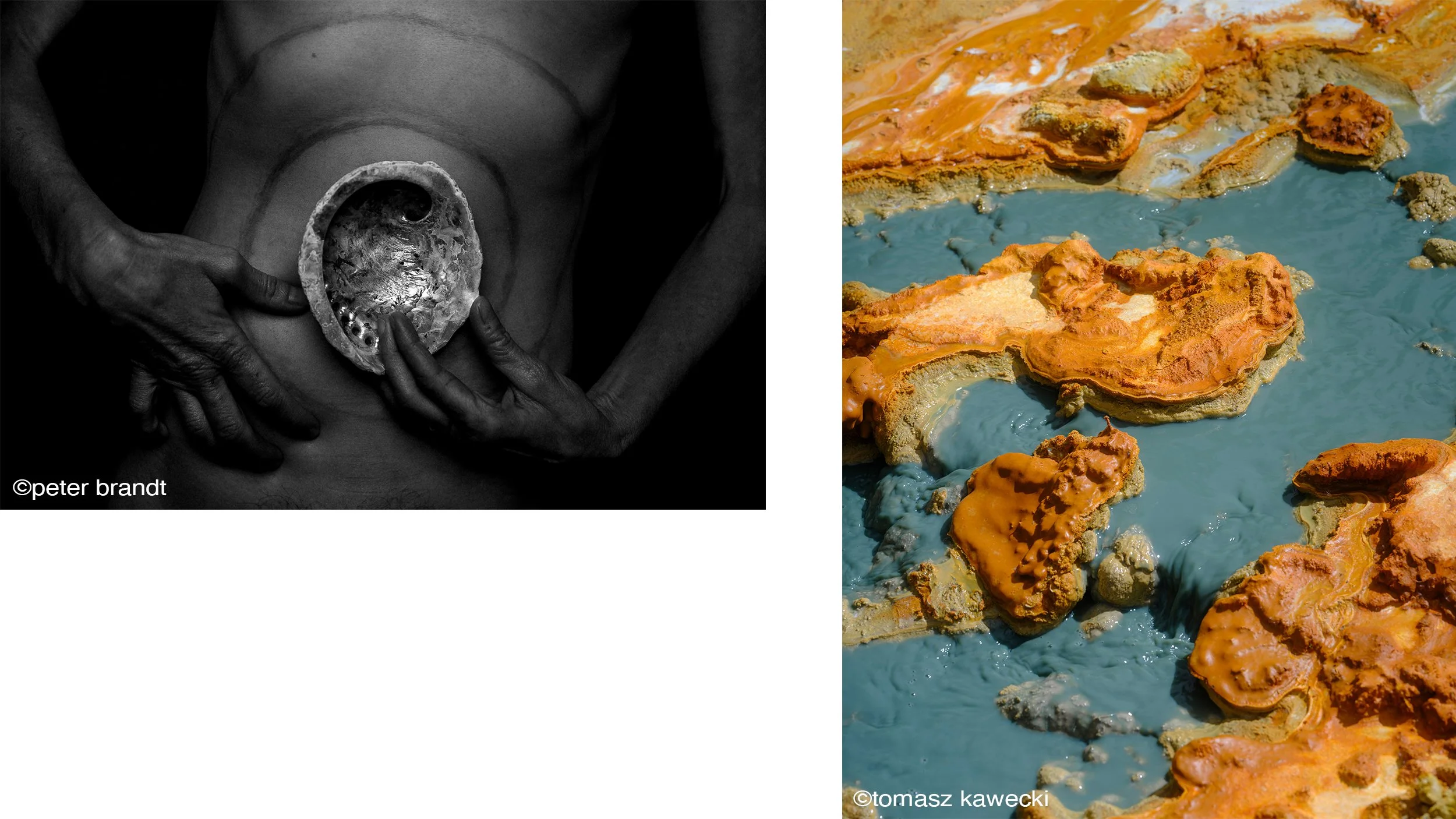
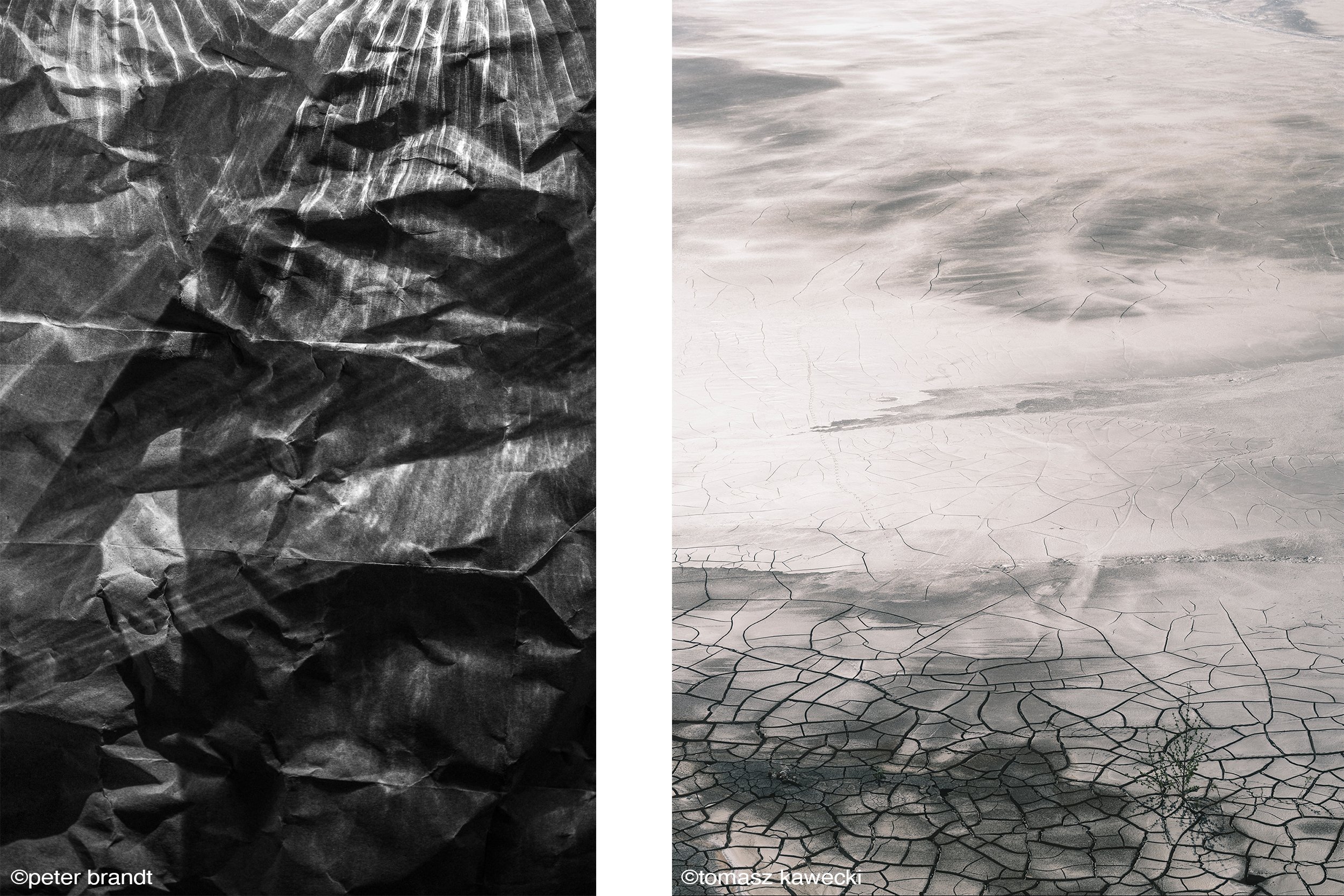
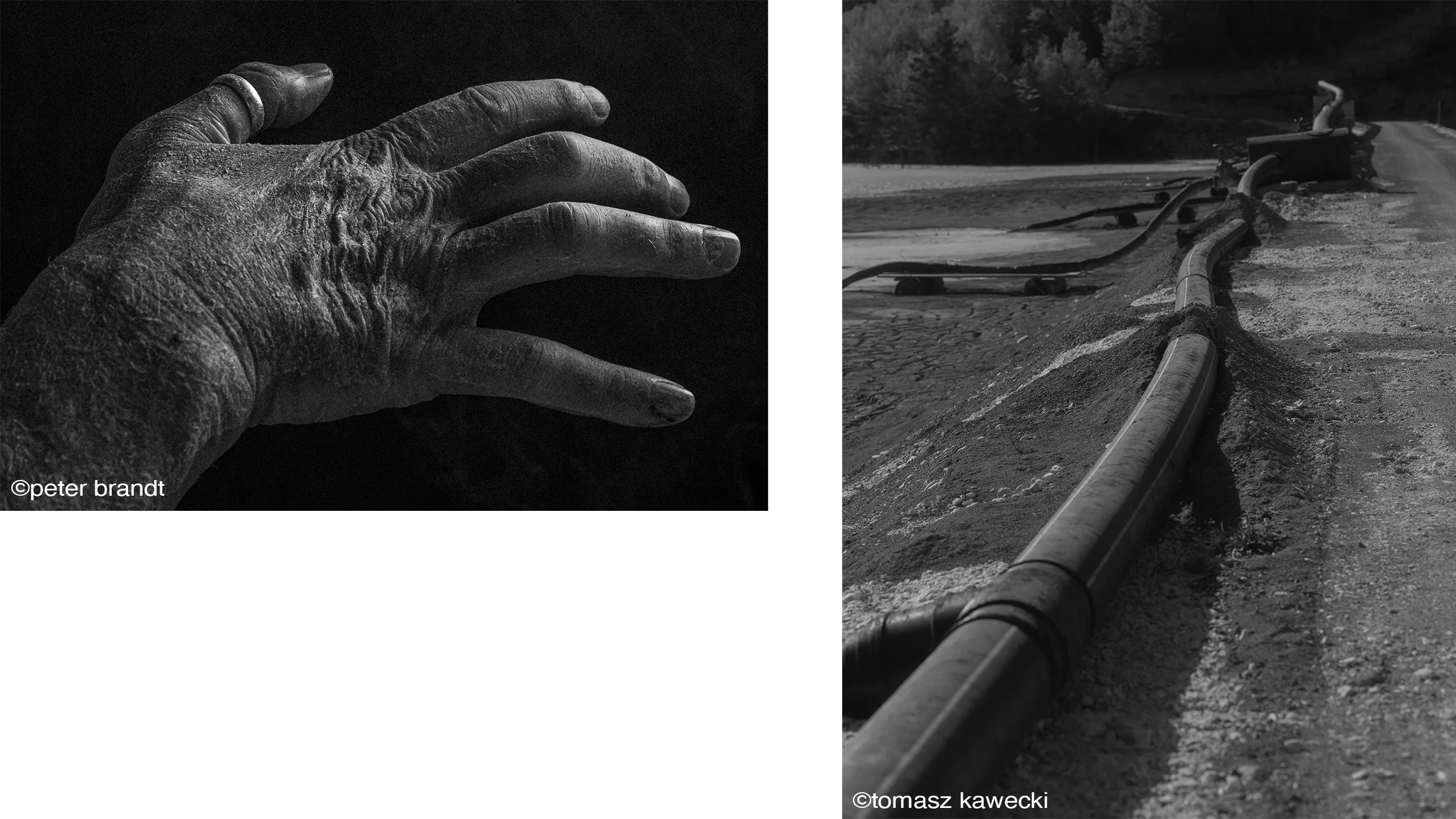
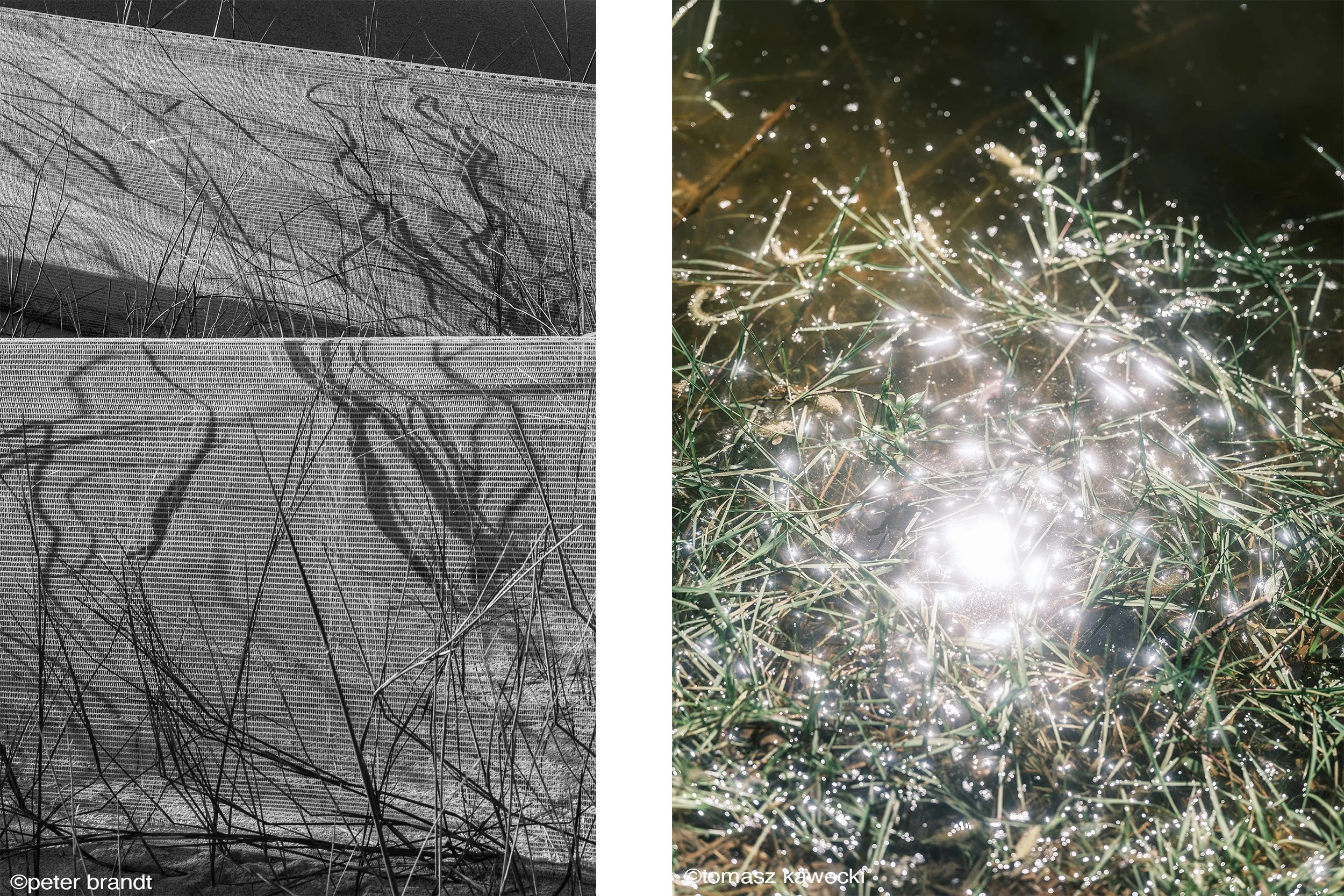
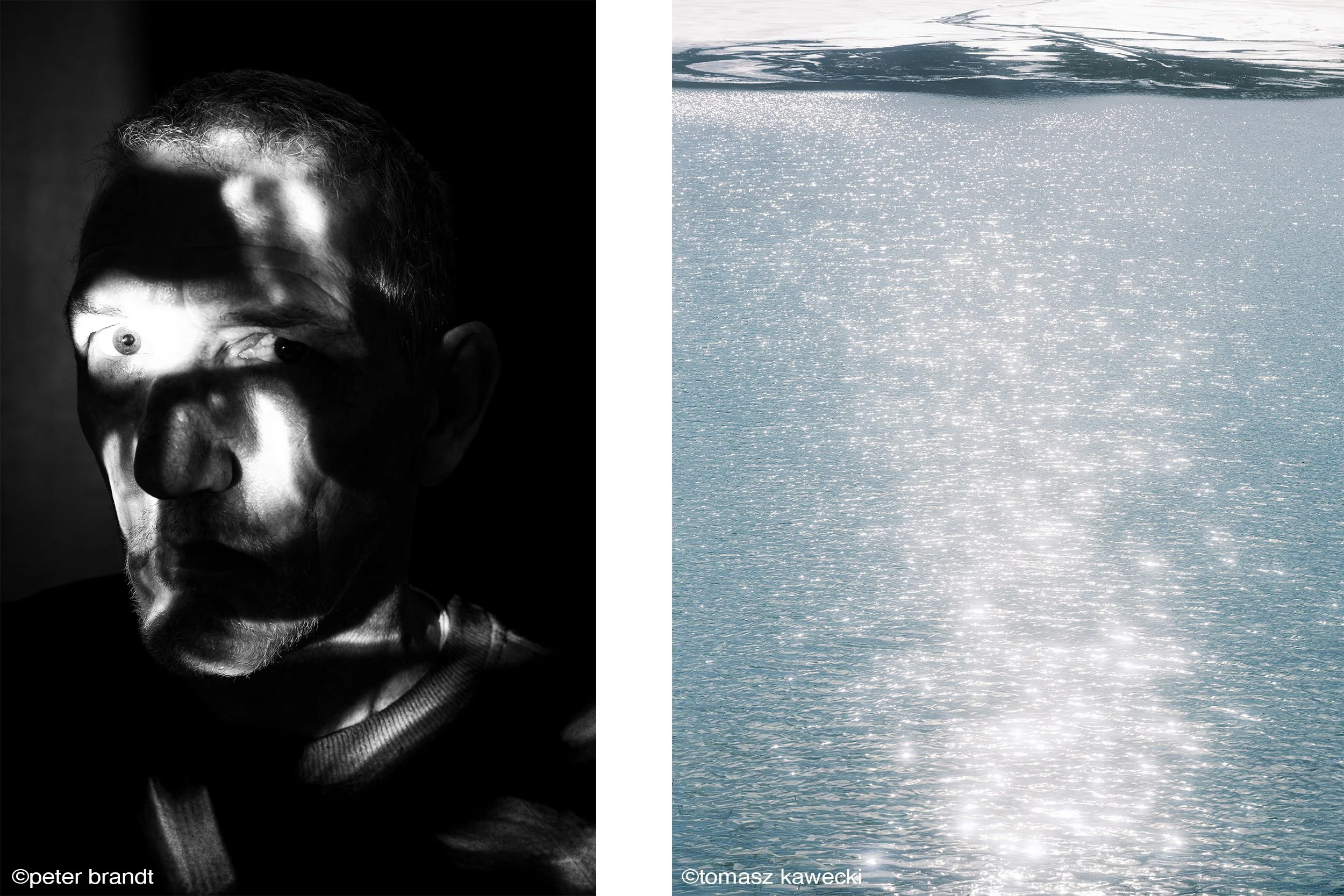
Following the collaboration we asked Peter and Tomasz about the experience.
What was your personal experience of A Visual Dialogue process?
Tomasz Kawecki:
It was fascinating to watch our different approaches clash. I was very keen to ensure that we didn’t have full knowledge of what the other was currently working on, and that our communication with Peter was based almost exclusively on images. The premise was simple: each of us worked on our own material separately, at our own pace, and from our current work we would select a frame that served as a visual response to our partner’s previous photograph. It seems to me that Peter had the most difficult task, as he initiated this dialogue – opening it without any point of reference. Later, we simply added further visual cues. When you got in touch with me, I was in the middle of working on my new project, Flux. It is a visual response to the crisis surrounding the transformation of the Romanian village of Geamăna into a a huge tank for post-flotation waste. I knew we wouldn’t have enough time to create something entirely from scratch, which is why I suggested this particular approach to Peter. I was delighted that he responded to it with such enthusiasm.
Peter Brandt:
Pretty stressful (but not necessarily in a bad way), as I do not normally conceive of my photos in such a short period of time. Also, Tomasz suggested in the beginning that we should get going without a specific theme and essentially ditch the dialogue, and of course the dialogue + photos we see on previous Visual Dialogues was all I had to base my expectations of the process on, so I had to adapt!
As a result, some of Tomasz’ response images seemed opaque (not that the written word always clarifies), especially in the beginning (I am sure he would have felt the same way about my response images — cue a mental image of Tomasz muttering, “Now why the hell did he respond to my hens with a sea shell on a belly?”), and my concern was that this opacity would have us responding on a purely formal level. But at a certain stage it developed from there, so while there were formal triggers, I think we both strove to steer the responses away from the predictable or obvious (and succeeded, I think).
Possibly we missed an opportunity by not establishing a theme so we could explore each other’s conceptual concerns as well as the purely visual. What I sought to do, as a result, was to maintain a conceptual thread in my own photos as much as possible, all the while exploring ways to respond to Tomasz’ images on an image-to-image basis based on the content as well as what I was able to read into it on a personal level.
How do you feel about the outcome?
Tomasz Kawecki:
I find this an incredibly inspiring experiment. Exploring another person’s sensibilities and seeking common ground solely through visual means is a fascinating process – and it was precisely this unique attempt to establish contact that was the most valuable aspect of it all. We were separated by a vast distance: Peter was on the other side of the world, whilst I – although I come from Poland – was working on material from Romania. Somewhere at the intersection of these different spaces, through the photographs we exchanged, we were able to show each other what we were looking at and intuitively attune our images to one another. The clash of our working methods was also incredibly fascinating. I took a more documentary approach, whilst Peter – or so I felt – immersed himself in his own dreamlike world. My visual responses came from the outside, filtered only through my own sensibility, whilst his images welled up from within, with the outside world serving merely as material to give them form.
Peter Brandt: I won’t deny I was concerned after the first few photos, but in the end I feel there are some fascinating pairings (and also an element of fun) that take us into a “purely photographic” space where we would respond to a combination of elements within the preceding image (sometimes with an additional nod to the images before).
How will this affect the way you work, or think about making work in the future?
Tomasz Kawecki:
Without fail, one of the cornerstones of my work on projects is the selection and sequencing of photographs. This stage is just as important as the actual process of taking photographs – a sort of ‘collecting’. Sometimes I even get the impression that this work is more important, and it is certainly often much more time-consuming. In the future, I would very much like to initiate similar dialogues with other artists, to see where such visual and cognitive experiments will lead us and into what meanders of the imagination they will allow us to venture. In my thinking about narrative construction, I often refer to the classic Kuleshov effect and the theory of dialectical montage – concepts developed by filmmakers such as Sergei Eisenstein and Jean-Luc Godard. I strongly identify with the premise that, during the editing of footage, what matters most to the viewer is not what the images show directly, but what is not visible. Meaning does not arise in the isolated shot itself, but in the ‘cut’ – it lies hidden between the images, creating what is known as the ‘third image’. This space left to the imagination becomes crucial: what happens at the juncture of two photographs and the gaps that arise between them. Although filling these gaps ultimately depends on the viewer, it is not left entirely to chance. As creators, through the conscious juxtaposition of images, we can, to a certain extent, programme this space for interpretation.
Peter Brandt:
This reminded me to be mindful of the many ways a photo sequence might work and to steer away from forcing a narrative progression (possibly a weakness of mine) where it is not a core part of the sequence (besides resulting in predictability, it also means you are often deciding that a specific photo should defer to a preceding or succeeding image).
I am sure there will be other insights that follow, with time, as a result of this project — but for the moment I am keen to take the insights described above into my next batch of work, which is to re-explore groupings and sequences on another (non-conceptually-based) series I have been working on since last year.
This was my first collaborative project with another photographer, and it is definitely a creative process I would be keen to try again.