mona bozorgi
Bio
Mona Bozorgi is an artist-scholar whose interdisciplinary research and artistic practice explore the correlation between representation and performativity in photography. Her research is intertwined with posthuman critical theory and focuses on the process of the materialization of bodies and its impact on the construction and production of identities. Bozorgi's recent work blends photography, textiles, and installation and explores the entanglement between the materiality of photographs and their meanings. Her work has been exhibited in numerous museums and galleries in the U.S. and internationally. In 2024, she was featured in the Florida Prize for Contemporary Art Exhibition, selected as a Critical Mass Top 50, and was a recipient of the Houston Center for Photography Fellowship. Bozorgi holds a Ph.D. in Fine Arts with a focus on Critical Studies and Artistic Practice from Texas Tech University and an MFA in Photography from the Savannah College of Art and Design (SCAD).
News:
Exhibition at SCAD Museum of Art in Savannah, USA in February 2026
mona bozorgi
@monbozorgi
Threads of Freedom
Project Statement
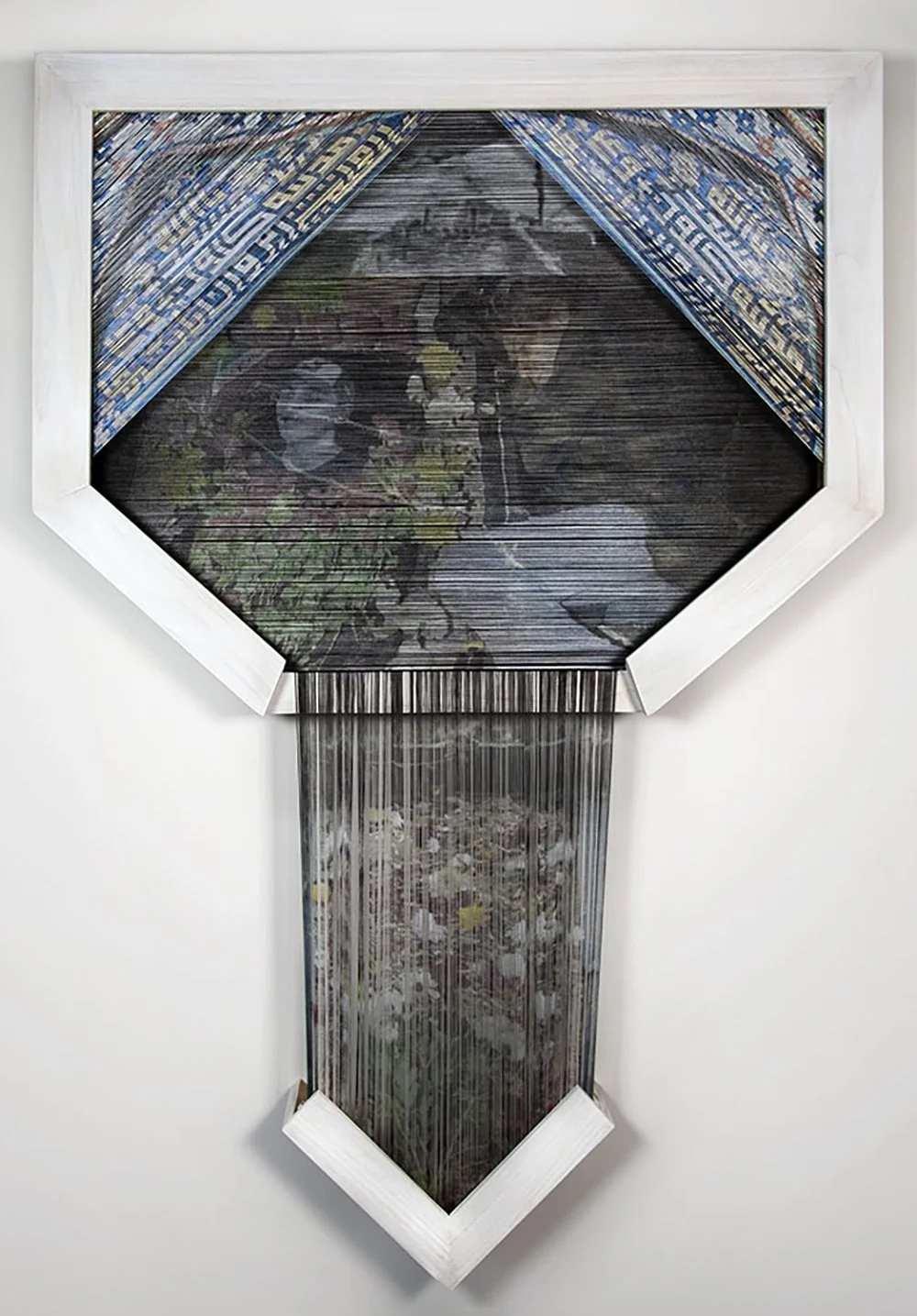
Threads of Freedom intertwines materials and narratives in photography to question traditional representations of women in Iran. This project shares stories of Iranian women using the photographs they have taken of themselves during the recent uprising and protests in the country. At the time, photographers were prohibited from documenting the uprising, and many who tried to take photographs were arrested. So, selfies became a way to document and resist. Women photographed themselves while removing and/or burning their headscarves in public to show defiance and to reclaim the spaces that had been stolen from them for almost half a century.
I conceived the process of creating the work as a form of protest, a way to resonate with the struggle, to be affected by the work as much as I hope it affects the viewers. Residing outside my country and unable to participate in protests, I found myself overwhelmed and empowered by the images of young, brave women. I collected and printed their images on silk and dismantled the fabric by removing individual threads by hand. Then, I layered the images to create new compositions and to reveal and connect the stories embedded in each photograph. Throughout history, fabric was utilized to simultaneously conceal, beautify, and objectify women's bodies. In Iran, women's bodies and hair have been veiled with fabric for centuries. In Threads of Freedom, fabric becomes a surface that reveals women's bodies instead of covering them, and the threads of the fabric reweave their shared stories. The work acknowledges that the people's history will remain despite the state's attempts to censor or erase it.
In the new iteration of the work, photographs are enclosed within boxes that serve as both containers and thresholds, concealing and revealing the images inside. These boxes, vessels of collective memory, reference multiple layers of photographic history and technology: the black box of the cellphone, photographs in archival boxes, and the intimate wooden cases of daguerreotypes. In the boxes, contemporary practices of digital image-making and archiving are interwoven with material modes of photographic preservation, highlighting how we intra-act with images today.