
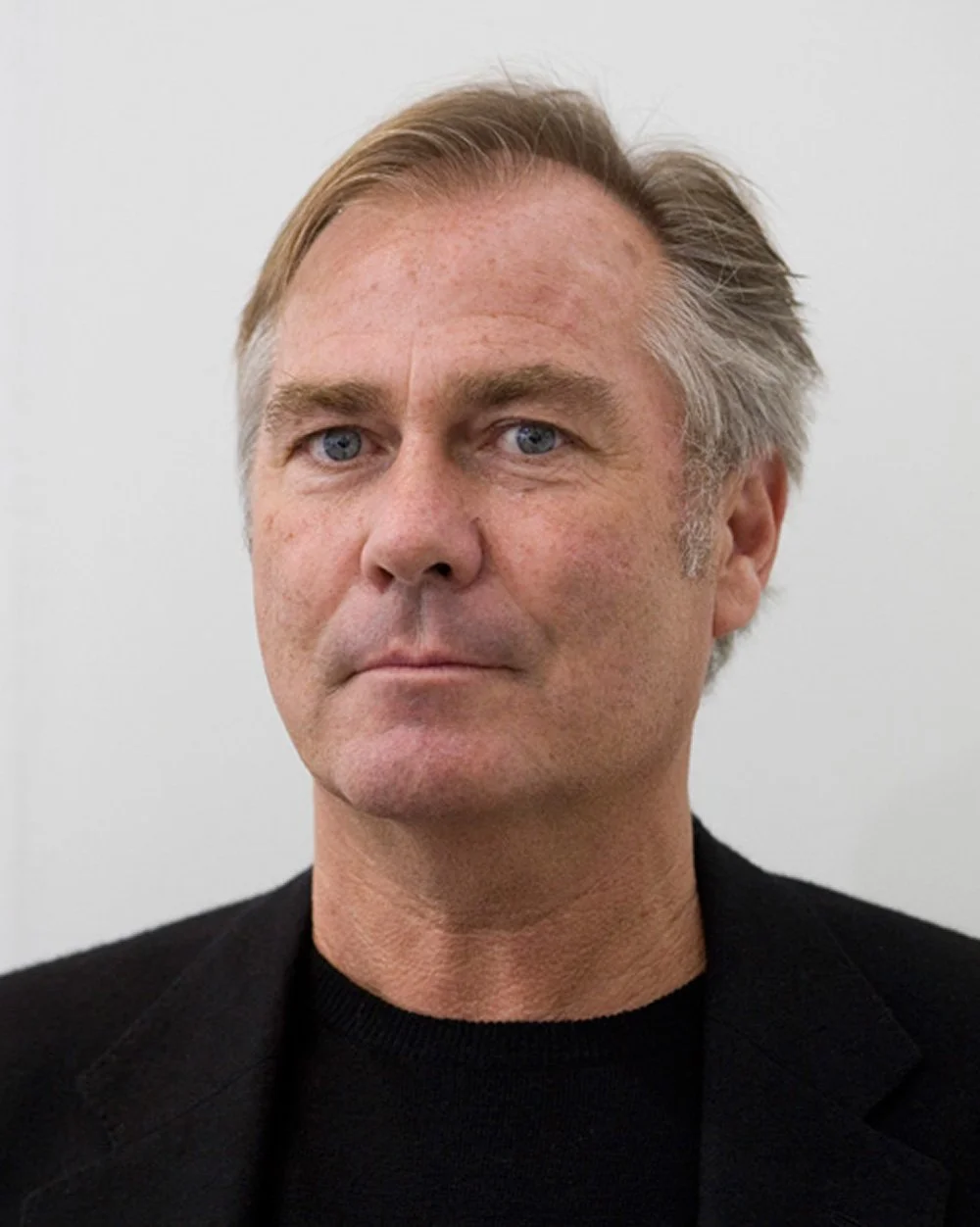
interview
timothy persons
gallerist / persons projects
curator, writer, artist, adjunct professor
berlin, germany
How do you define your role in the photography world?
My role within the photographic world has many different faces. Over the past 45 years, I’ve had the privilege of working as an artist, curator, writer, and teacher. Historically, I will be noted as the professor who created and developed the Helsinki School, directing it for three decades and producing six generations of artists who use the photographic process as an instrument for conceptual thinking. At the same time, my position on the Paris Photo selection committee for the past 20 years has contributed to developing how photography can expand its parameters by focusing on a more contemporary and contextual platform. Lastly, together with my wife, Asia Zak Persons, we founded Persons Projects, which has become one of the leading galleries for conceptually based photography in Berlin and internationally. This year, together with our two sons, we established the Persons Projects Foundation, which aims to further develop and preserve the legacy of the Helsinki School.
Why do you do what you do?
I have always used curiosity as my compass in life. Coupled with my experiences, it has served as the primary motivator for exploring new methods and materials to perceive, present, and interpret creative ideas—first as an artist, then as an educator, and finally as a curator and gallerist. I have always enjoyed learning through doing, using mistakes and constructive criticism as positive tools for shaping my own becoming.
Where do you look at photographic work? How do you discover new artists?
I discover new artists primarily through other curators, biennials, collectors, exhibitions, and those who reach out to me directly. My current focus is on rediscovering older artists who have remained under the radar for much of their careers.
What is the most significant challenge facing contemporary photography today, and what is the greatest opportunity?
Photography is increasingly becoming a means for thinking, rather than merely capturing what’s in front of the lens. Because of its accessibility—from mobile phones to the internet—artists from various creative disciplines are using it to expand their practices. The current state of the art market presents both challenges and opportunities. In recent years, the collecting of photography has undergone a significant shift, both privately and institutionally. Most photography collectors have spent years acquiring knowledge and insight in building their collections. This has changed drastically due to the aging of that initial generation of collectors, compounded by the pandemic and the scarcity of older material. Many of the more established collections are now focused on securing a lasting home for their works rather than expanding their parameters. However, this has opened new opportunities for a younger and increasingly visible group of buyers whose interests are more varied. While their approach to collecting is still evolving and often uncertain, they are driven primarily by personal taste and emotional connection rather than long-term strategy or market value. They are not yet collectors in the traditional sense but enthusiastic buyers who are beginning to engage more seriously with the medium. Photography resonates strongly within this younger generation, not only because of its accessibility but also because it remains more affordable than other media such as painting or sculpture. With the rise of digital photography and AI, producing a technically perfect image has become relatively easy and durable. As a result, photography is no longer simply a medium to capture what’s in front of the camera—it has become a vehicle for conceptual thinking. This shift has sparked growing interest in photography among collectors who traditionally focused on other media. As more artists incorporate photography into their creative practices, the medium continues to expand its parameters. As galleries exhibit more photo-based works and collectors, museums, and curators embrace them on par with painting and sculpture, photography will continue to evolve to the next level.
As someone deeply engaged with Nordic contemporary photography, how would you define the style of the region?
There is no single style that can be labeled as purely Nordic. It’s true that many artists from this region use nature, light, and the passage of time as their raw material. With the evolution of the internet, photography has become a universal language. Santeri Tuori, Eeva Karhu, Mikko Rikala, and Jorma Puranen are excellent examples of Helsinki School artists whose works reflect the collection of time by using nature as a filter for their ideas.
How would you describe the current state of the contemporary photography market in 2025, and what factors do you think have shaped it? Where do you see it heading next (and how does this affect photographers)?
In general, the global art market suffers from over-saturation—too many fairs, biennials, inflated pricing, dominant auction houses, and a lack of constructive criticism at all levels. Art fairs have become so expensive that galleries can no longer afford to experiment with new works, creating an atmosphere where everything feels and looks the same. The sheer number of events leaves collectors exhausted and frustrated by both the prices and the diluted quality of the works on view.
Paris Photo remains the leading fair platform for photography, followed by Photo London and the Arles Les Rencontres festival. Many regional events are on the rise, but most still function with an outdated format. It will likely take another decade for the next generation of photo collectors to mature and broaden their understanding of the ever-changing art world.
Can you name some projects by “emerging” photographers that have recently captured your attention? What made the work stand out to you?
Two artists who have recently captured my attention are Nanna Hänninen and Jyrki Parantainen. Both have been, in a sense, rediscovered—their careers span more than thirty years, beginning in the 1990s. What interests me most is how they have changed their working models. They no longer adhere to traditional editioning, instead presenting their photographs as unique works by incorporating techniques such as painting, staining, and other material interventions.
Bio:
Gallery owner, curator, writer, artist, and adjunct professor, based in Berlin
Early Life and Education
Timothy Persons was born in 1954 in Narvik, Norway, and grew up in Claremont-Pomona, Los Angeles, USA. He studied under the renowned ceramic artist Paul Soldner, serving as his teaching assistant for two years. During this period, he was also influenced by guest lecturers such as James Turrell, Betty Woodman, and Lewis Baltz.
Persons pursued his graduate studies in Southern California, participating in a joint program between John Baldessari’s CalArts and Claremont Graduate University, structured around the concept of the Open Studio. He completed his Master of Fine Arts at Claremont Graduate School, California, in 1982, before returning to Europe.
Career
Timothy Persons is the creator and founder of The Helsinki School, a pioneering educational and artistic platform developed from a professional studies program at Aalto University. The Helsinki School redefined the academic model by integrating students, teachers, and alumni into a continuous dialogue through group exhibitions, publications, and participation in international art fairs. It became one of the first educational platforms to employ photography as a conceptual and pedagogical tool. The term “The Helsinki School” was first introduced by Boris Hohmeyer in the article “Aufbruch im hohen Norden” (Breakthrough in the Far North) published in art Das Kunstmagazin in 2003.
Persons has served for over three decades as an adjunct professor at the Aalto University School of Arts, Design and Architecture, Finland. He is also the co-founder and director of Persons Projects (formerly Gallery Taik Persons) in Berlin.
As a curatorial advisor, he has collaborated with major institutions including Kulturhuset (Stockholm), KIASMA Museum of Contemporary Art (Helsinki), and The National Museum of Photography – The Royal Library (Copenhagen). He has been a senior member of the Paris Photo Selection Committee since 2006 and now serves as an honorary member. Between 2003 and 2005, he chaired the jury for the Hasselblad “Young Artist” Award in Gothenburg.
Persons has lectured internationally at prominent art and academic institutions such as the Museo Nacional Centro de Arte Reina Sofía (Madrid), Complutense University (Madrid), Danish National Museum of Photography (Copenhagen), and universities including NYU, Pratt Institute, Columbia, Yale (USA), and Beaux-Arts de Paris (France).
Apart from his academic work, he has collaborated with numerous artists and publishing houses such as Kehrer Verlag, Hatje Cantz, and Thames & Hudson, contributing to several significant book projects, including Zofia Kulik: Works (2025), six volumes of The Helsinki School (2005–2019), Grey Crawford: Finding Bones and El Mirage (2018), Dominik Lejman: Painting with Timecode (2014), POLISH!: Contemporary Art from Poland (2011), and Nuevas Historias: A New View of Spanish Photography and Video (2008).
News:
Solo show Zofia Kulik - Written in Her Own Voice at Persons Projects in Berlin, Germany
until January 24, 2026
Group show Constellations of Thoughts with works by Niko Luoma, Jyrki Parantainen, Mikko Sinervo and Niina Vatanen. at Persons Projects in Berlin, Germany
Opening: February 7, 2026
Solo show Rita Päiväläinen at Persons Projects in Berlin, Garmany
Opening: March, 20, 2026