
chaos to composition and the act of collage
Text by Alex Mendi
Identity is not a linear narrative, and simplicity does not define consciousness. Our sentience is fragmented and multifaceted, and as a storytelling species, we crave outlets to give form to our existential angst. Cave paintings, ritualistic chants and monolithic structures morphed endlessly. From ancient art and medieval paintings to Dada and Surrealism. Pop art, appropriation, and modernism became ways to navigate our modern world. As currents of thought shifted further, when did art begin to blur distinctions of space and time? When did collage emerge as part of the conversation?
Collage is a medium that evolved slowly and was discovered rather than invented. From the French coller, collage literally means to glue or to stick. Layering visual, graphic, and tactile elements, collage becomes the process and the outcome of connecting ideas both obvious and elusive. With readily available materials ranging from magazine cutouts to newspaper advertisements and found objects, collageʼs barriers to entry were low. Thus, it became the medium of both the amateur and the master. Painters, photographers, poets and sculptors used collage to encrypt and unpack narratives.
Distinctions between collage, photomontage, and assemblage are blurry, as they all share a Frankensteinian logic of assembly. Collage and photomontage are both 2D dissections of imagery, while assemblage, on the other hand, breaks the 2D boundary into a three-dimensional world, still mimicking the fragmented nature of collage.
Finding a sense of identity through the never-ending chaos of our surroundings is a complex undertaking. Through its multiplicity of meanings, perspectives, and histories, collage was always appealing for those with layered identities. Photomontages can be found as early as the Victorian era, but they gained popularity in the 20th century. Through their collages, Dada artists Kurt Schwitters, Raoul Hausmann, and John Hearfield; and Surrealists Dora Maar, Man Ray, and Eileen Agar, to name a few, were pioneers in the active deconstruction of identity. Subverting logic they arrived at a critique that went beyond their individuality and instead probed the political and social systems that dominated the time.
For post-and-anti-war artists Hannelore Baron and Robert Rauschenberg, it became a channel for their trauma and rage. For feminists across generations, like Martha Rosler, Barbara Kruger, Hannah Höch, Claude Cahun, Linder Sterling and Nancy Spero, it was a direct response to the patriarchal and male-centered consumerist society that thrives when denigrating women. Romare Bearden used collage as an outlet to comprehend his fragmented sense of belonging through a racial and cultural lens, and today, artists like Lorna Simpson, Wangechi Mutu and Deborah Roberts echo those threads.
The perpetual flux of digital abundance characteristic of the present-day landscape can be paralyzing. Artists like Sara Cwynar, Lucas Blalock and Jon Rafman explore the intersections of identity and the saturation of media. Through an amalgamation of mediums like photography, video, and animation they create collages that go beyond a screen and into real-world immersive experiences. Keen on probing the logic of image saturation and the absurdity of the digital sphere, these artists continue to question the structures that support what we interpret as reality.
As the medium continues to morph and expand, a few things remain unchanged. Collage has been and will continue to be a medium that subverts the foundations of our perceived reality, and through its disjointed nature, itʼs become a portal into the tangled webs of identity. In this issue, artists from all across the globe will each show us a window into their own constructed universes. For Agnes Eperjesy, Mario Zoots and Harriet Moutsopoulosʼ worlds, the surreal and unexpected clash and reconfigure every frame. For others, like Thato Toeba, Prapat Jiwarangsan and Giana de Dier, history is the starting point for reconstructing an old memory and cementing a new one. For Rodrigo Moreira and Bonnita Postma, pleasure becomes unapologetic, and sex appeal almost an inevitable result from confrontation. Each in their unique way, they come together through their deep curiosity for what already exists, and sensibility for what could be.
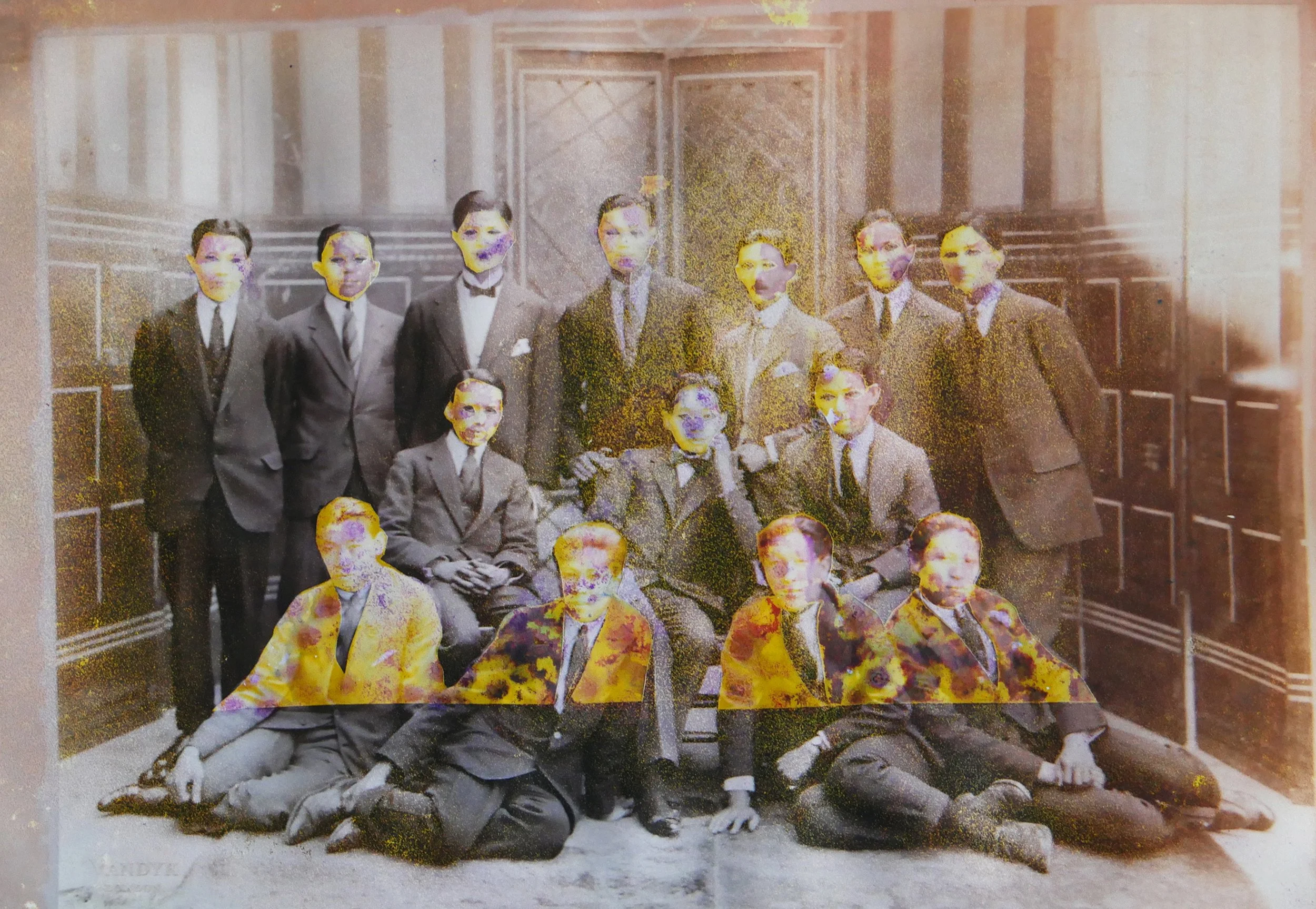
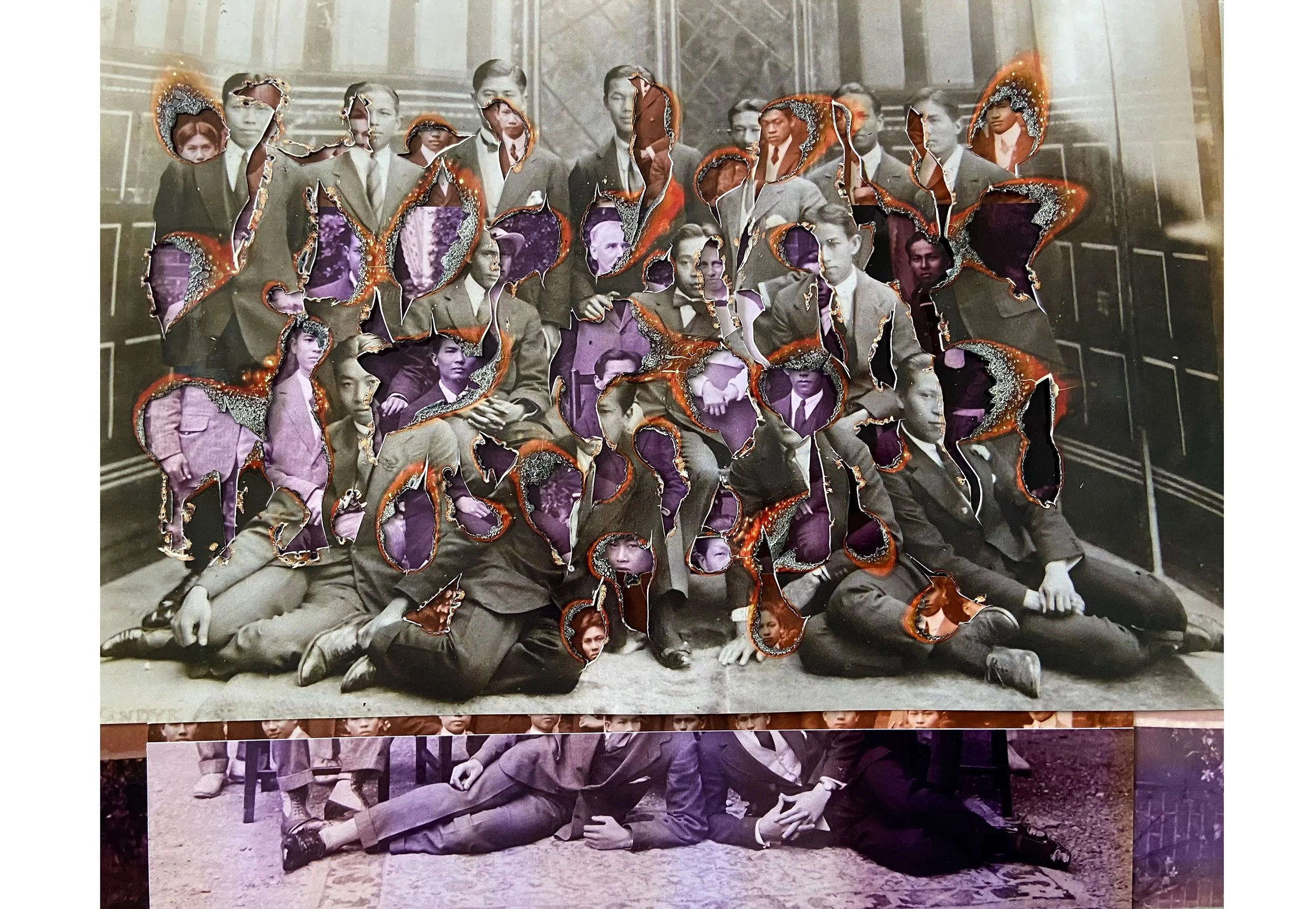
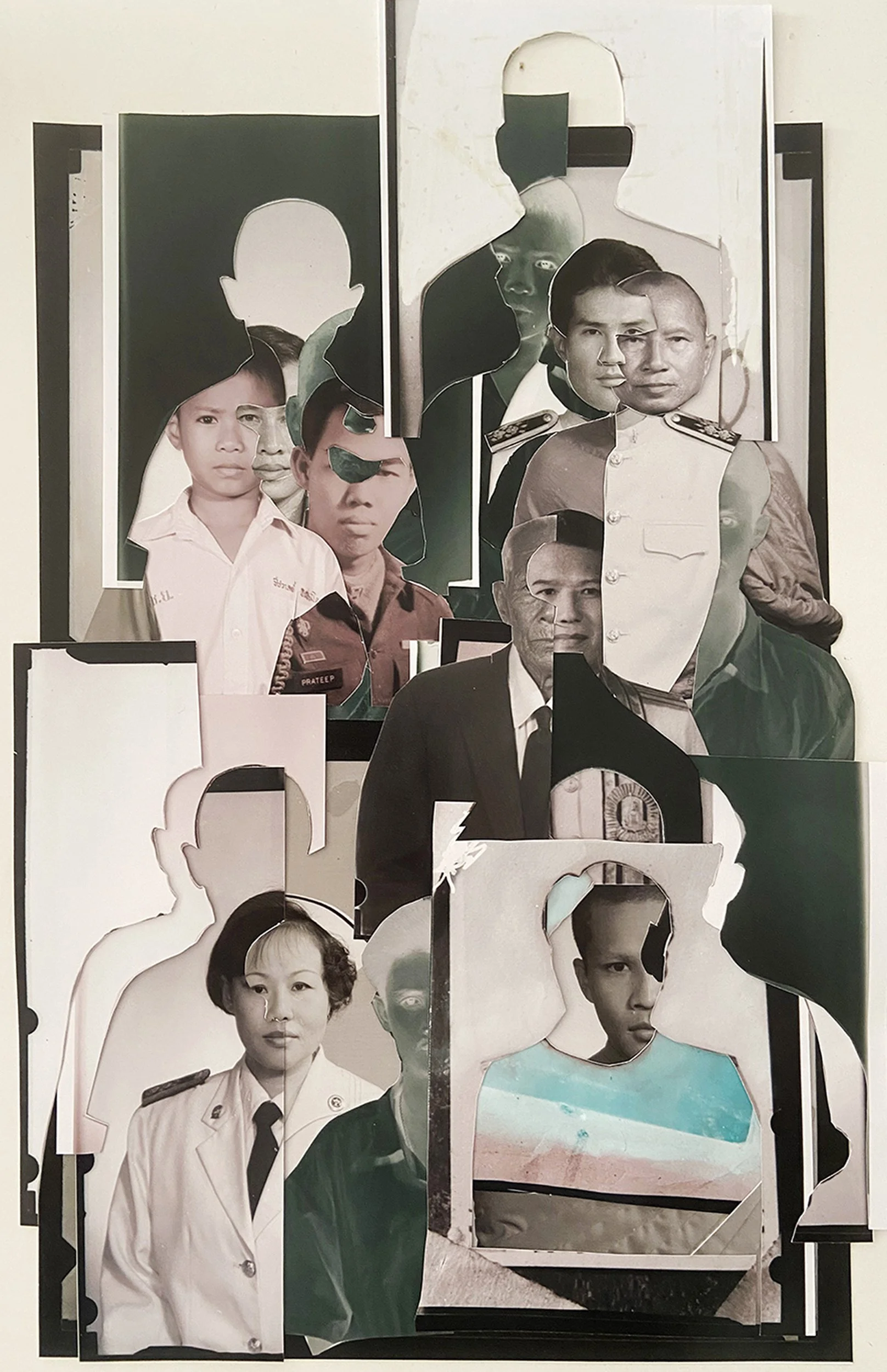
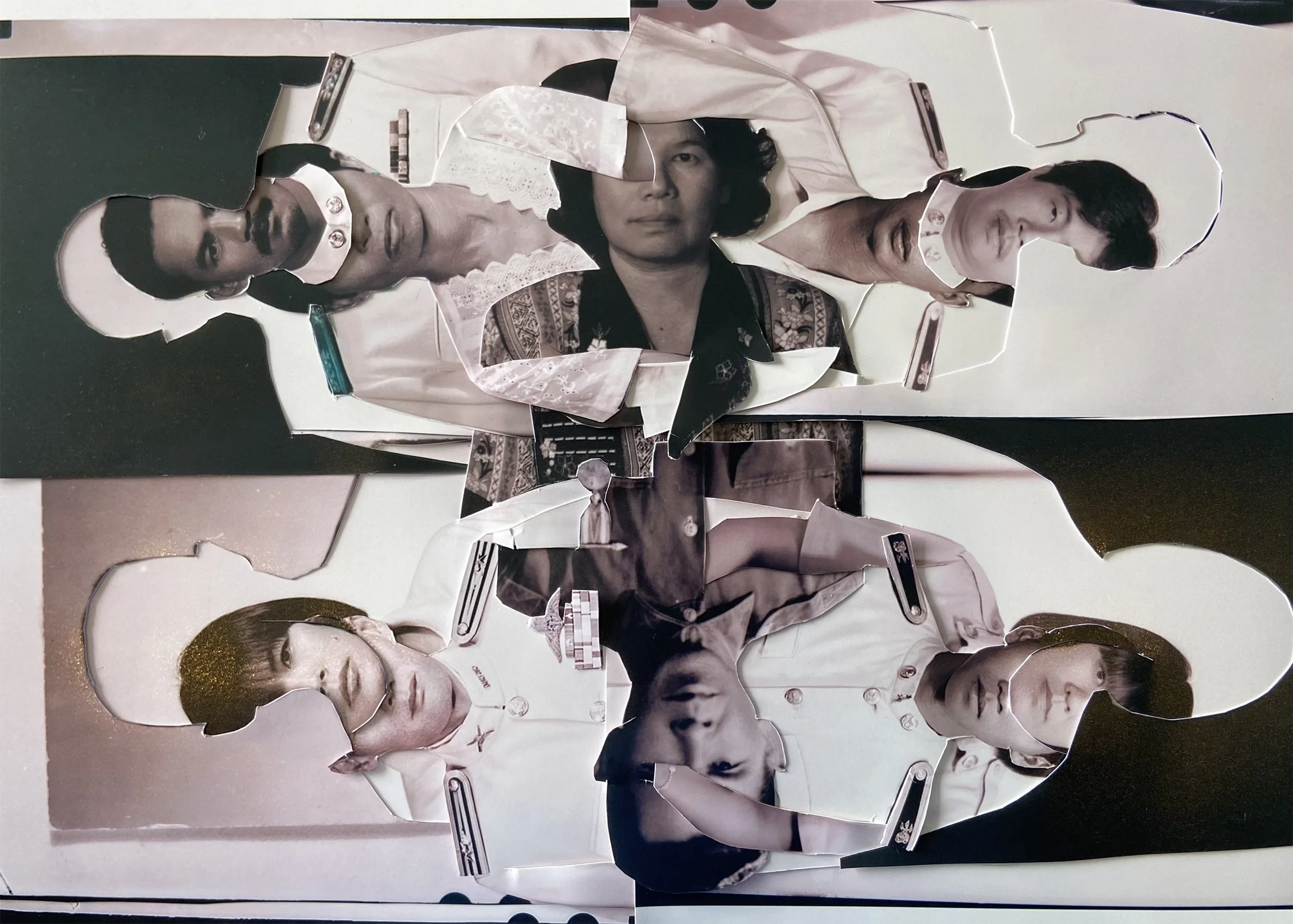
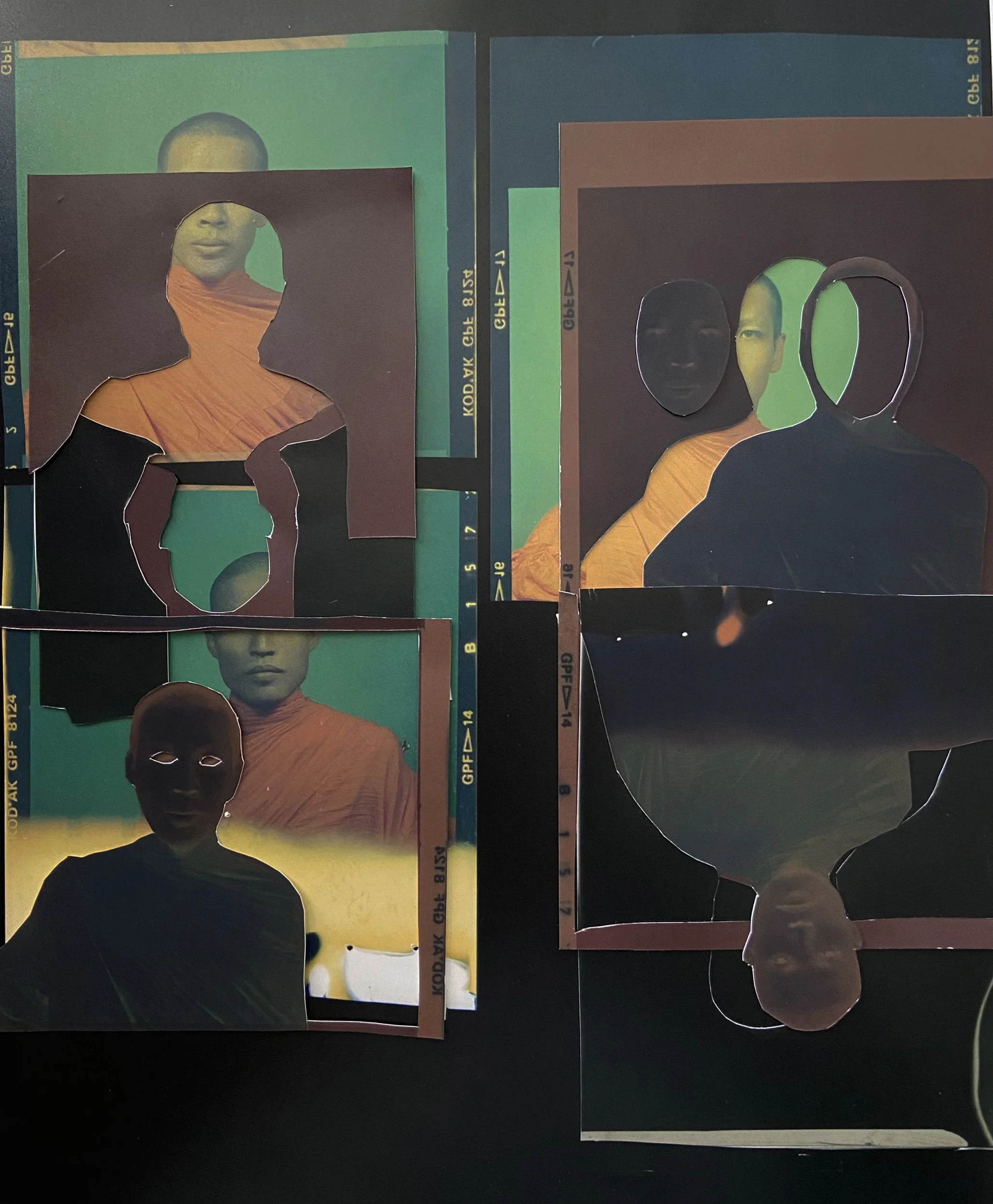
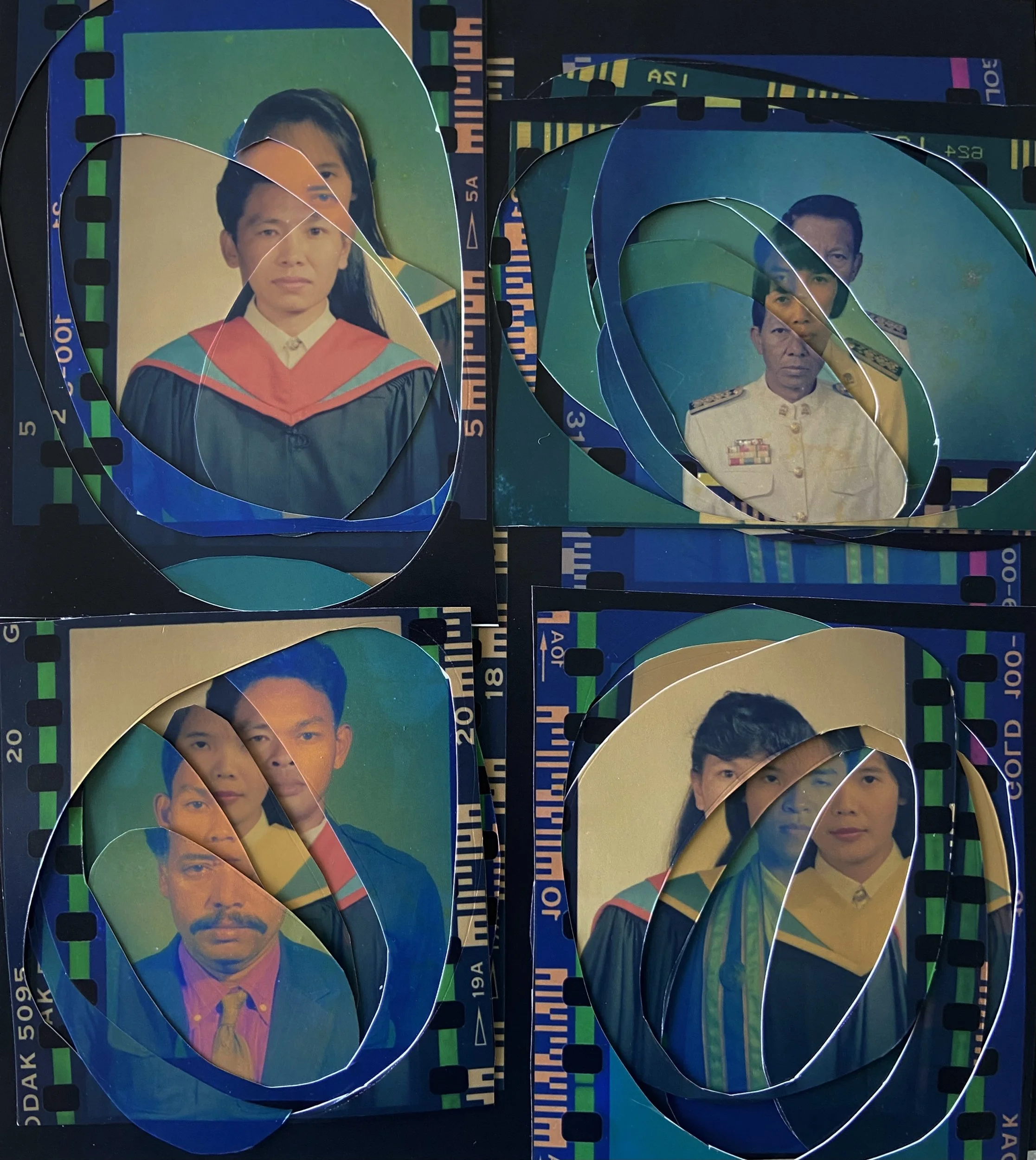
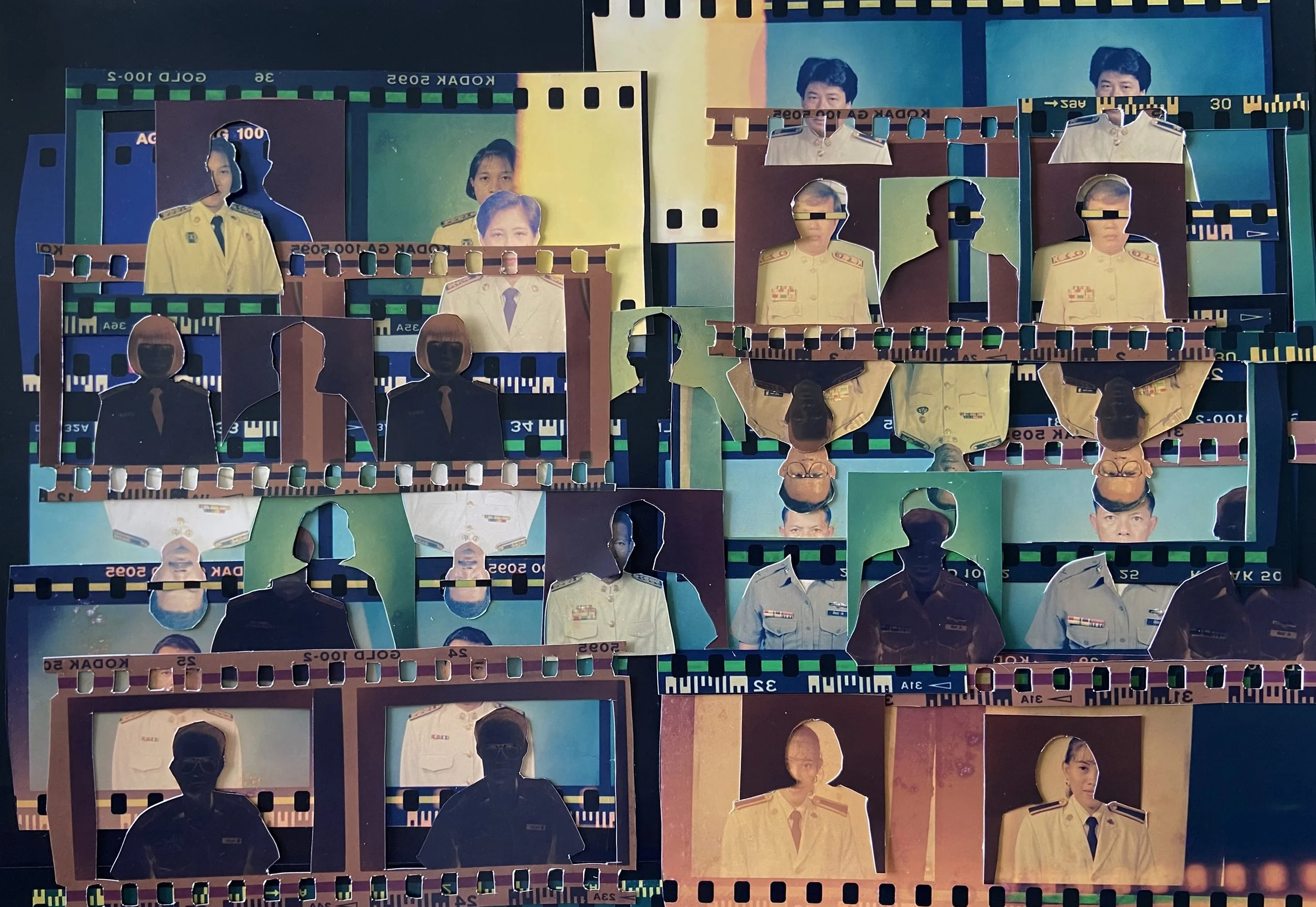
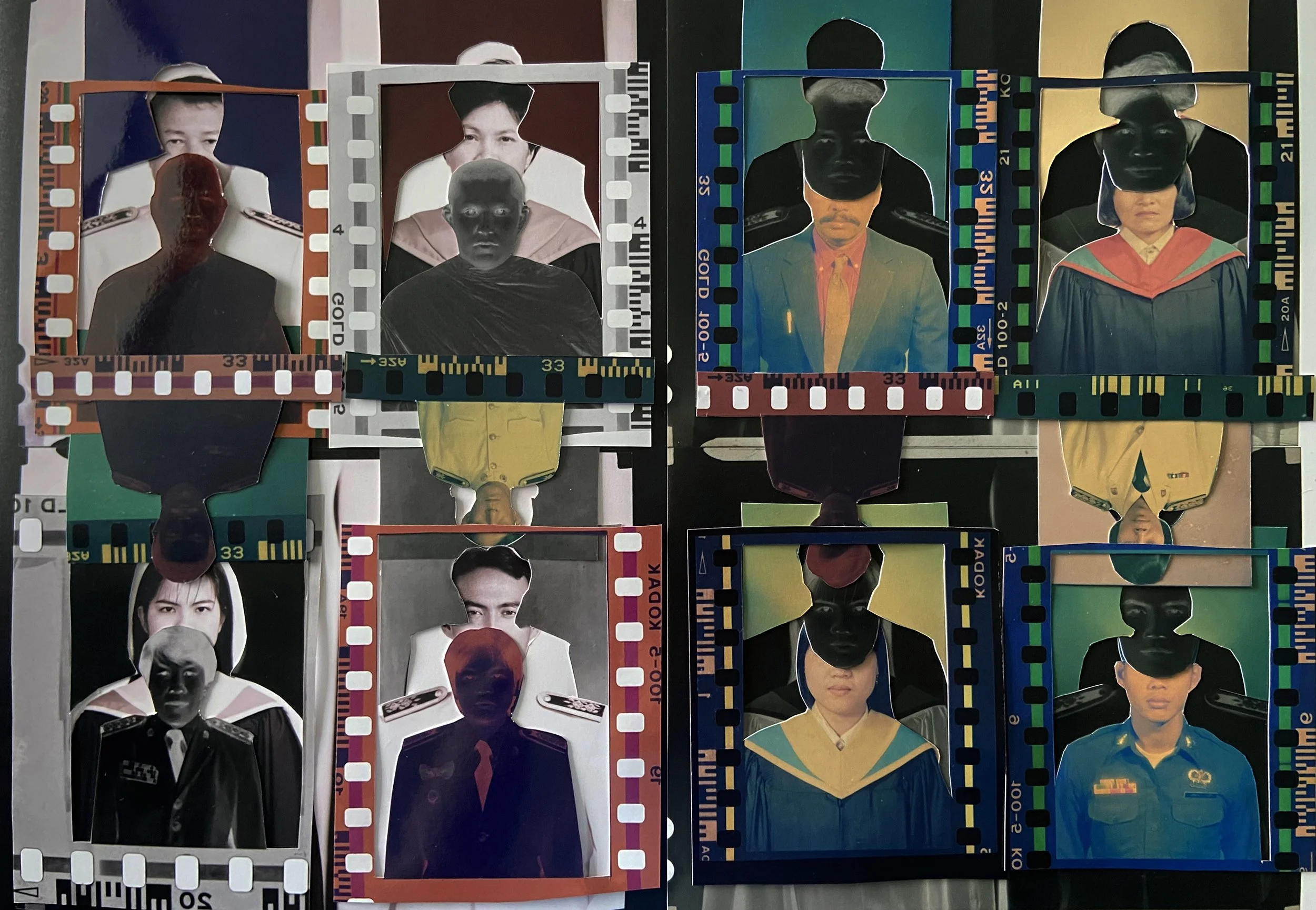
©prapat jiwarangsan
Prapat Jiwarangsan
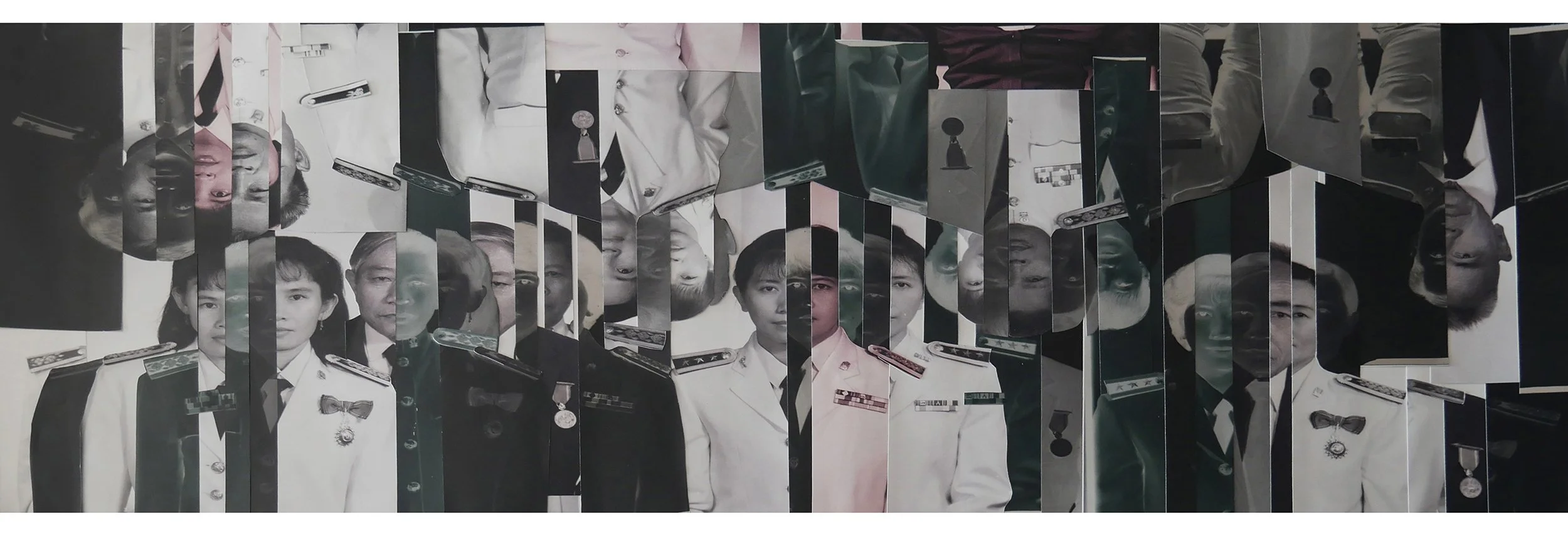
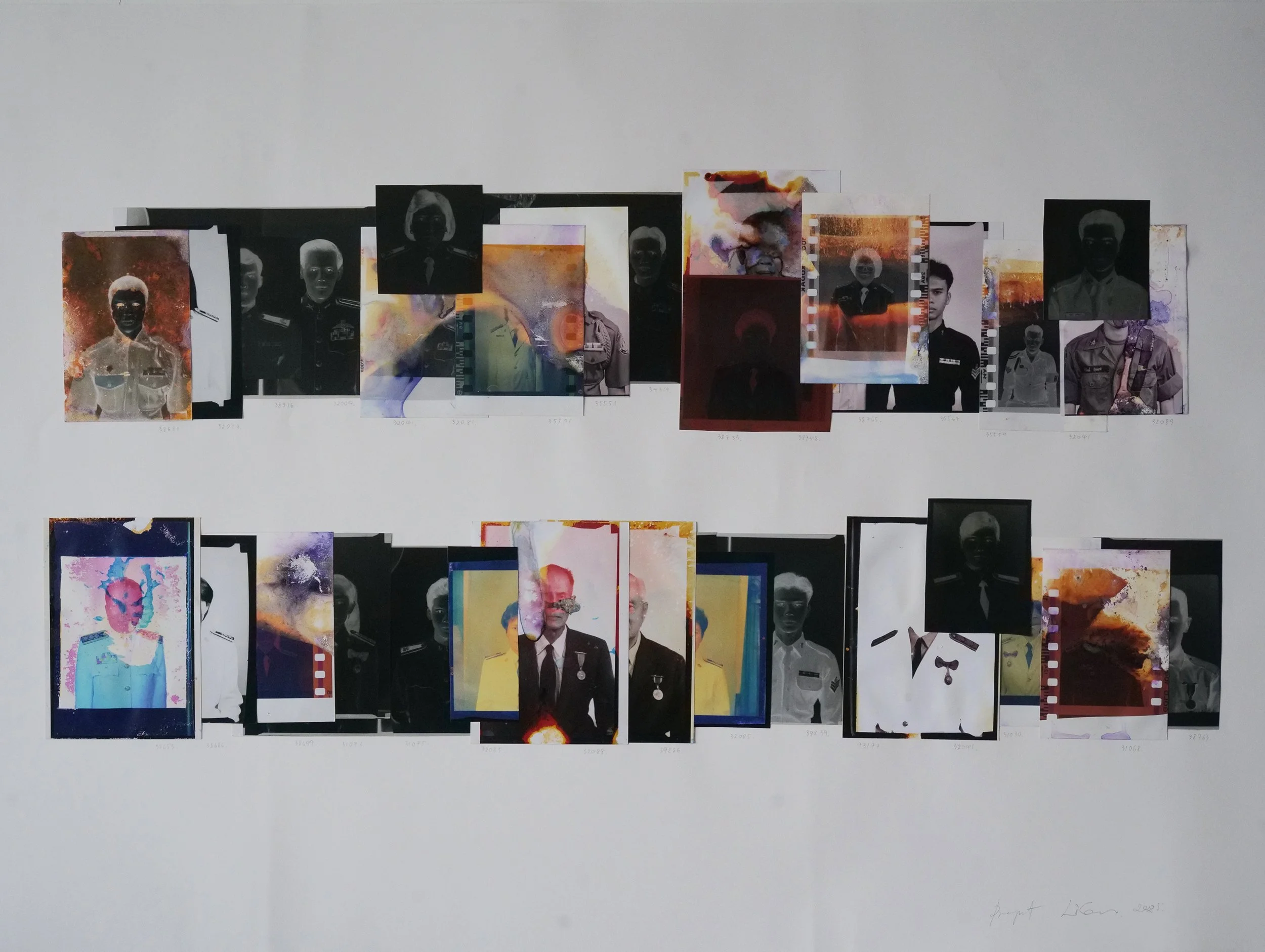
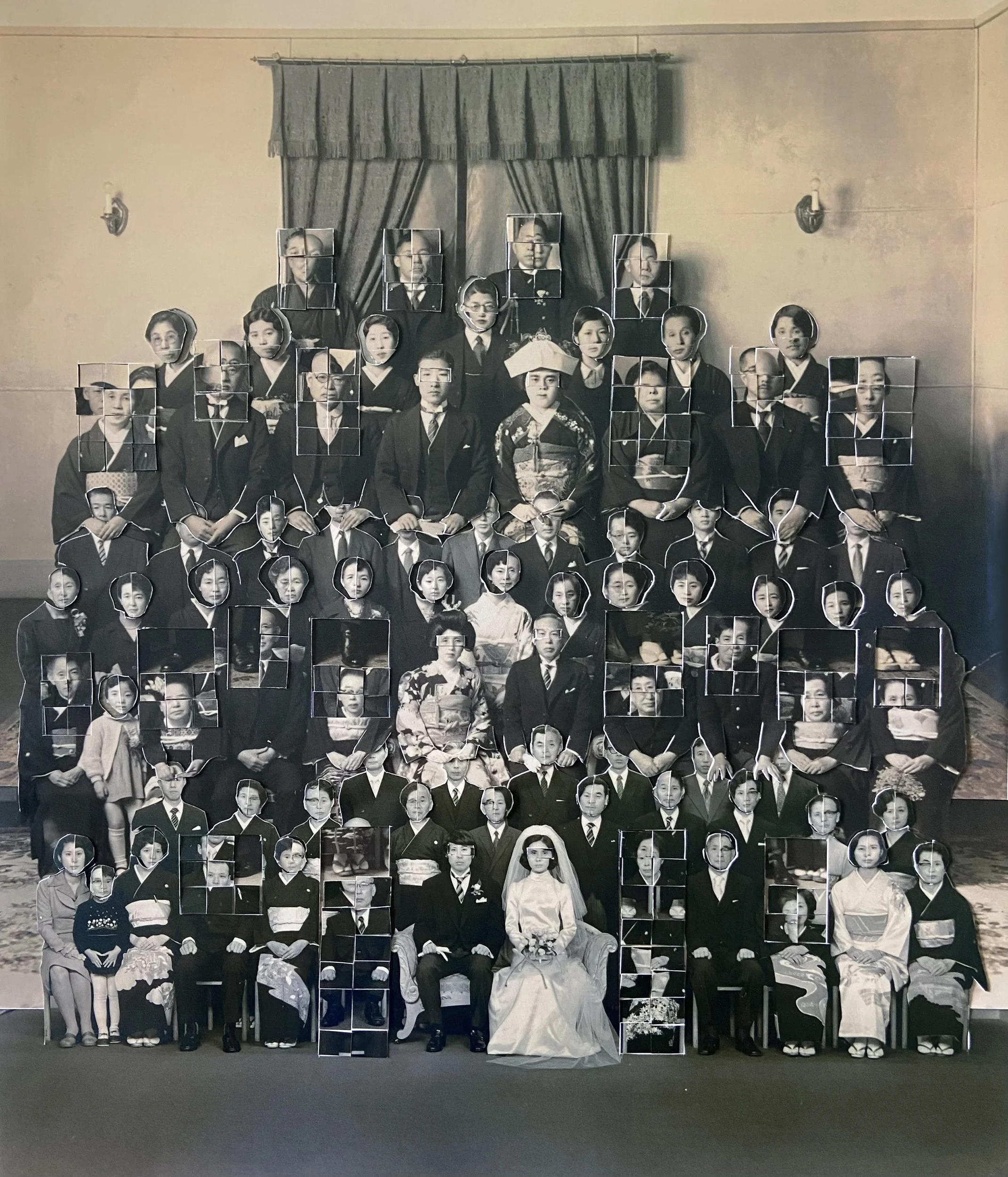
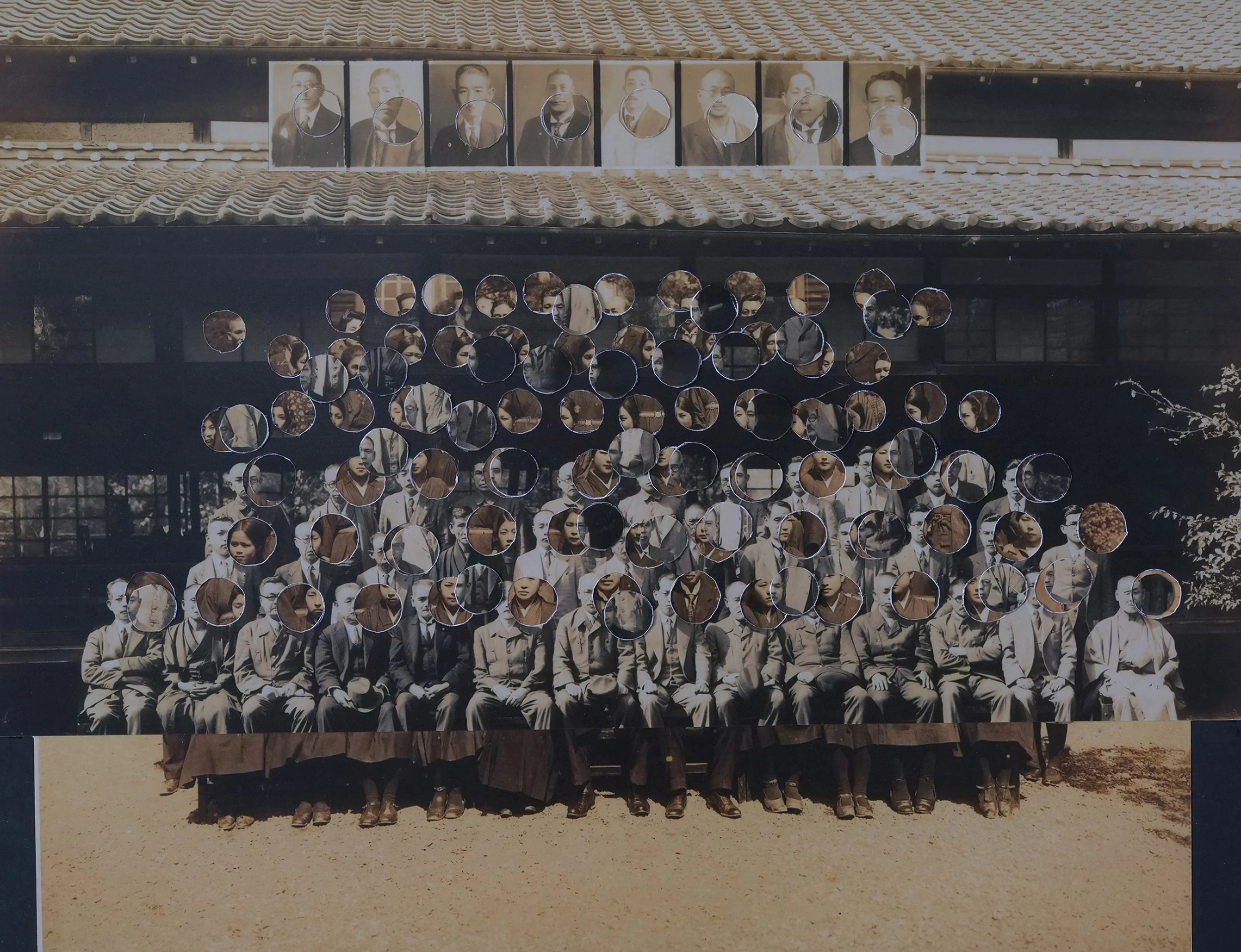
A permeable membrane, identity shifts and morphs to the culture and contexts itʼs nurtured by. In his photographic collage series Portrait of a Siamese Family and Portrait of an Asian Family, Prapat Jiwarangsan highlights the capability of historic portraiture in shaping our notions of social status, wealth and power. Photographs from the Thai Student Alumni Association in England from 1890-1950, and negative films from an out of business darkroom are the starting points for Jiwarangsanʼs distorted portraits.
Traditionally in these types of family or royal portraits, nobles and aristocrats sit, while the commoners kneel and squat, and emblems or insignia are a nod to military ranks. Through his collages, Jiwarangsan creates an alternate social portrait where symbols of power and status no longer serve. By melting faces, corroding surfaces and carving out bust silhouettes, Jiwarangsan blends and blurs the boundaries of memory, time and hierarchy. By reframing perceived degrees of power, Jiwarangsan forges a new shared memory to last across generations and by unearthing family and business archives, he questions the validity of historical records and how they can propagate biased notions of power.
©thato toeba
Thato Toeba
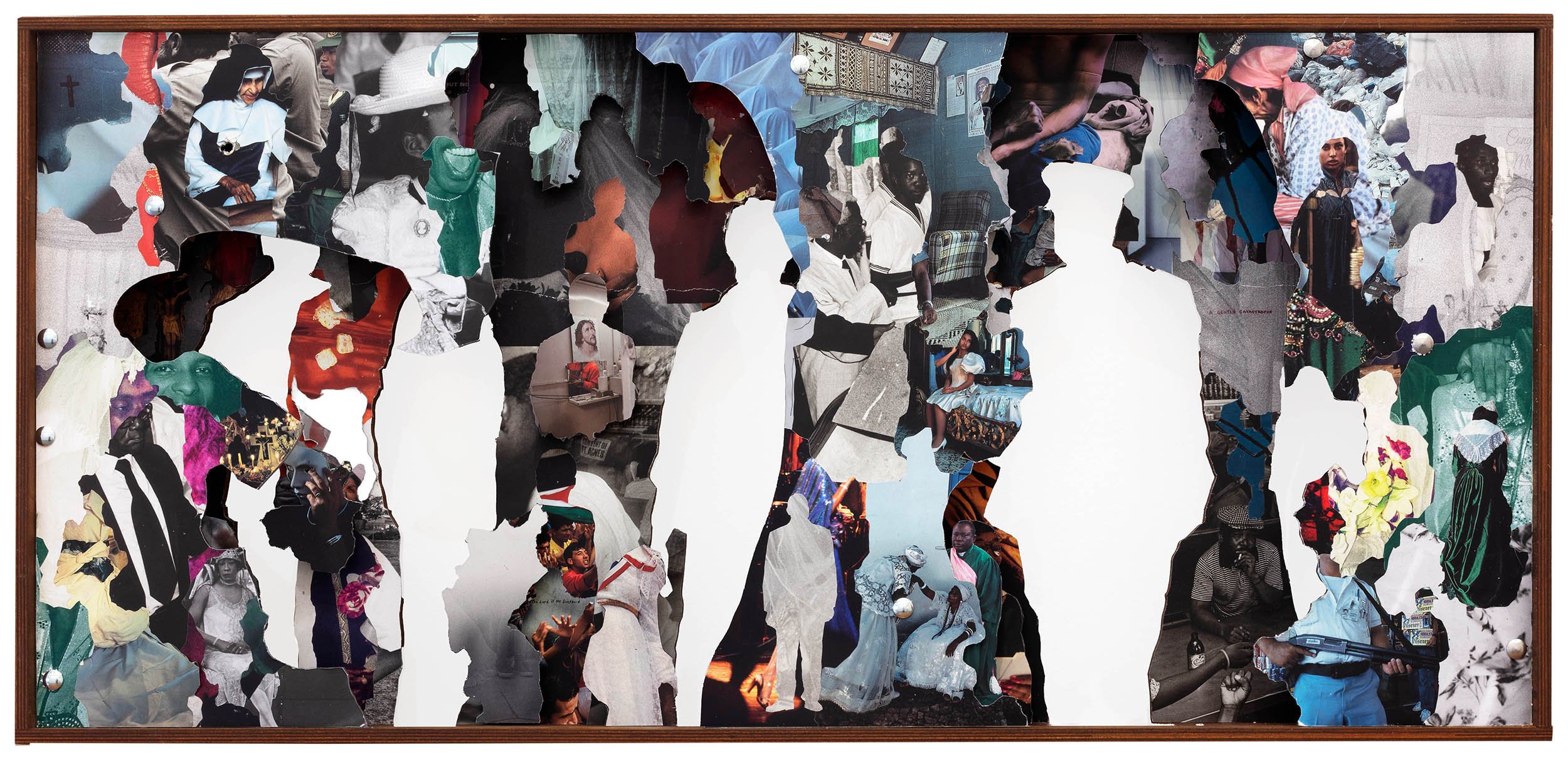
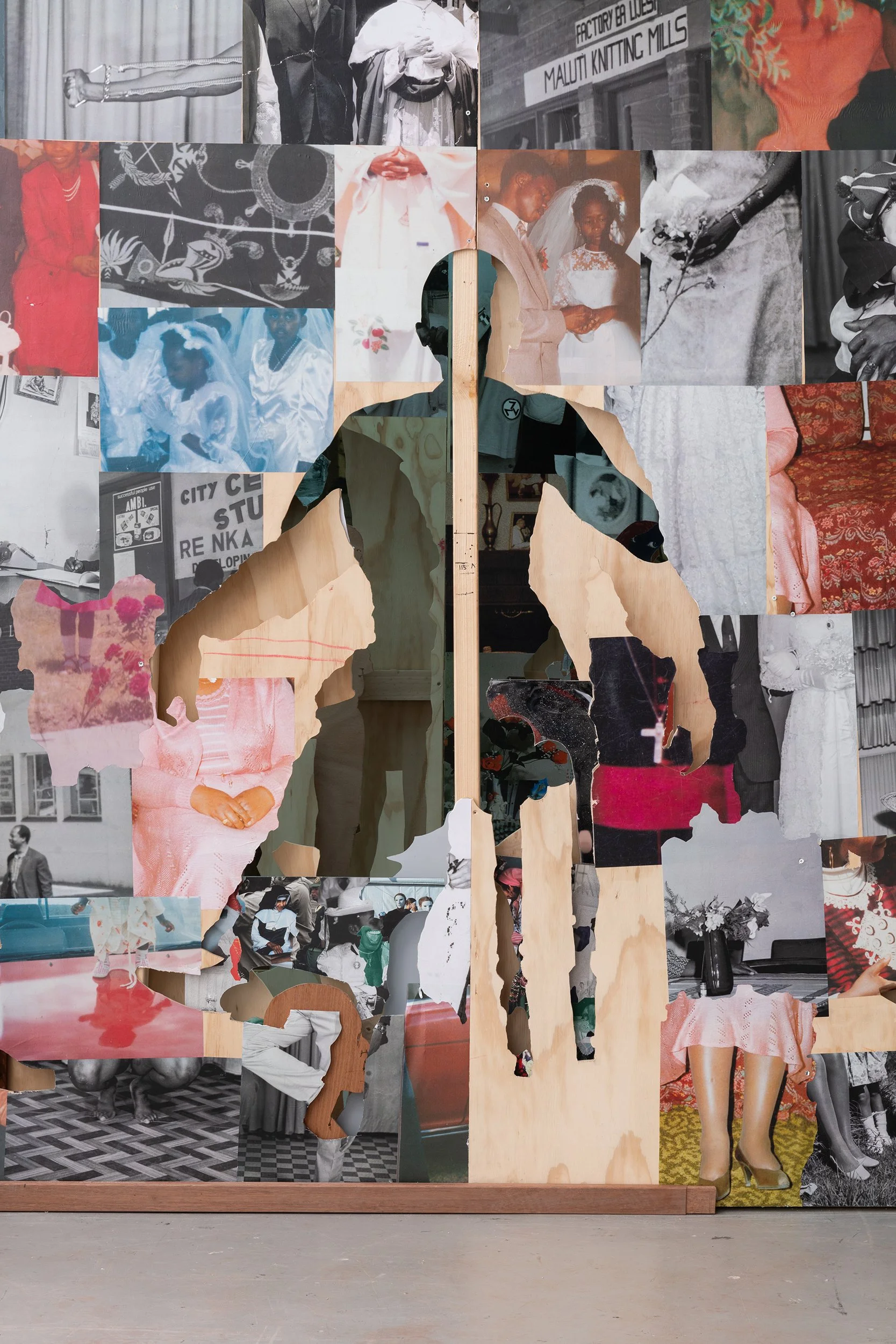
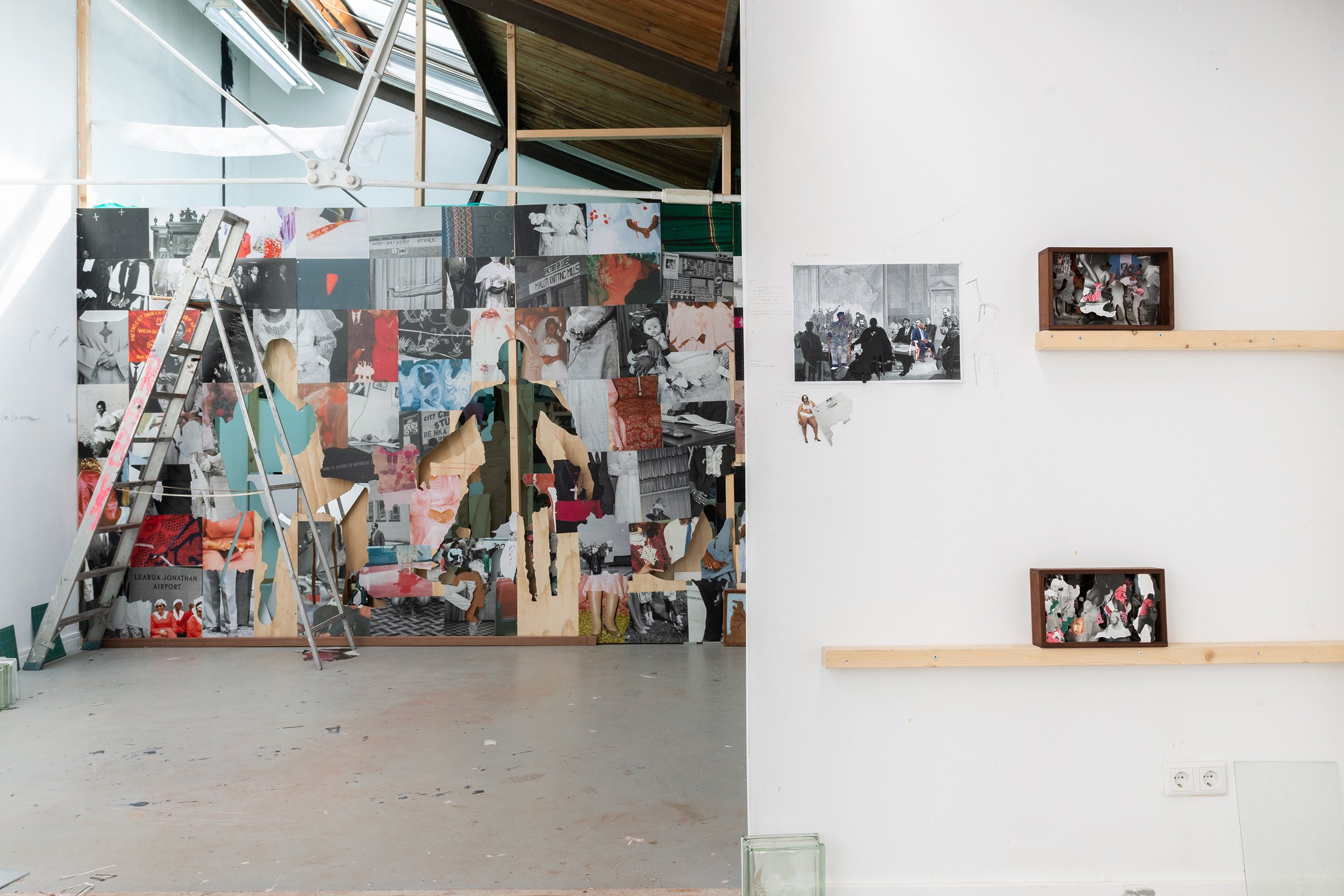
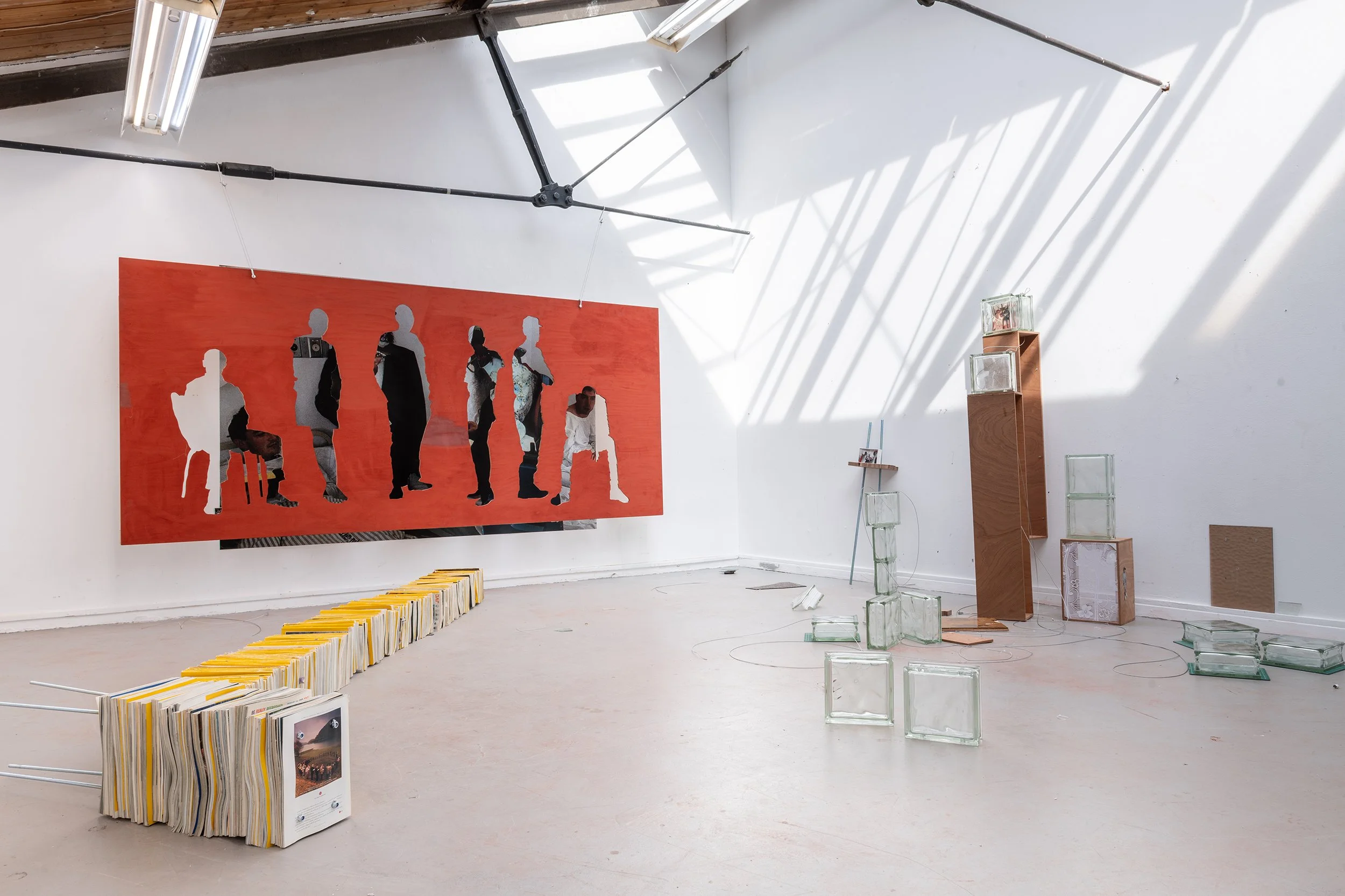
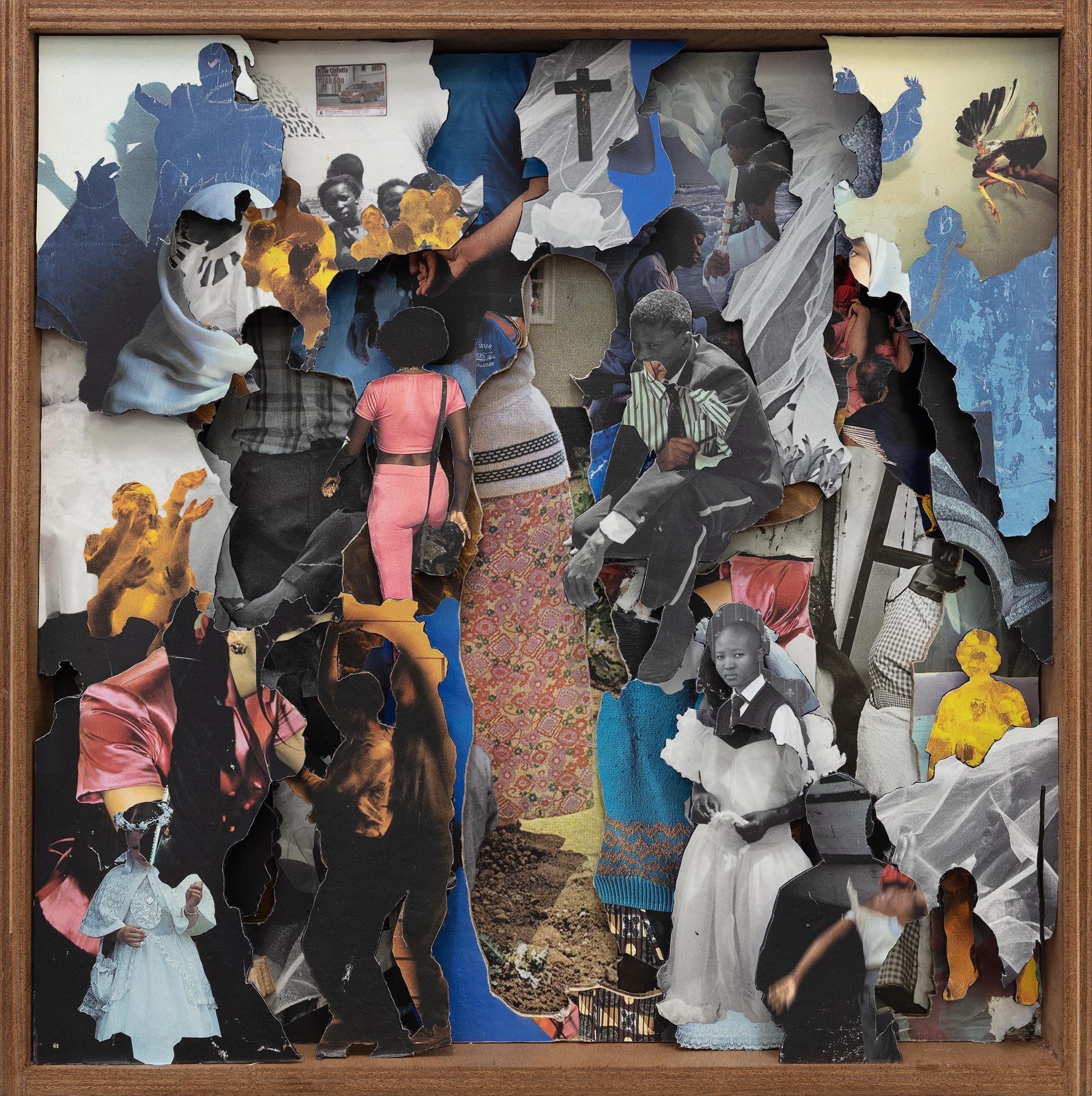
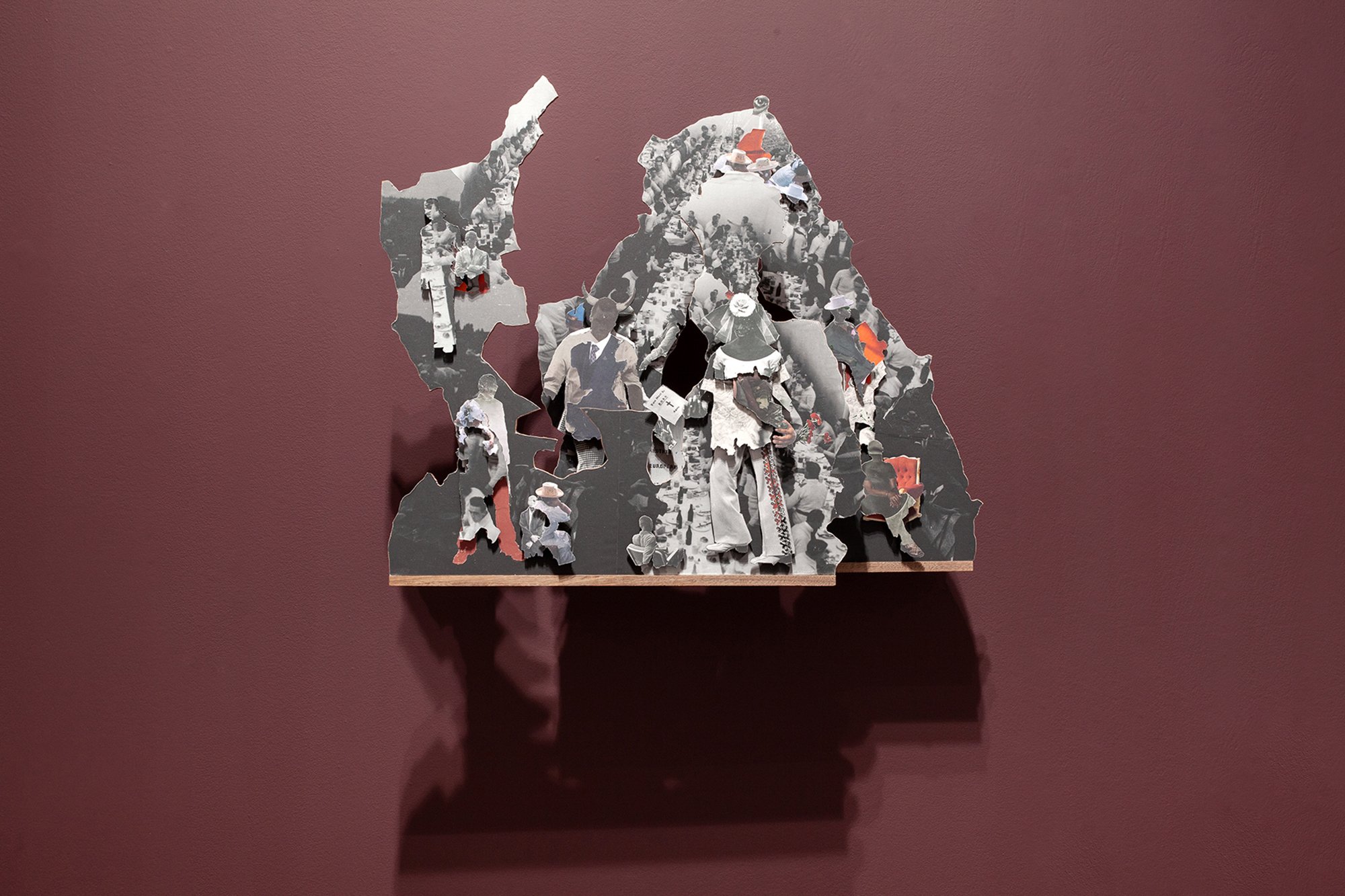
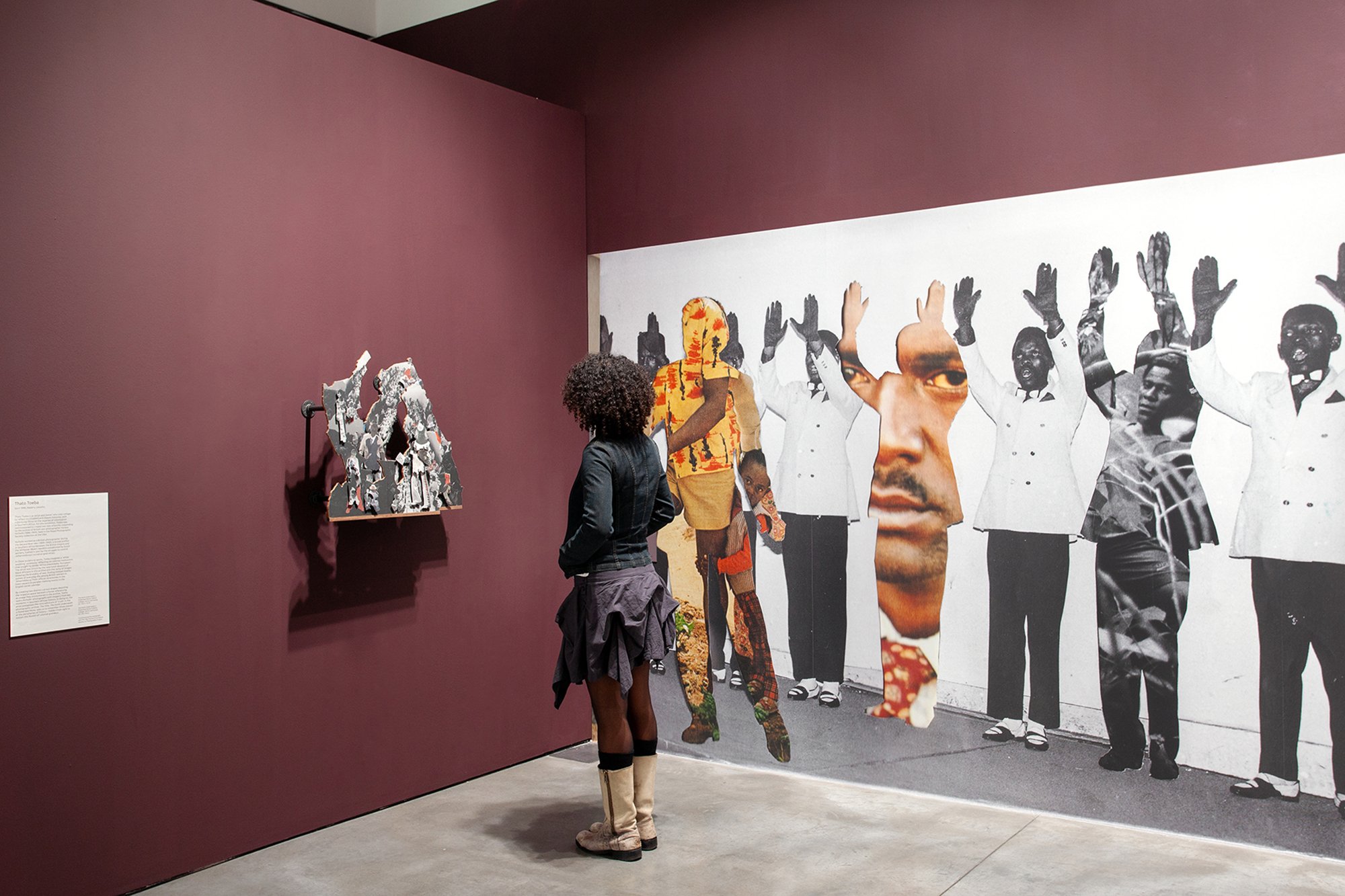
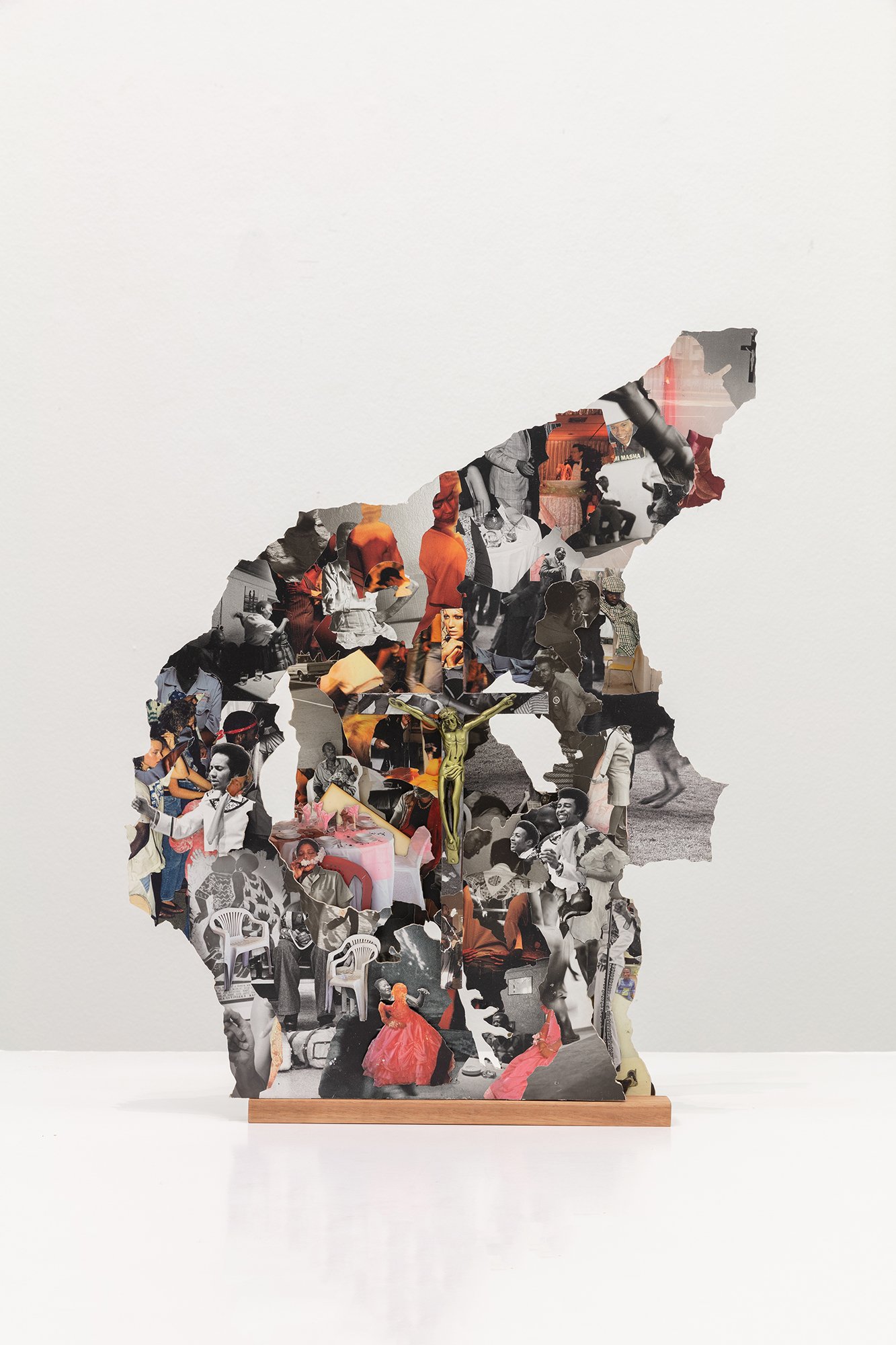
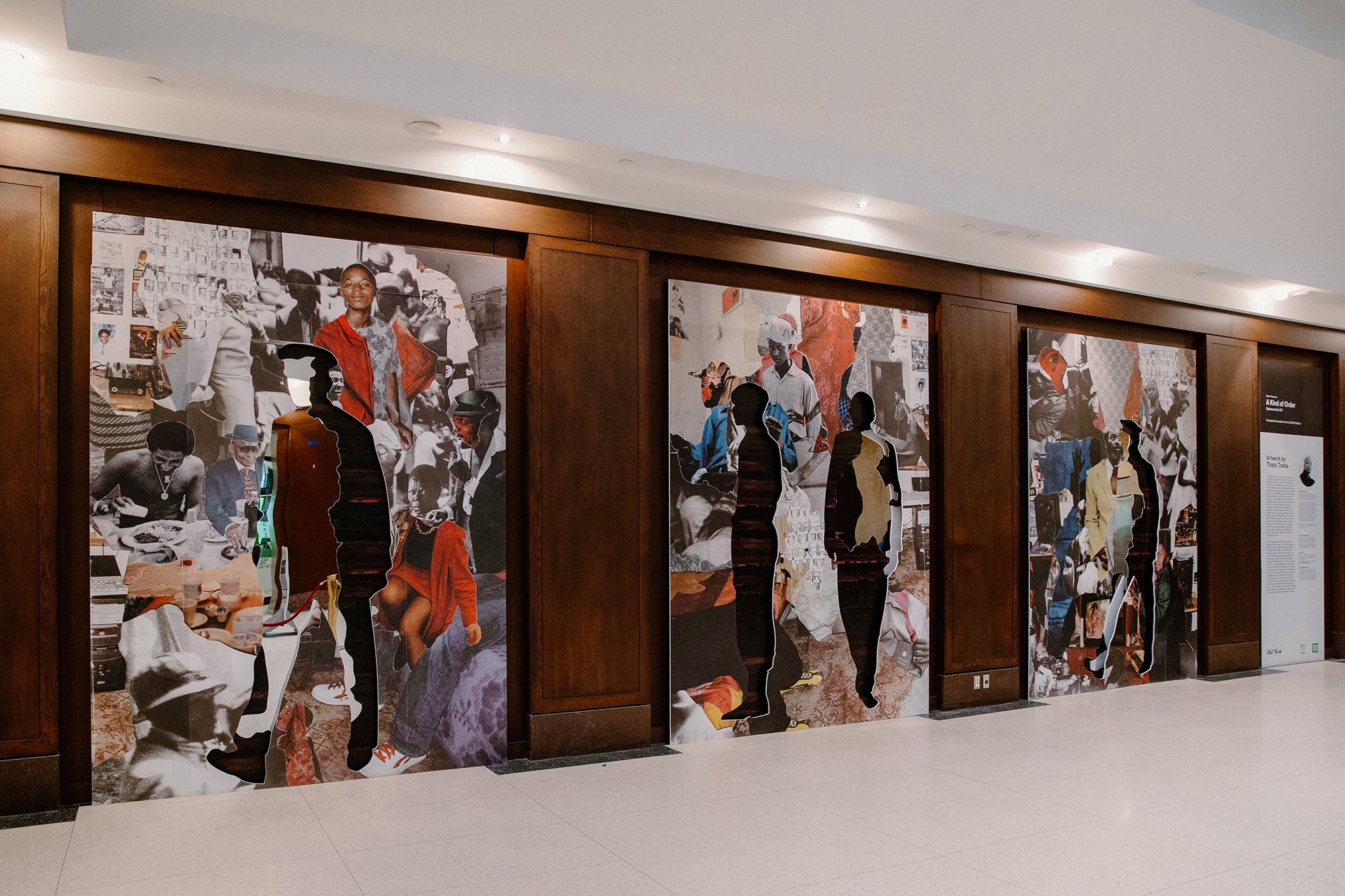
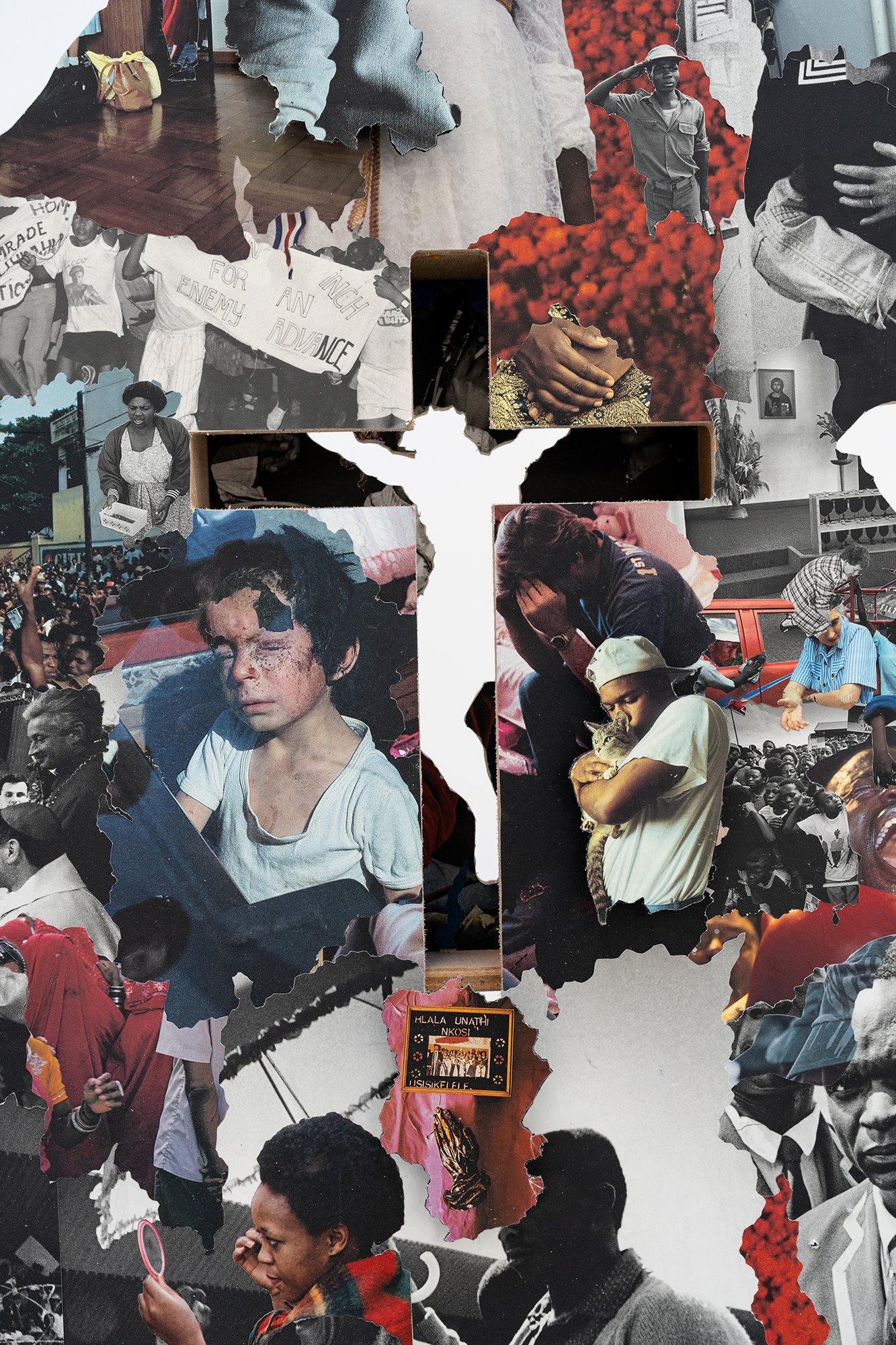
Constructing a new collective and cultural remembrance requires the deduction of outdated narratives. One must clear the cache for new memories to fit. But erasing colonialism, oppression, racism and discrimination isnʼt as easy as doing a right-click and emptying the trash. The resulting trauma from extreme violence, misrepresentation and ignored perspectives cannot be told linearly, and thus cannot be erased as such. As a lawyer, social sciences researcher, and artist, Thato Toebaʼs mission is to challenge the colonialist and censored recount of Africaʼs history. With collage, they aim to bring forth the layered trauma of those who have for centuries been invisible.
Toeba understands law and art not as stagnant unrelated forces, but as symbiotic organisms that shape society, recognizing images as unequivocal political statements. With this rich understanding of power dynamics, they merge images of African culture and celebration, as well as symbols of oppression and resistance, and the striving for a “white idealˮ. By cutting out silhouettes in the foreground - some appear to be figures of authority, others mere bystanders - Toeba builds depth through layers and fragmentation. For Toeba, their practice is not only about uncovering a lost history, but also a way to talk about the issues that plague us today. By making connections between past and present histories, many artists today are better able to understand their backgrounds and identities as agents of change, instigating conversations that challenge the status quo.
©giana de dier
Giana De Dier
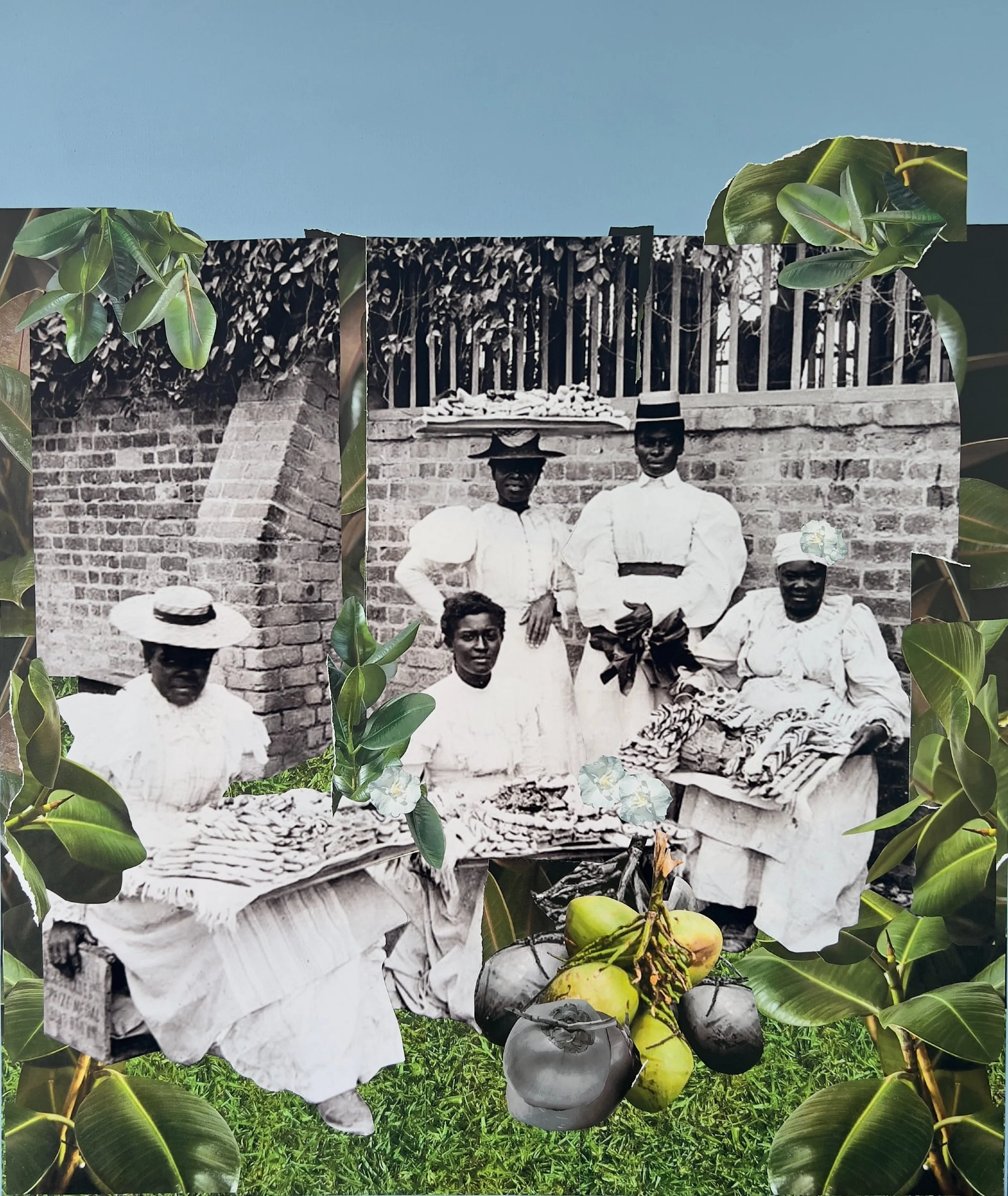
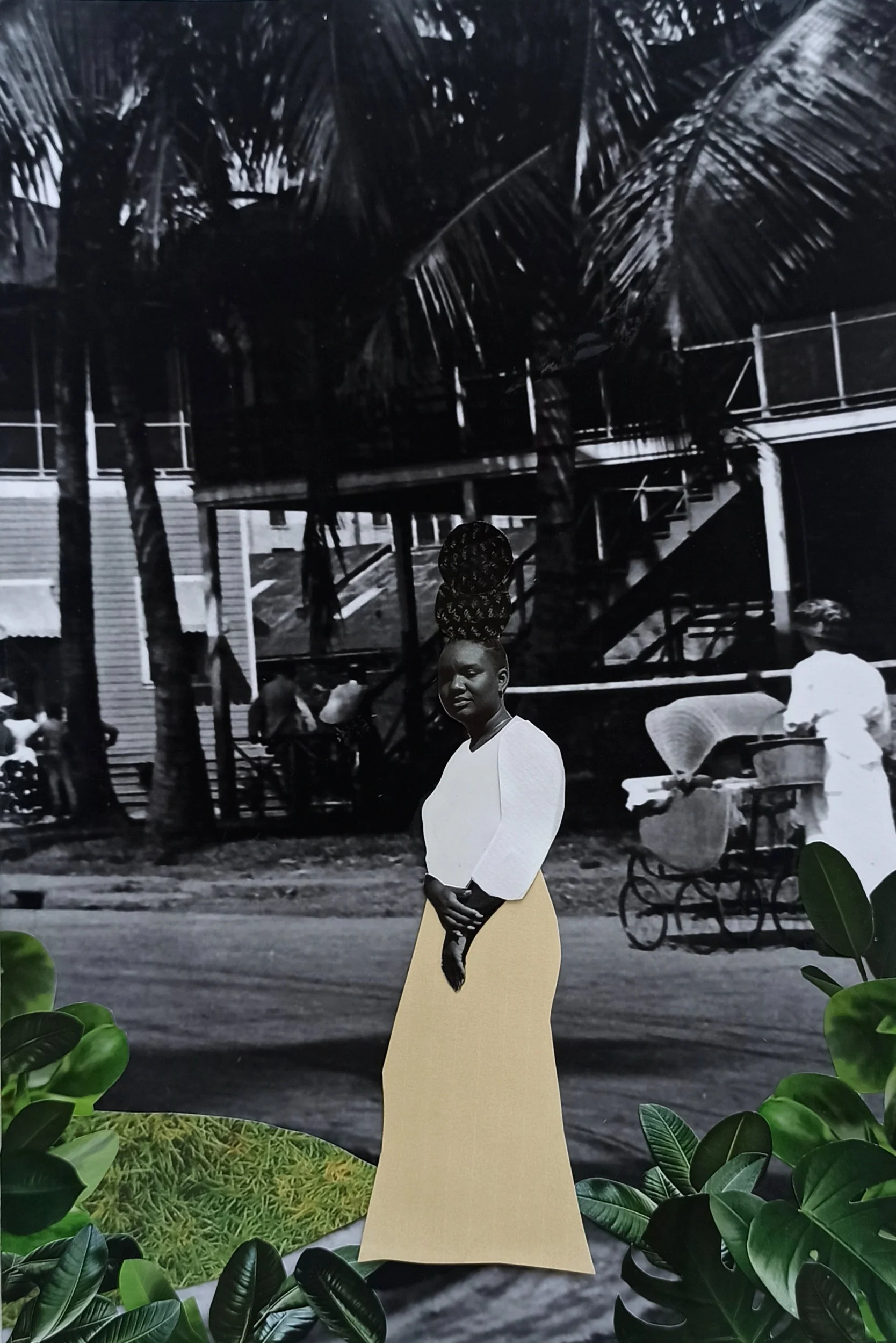
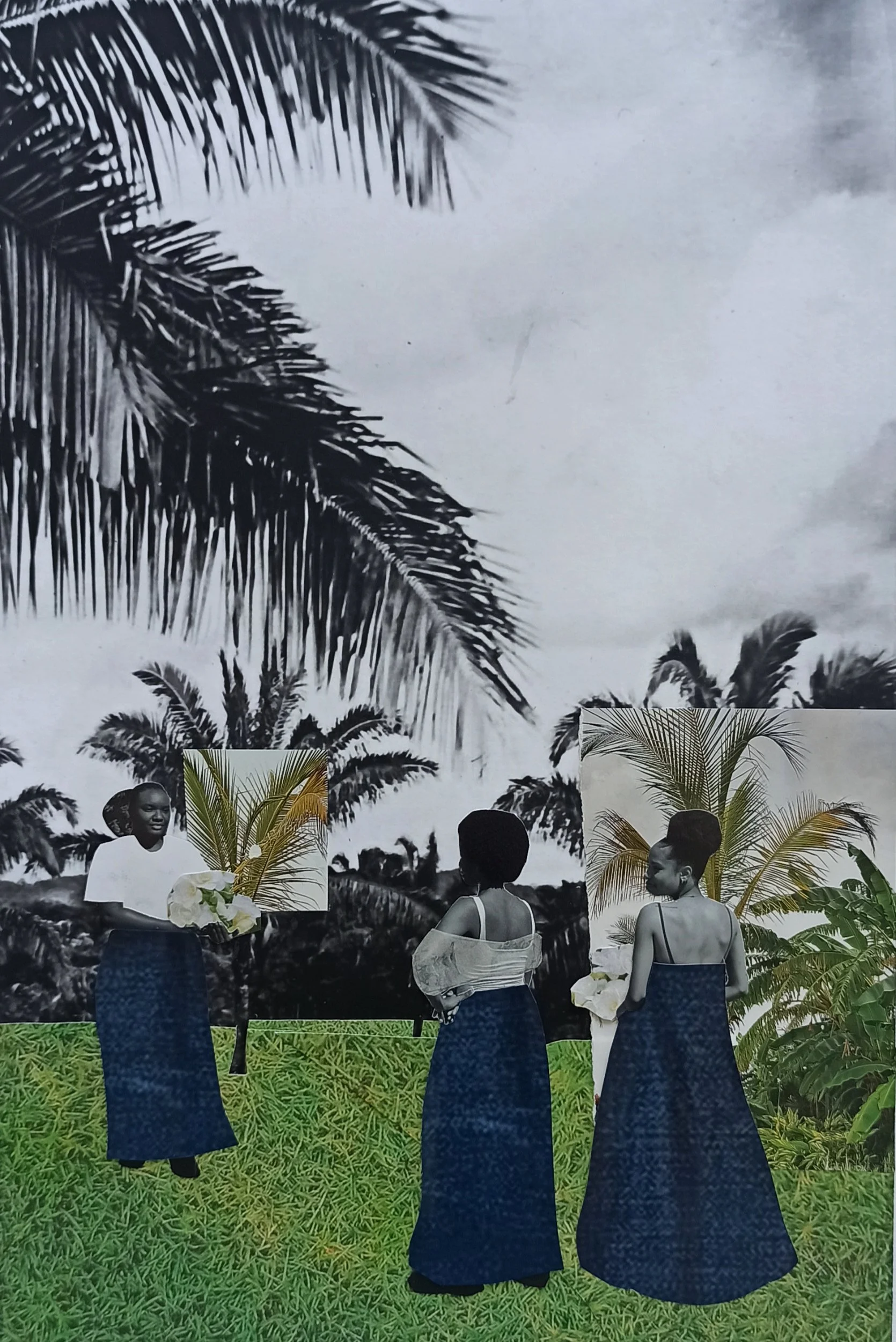
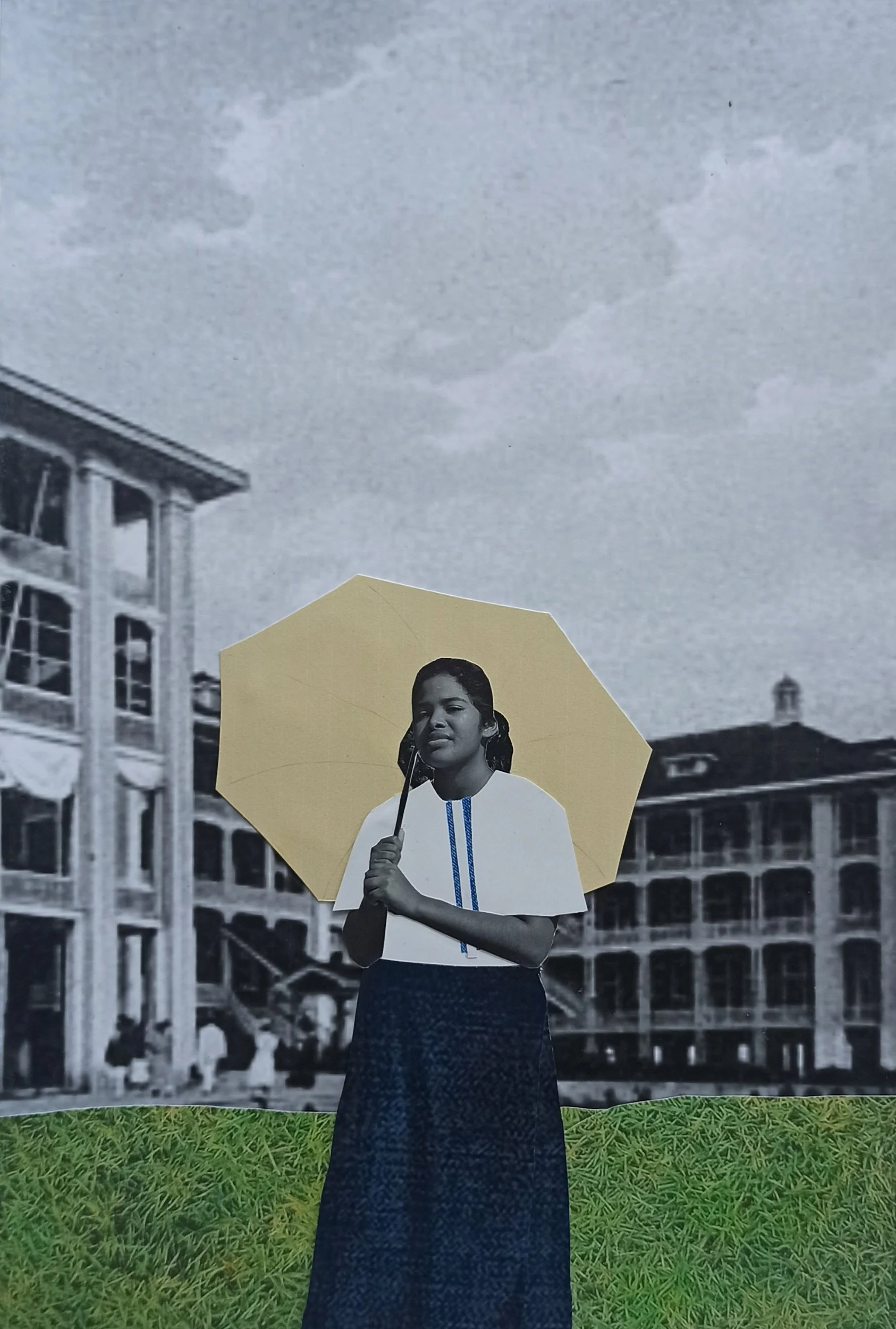
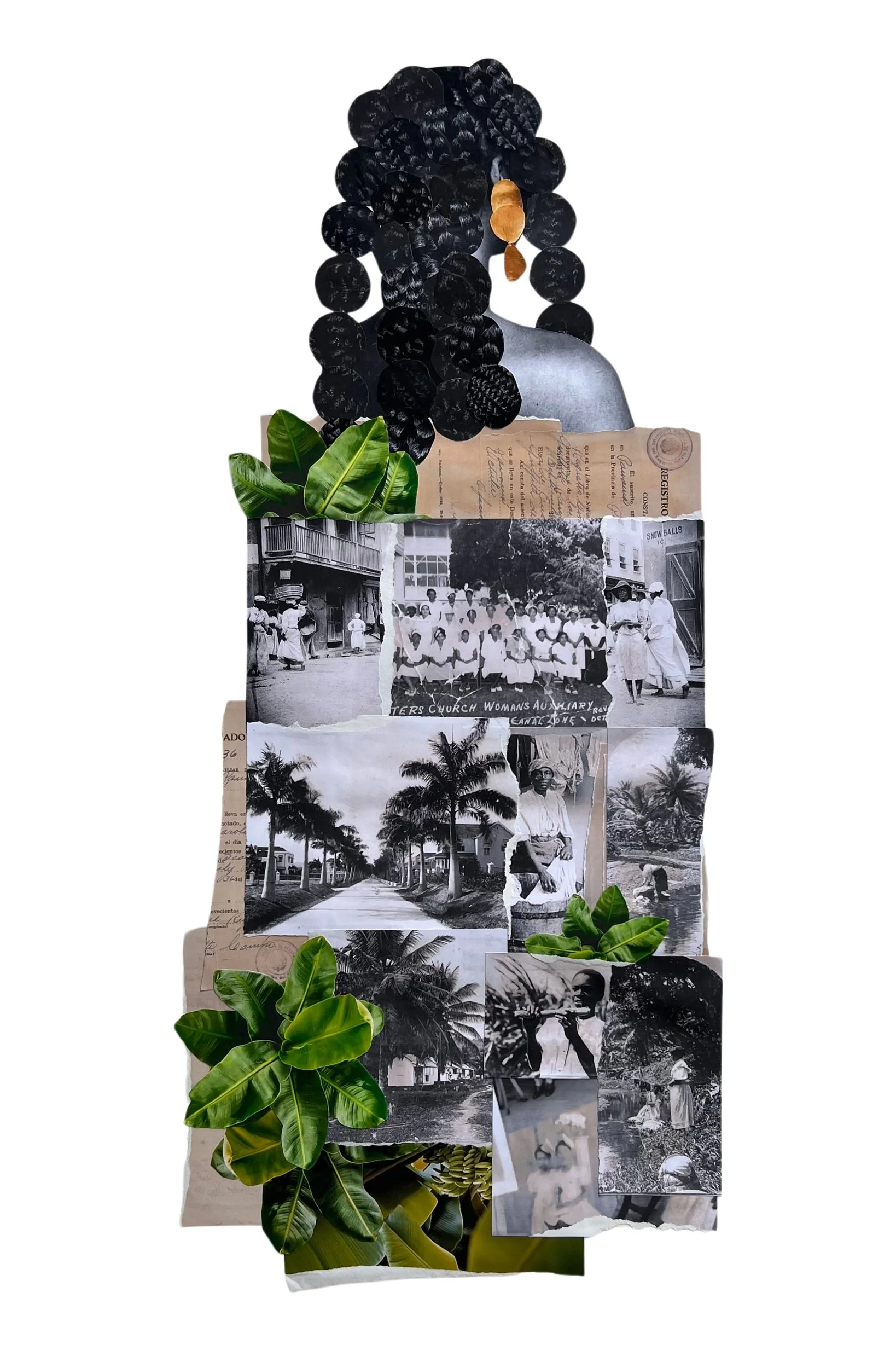
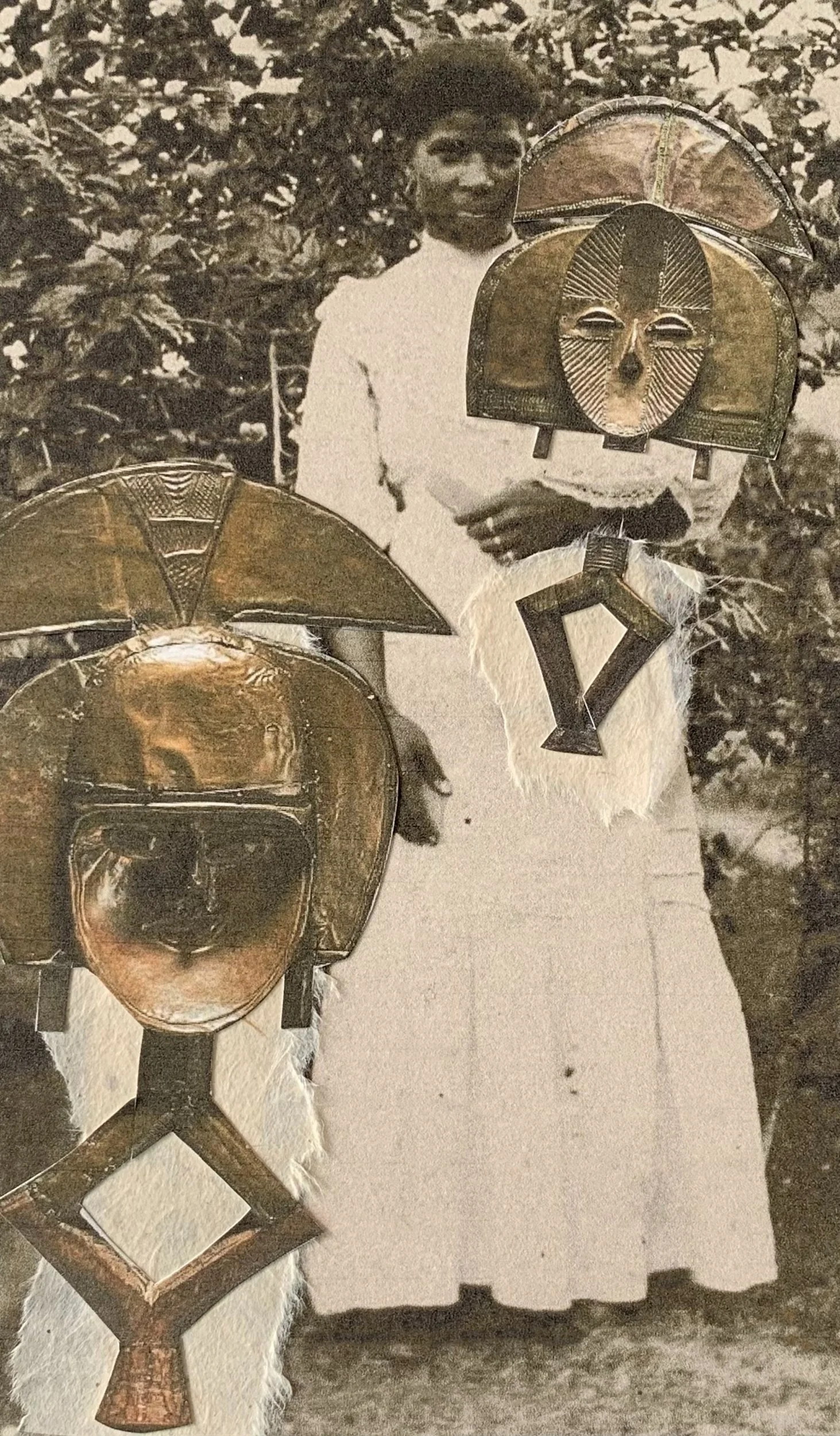
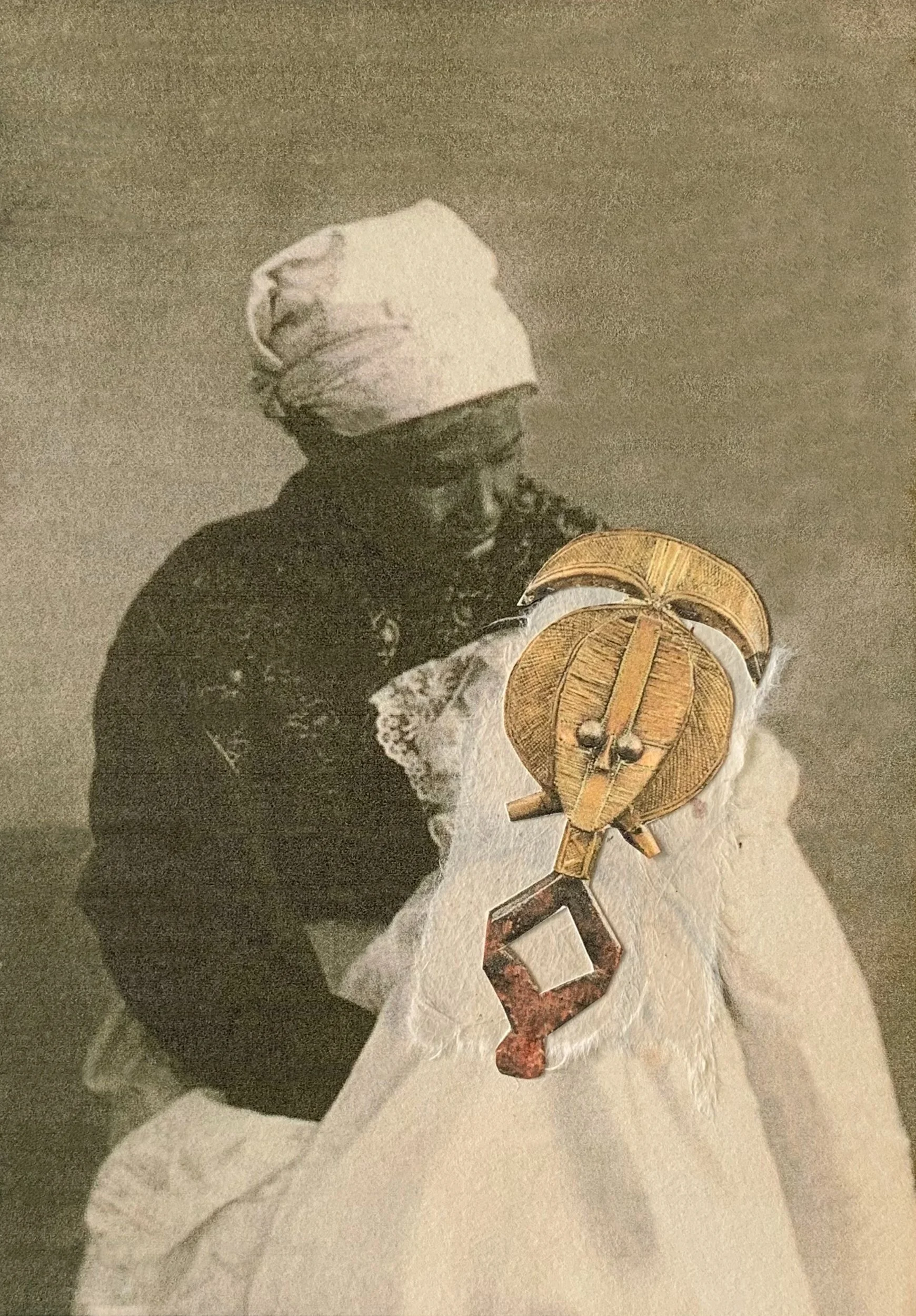
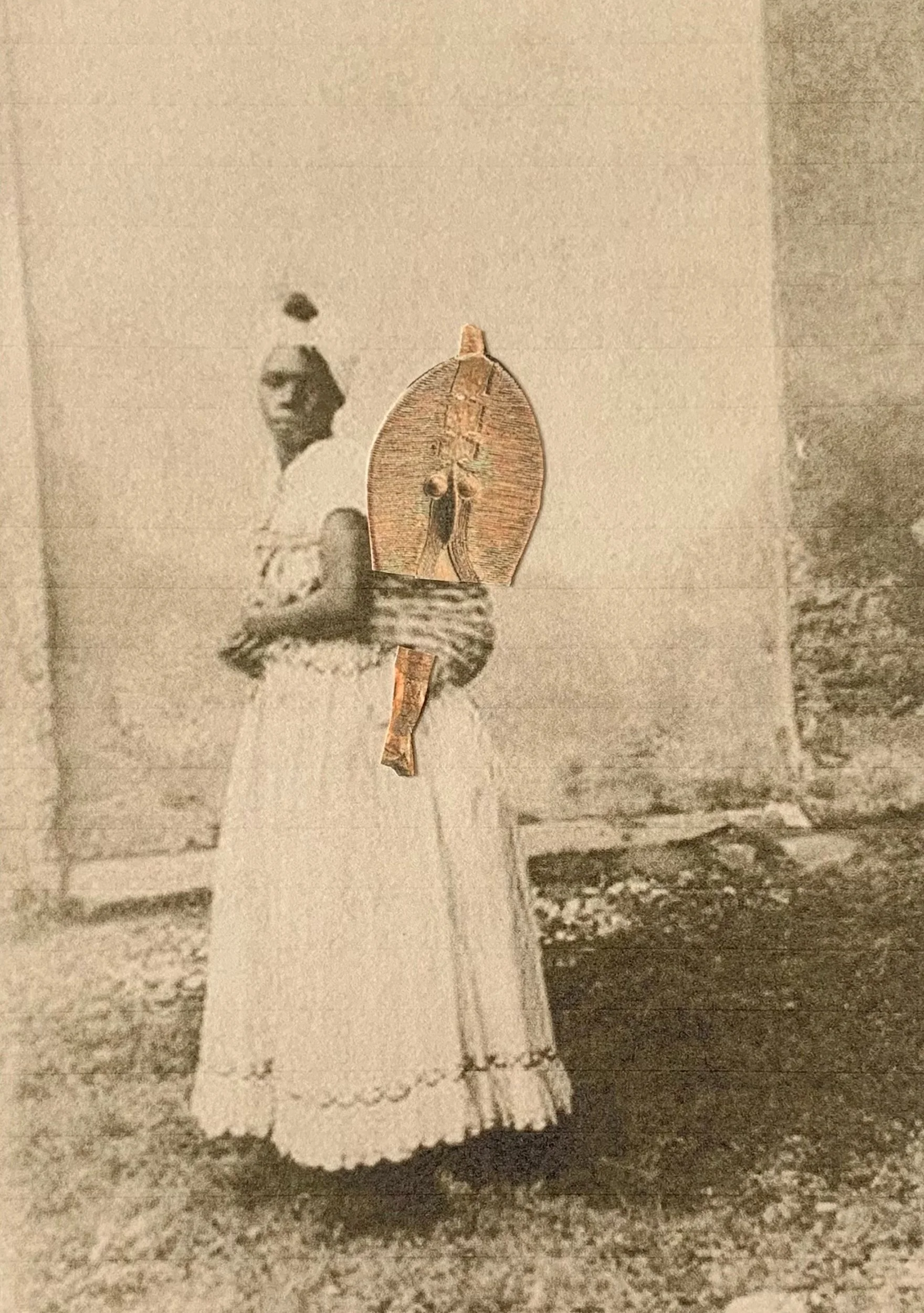
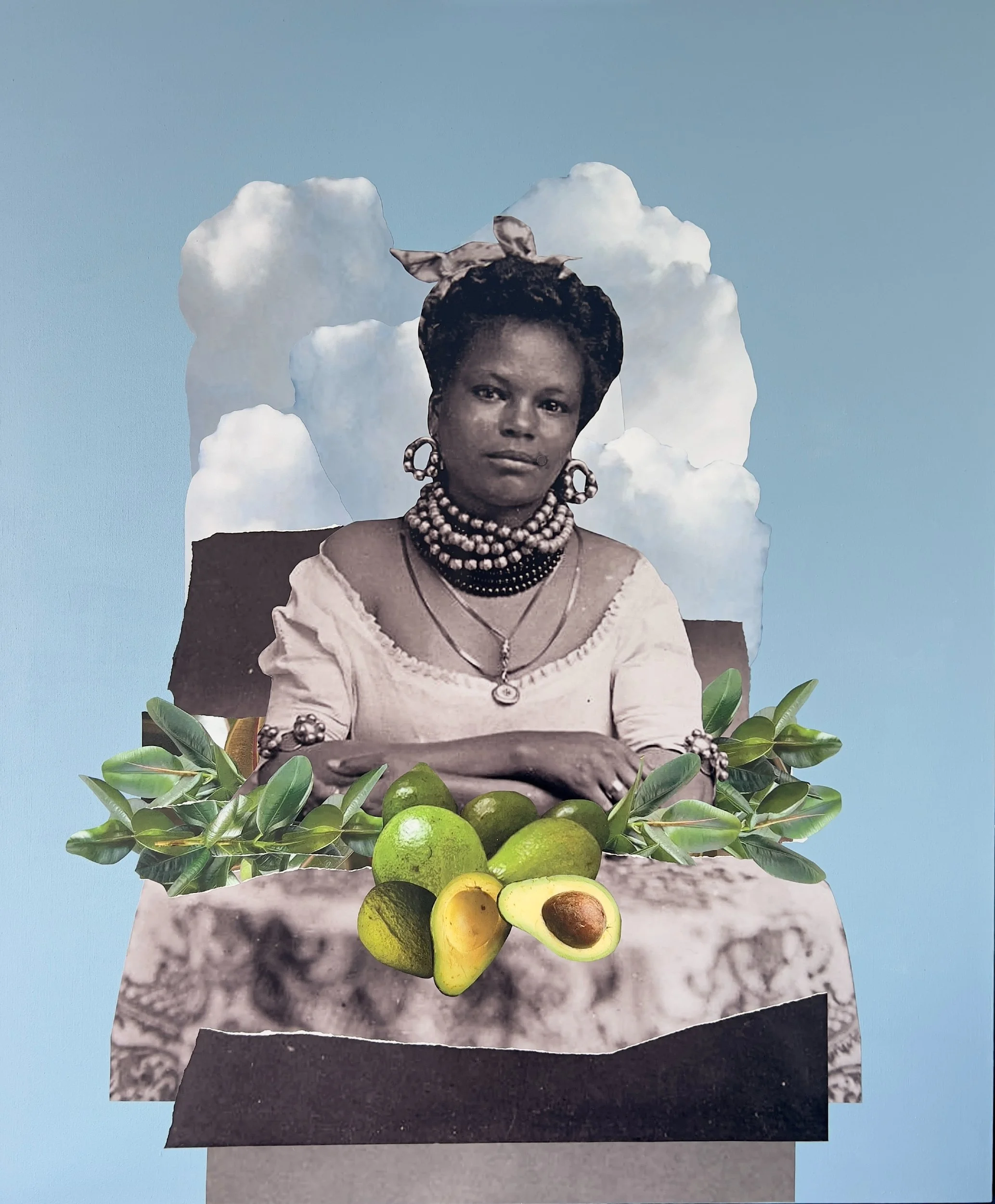
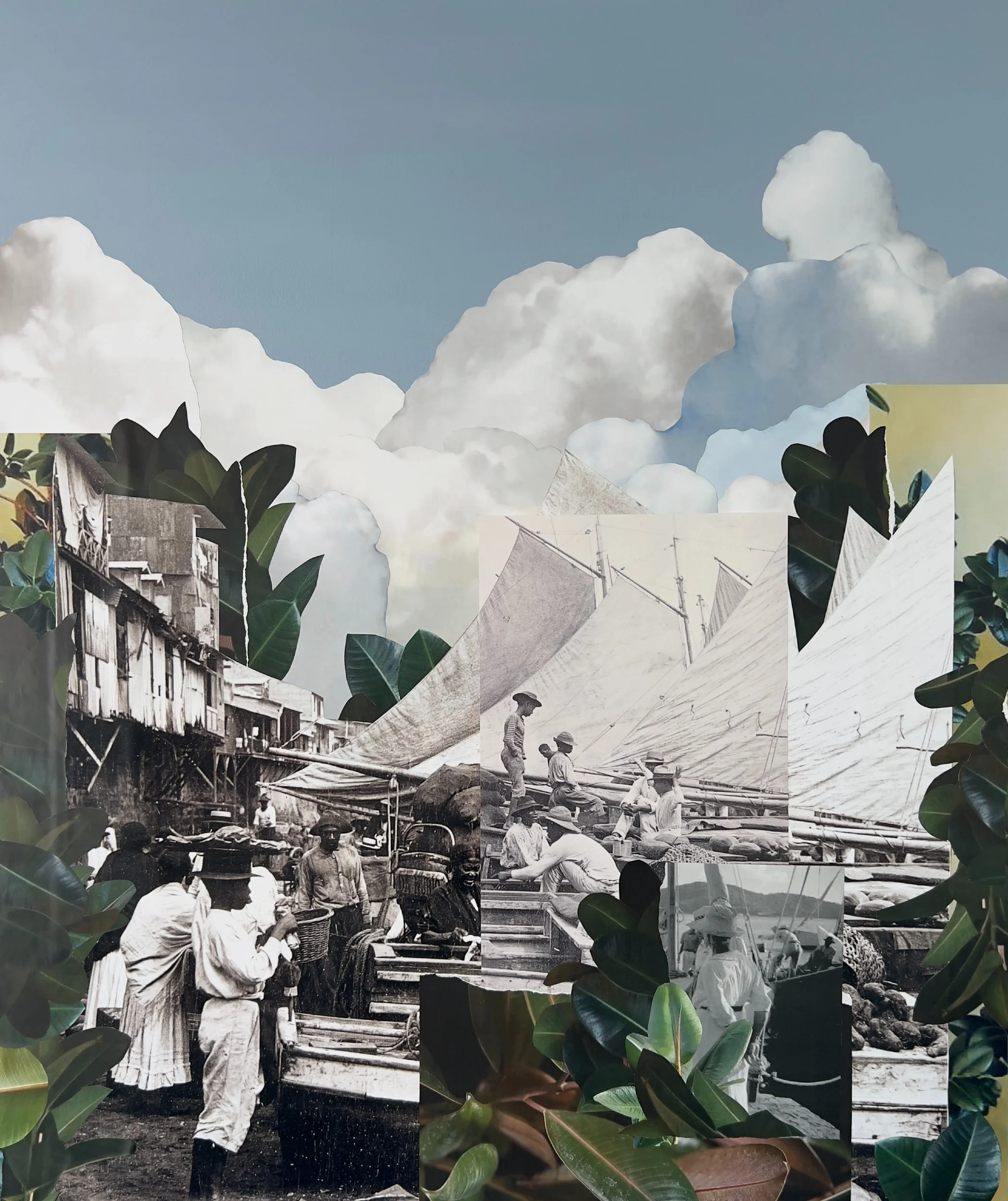
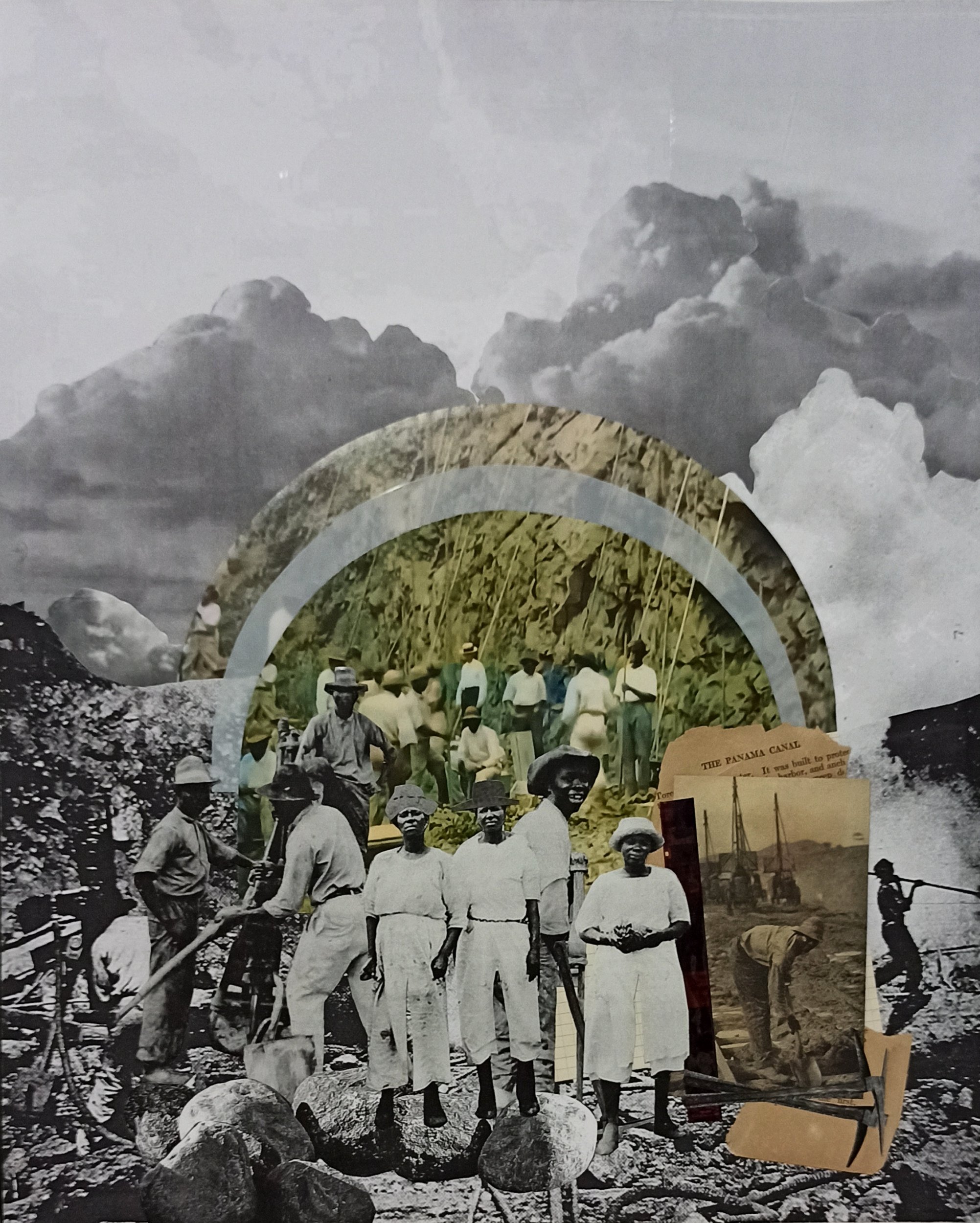
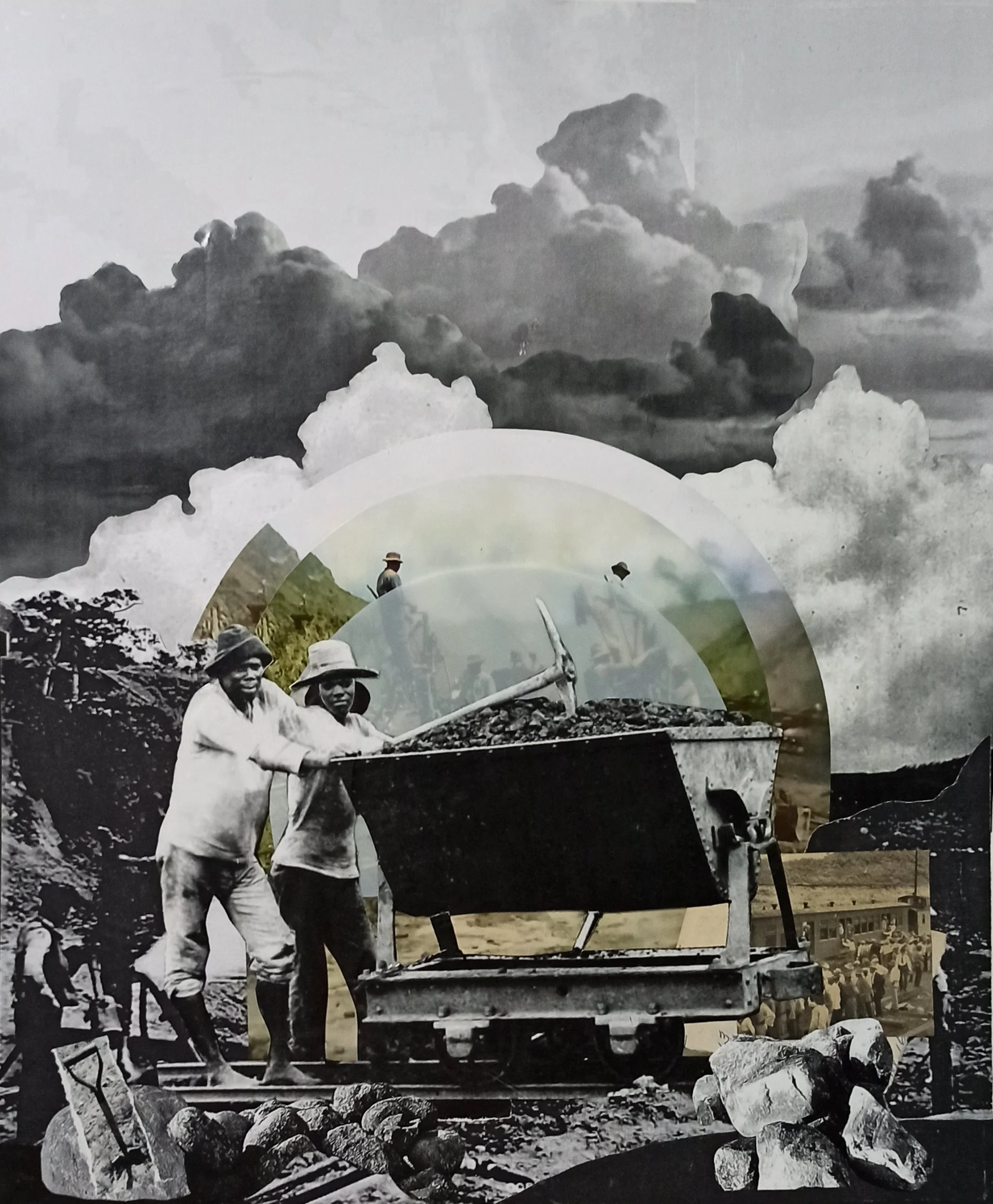
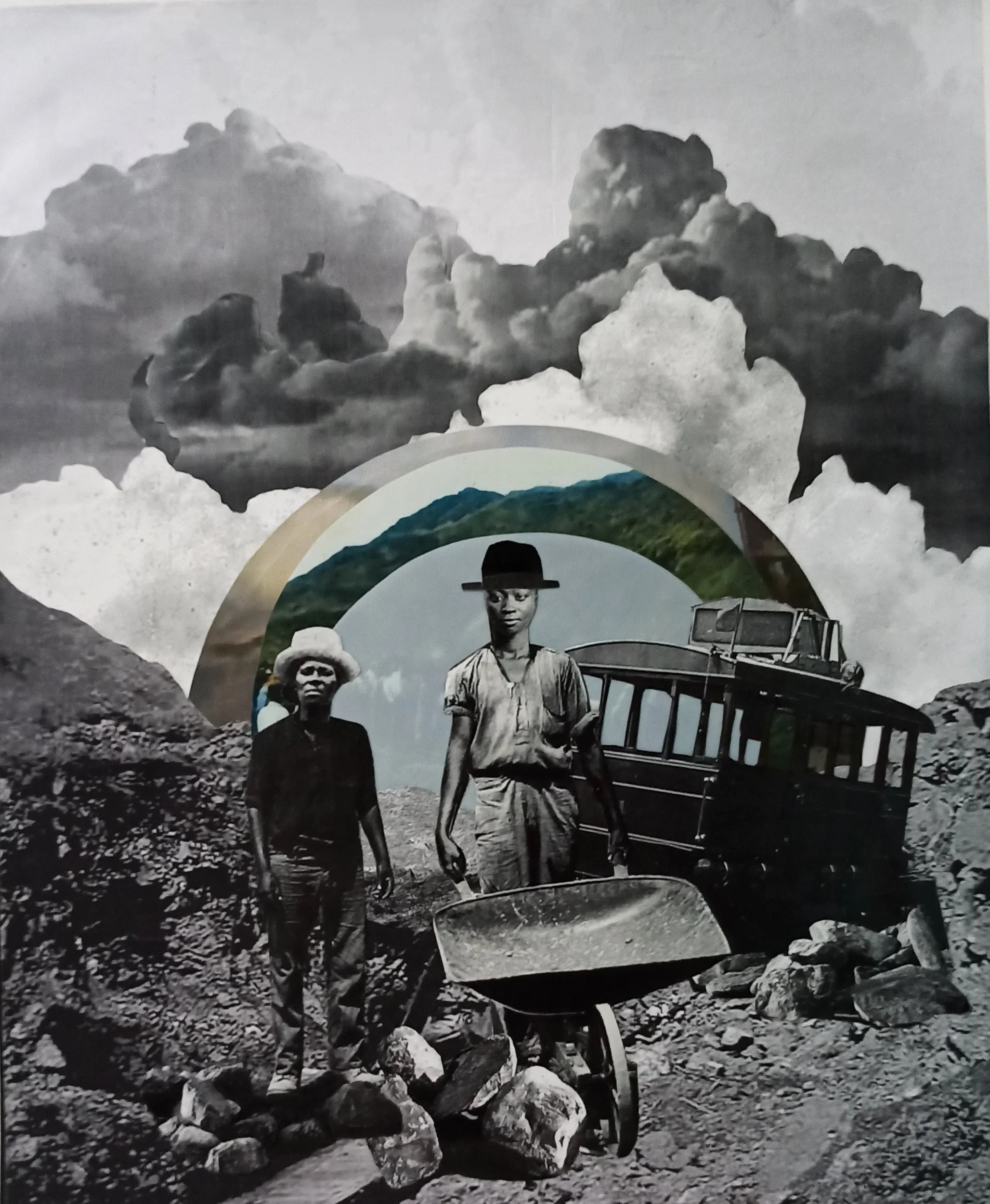
Through paper and fabric, Giana De Dier layers her personal and familiar memory to explore threads of migration, representation, and identity in the image archives of the Panama Canal. Much like Toeba, De Dier is an advocate for the lost and misrepresented legacies throughout history, focusing on those of the Afro-Caribbean women who migrated during the construction of the Canal. In her four-collage series titled What we choose not to see, De Dier aims to shed light onto the overlooked part of the history of the Panama Canal. Pictured in the collages are women workers who, disguised as men, infiltrated the work force as coal sifters to provide for their families. The rich clouds in the background serve as a reminder of these women’s resourcefulness and ability to dream of a better future, while the colorful arcs–in contrast with the grey palettes of archival images–– create portals that go into the past and give space for meaningful reflections in the present.
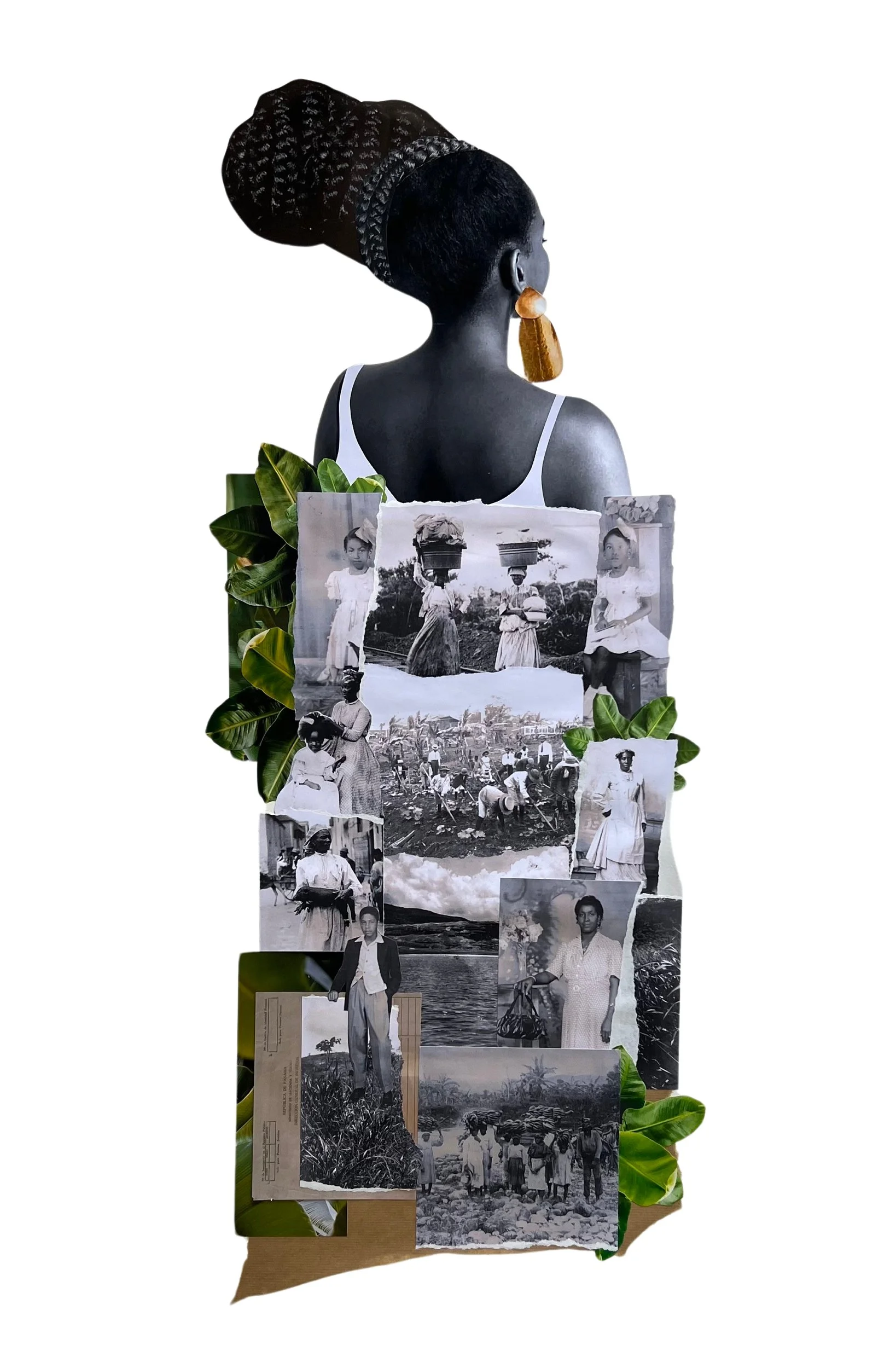
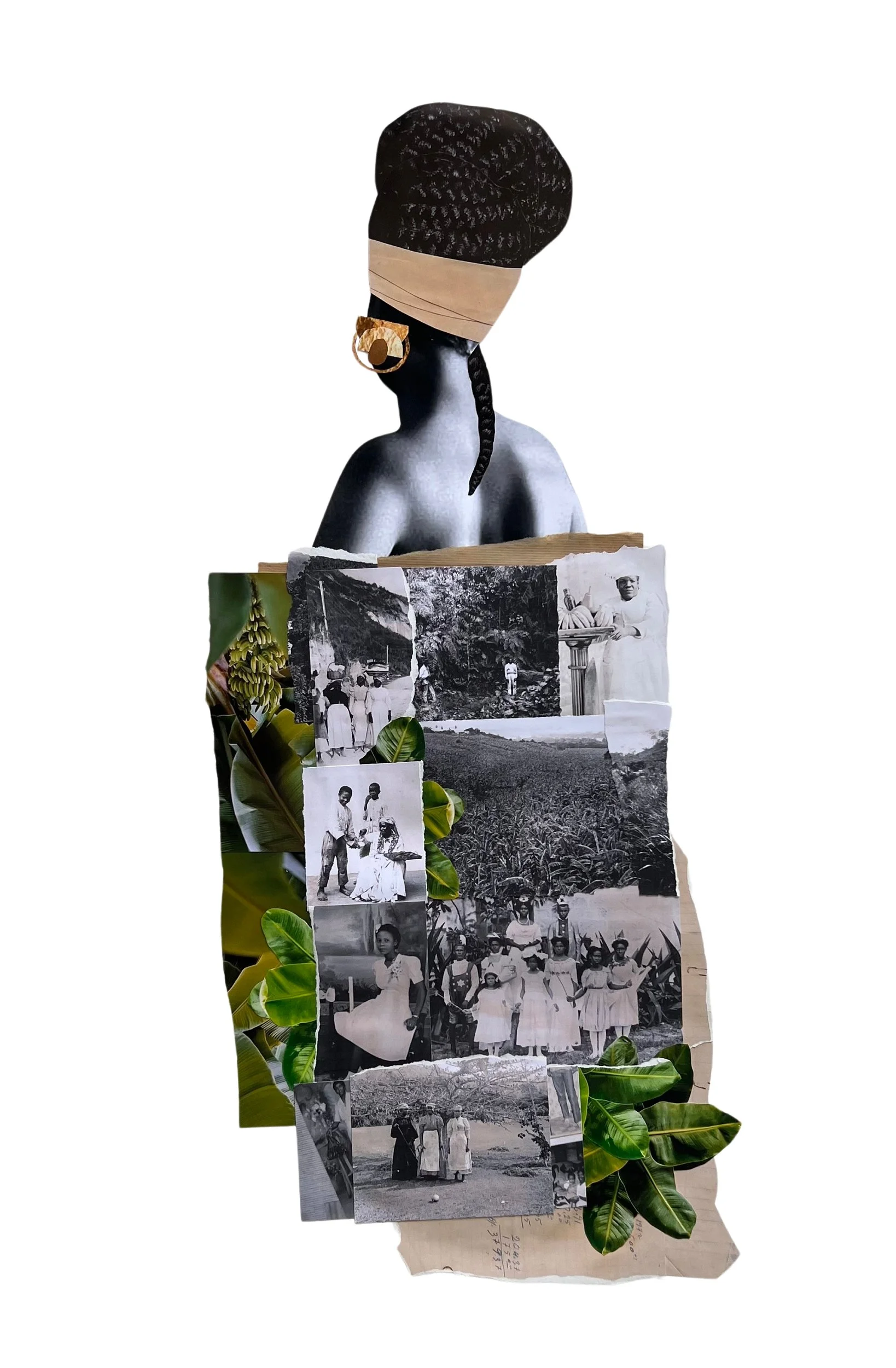
De Dierʼs body of work is actively re-envisioning the narratives that have shaped familiar ancestry and collective memories. For her, remembrance and trauma live not only in the mind, but also in the body. In her series Everything that is noble and true, De Dier imagines the body as a vessel that carries within it the chronicles of a treacherous journey of migration into the Americas. On the backs of Afro-Caribbean women, she layers a myriad of images depicting family life, African cultural references, and both familiar landscapes from their past and newly encountered ones. She ponders the balance between remembering and assimilating, and the struggle of choosing what to let go and what to carry with you–referring to material belongings one had to either take or leave behind, and the intangible possessions that slowly became part of one’s identity.
©bonnita postma
Bonnita Postma
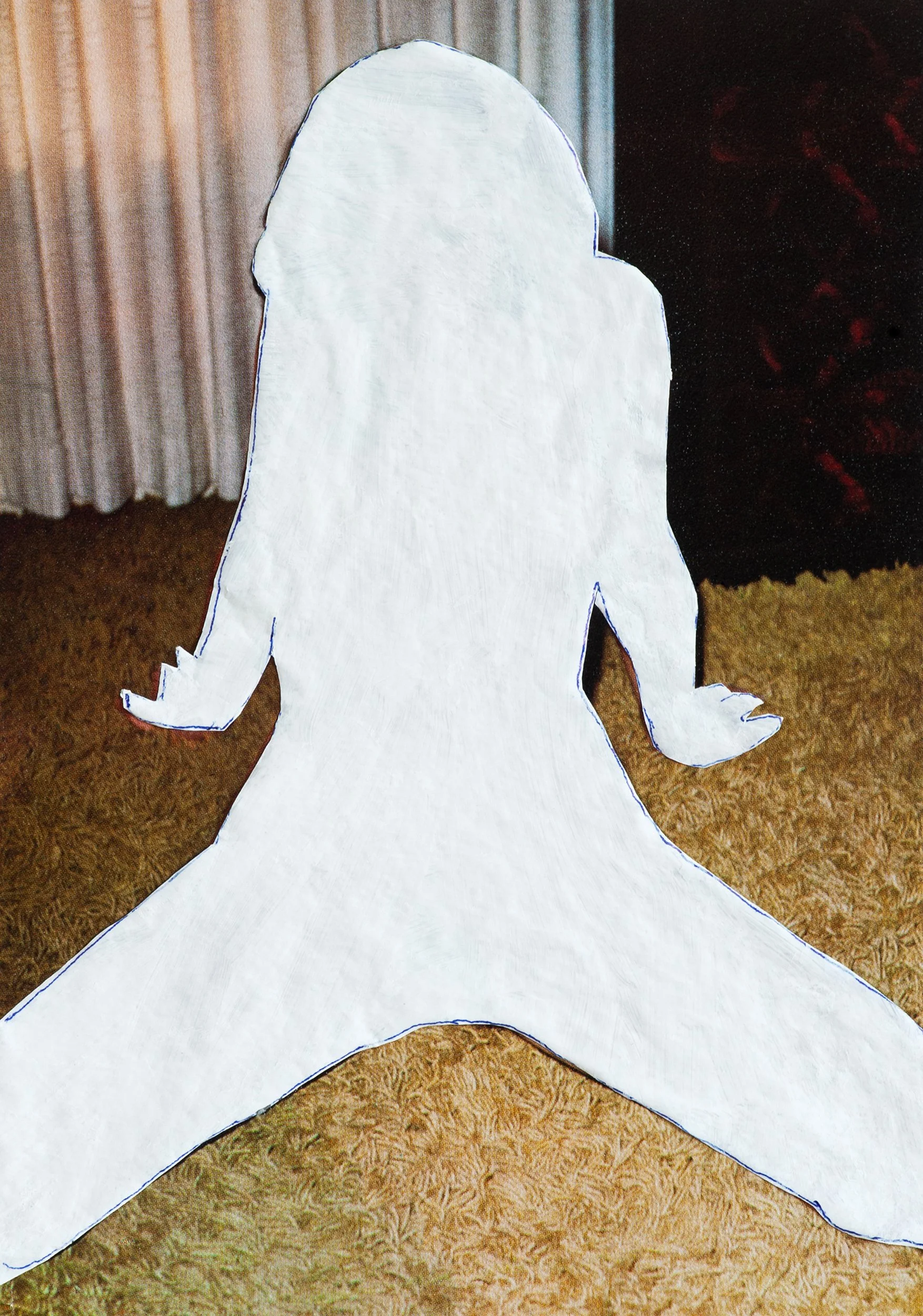
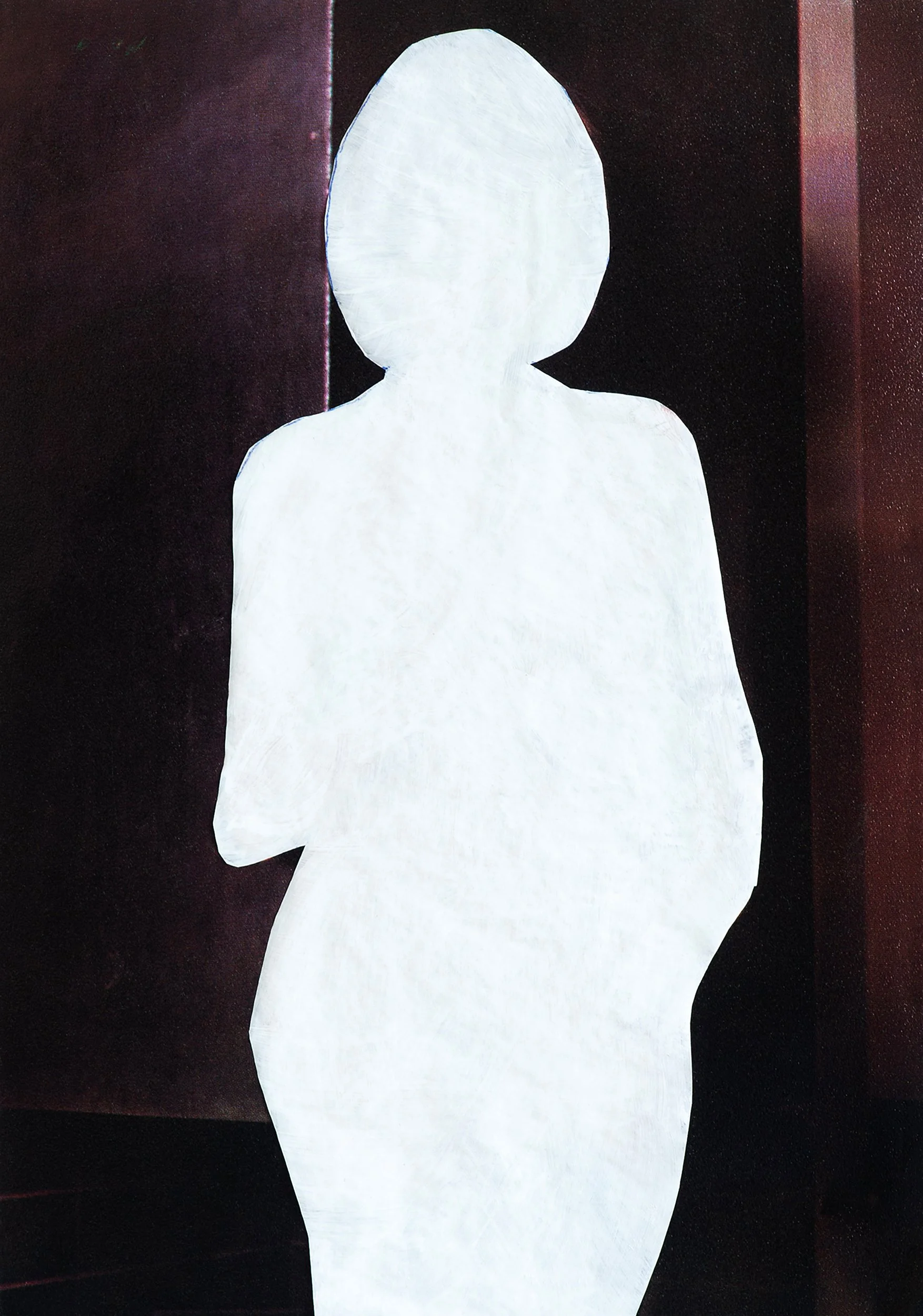
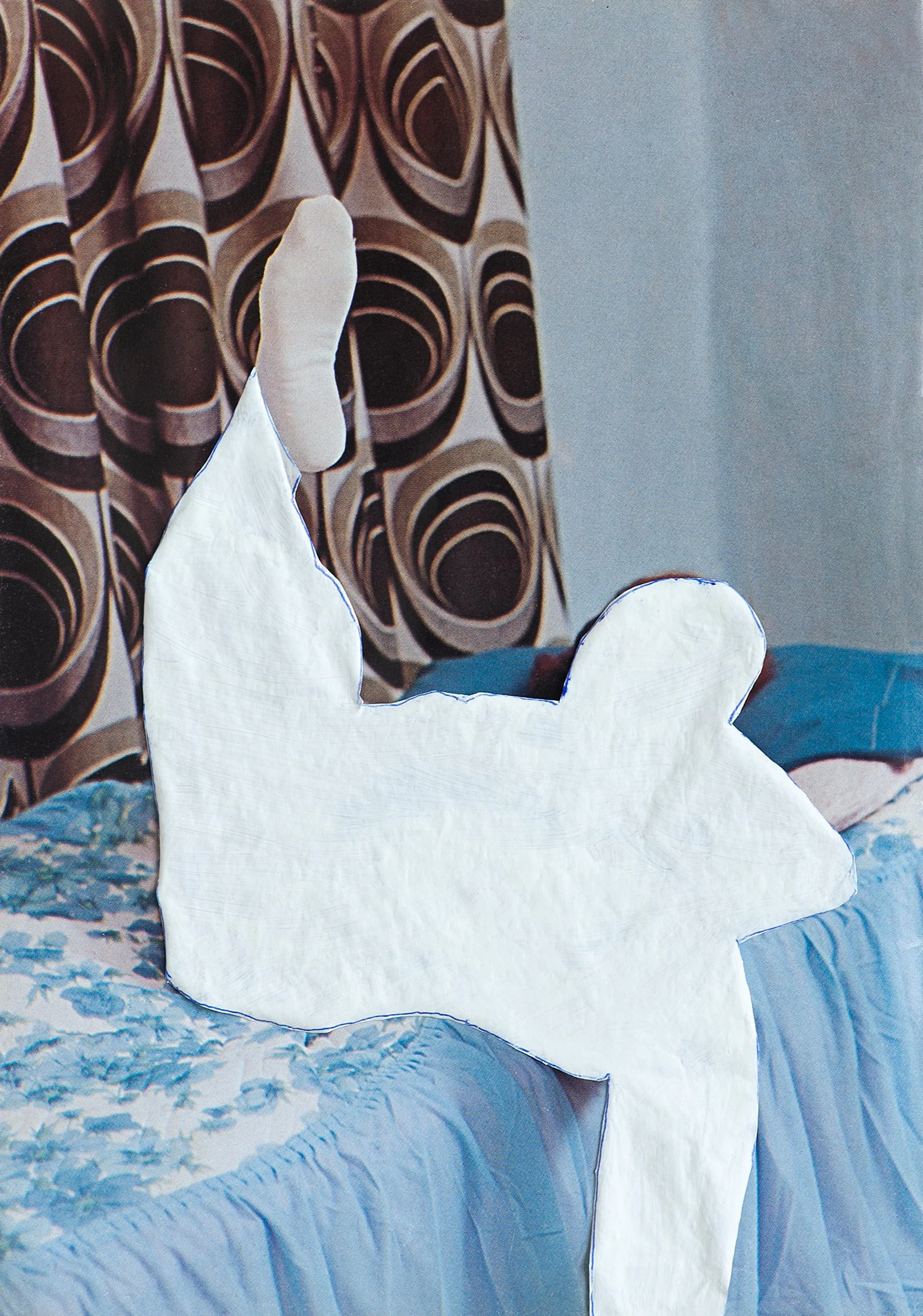
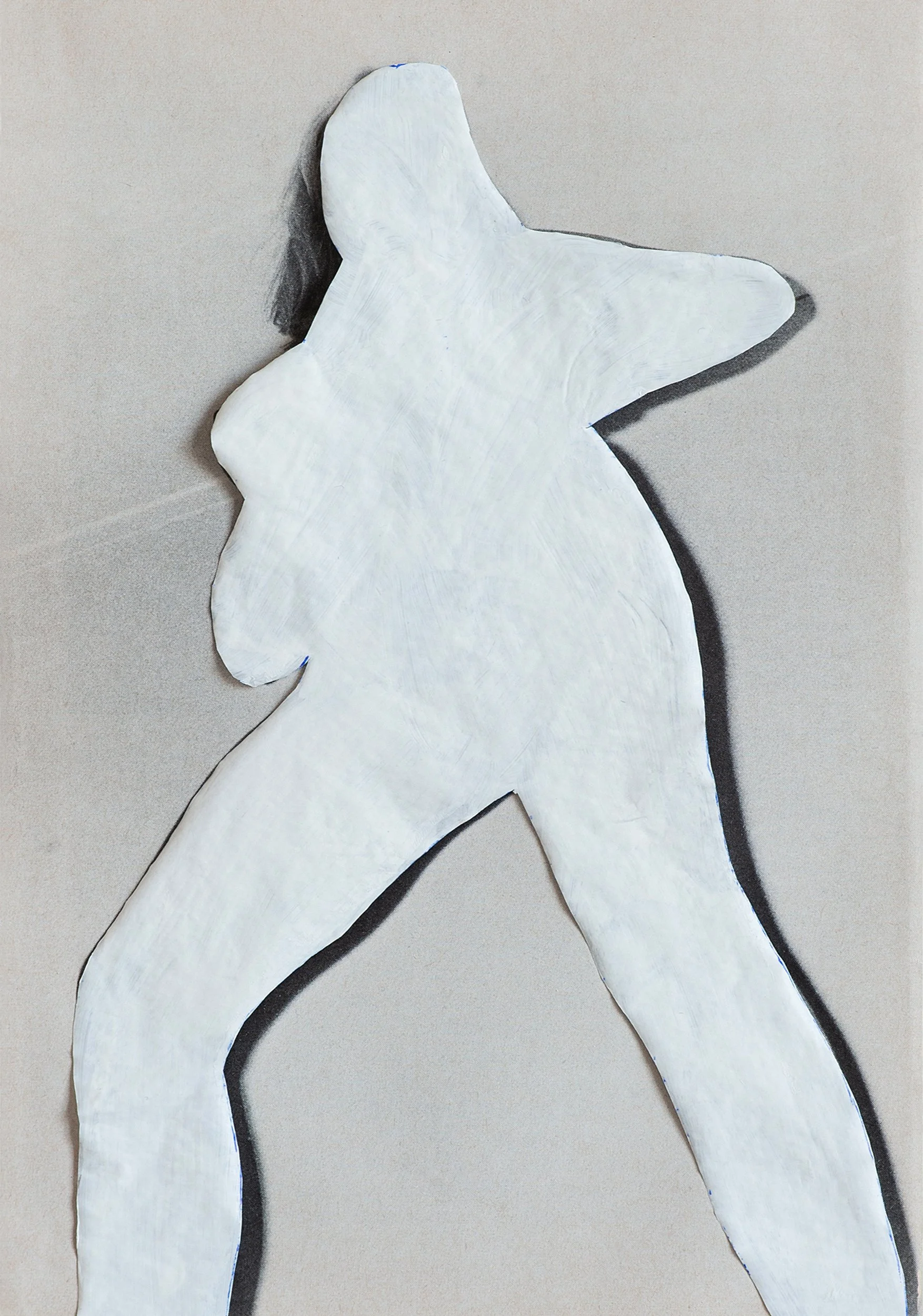
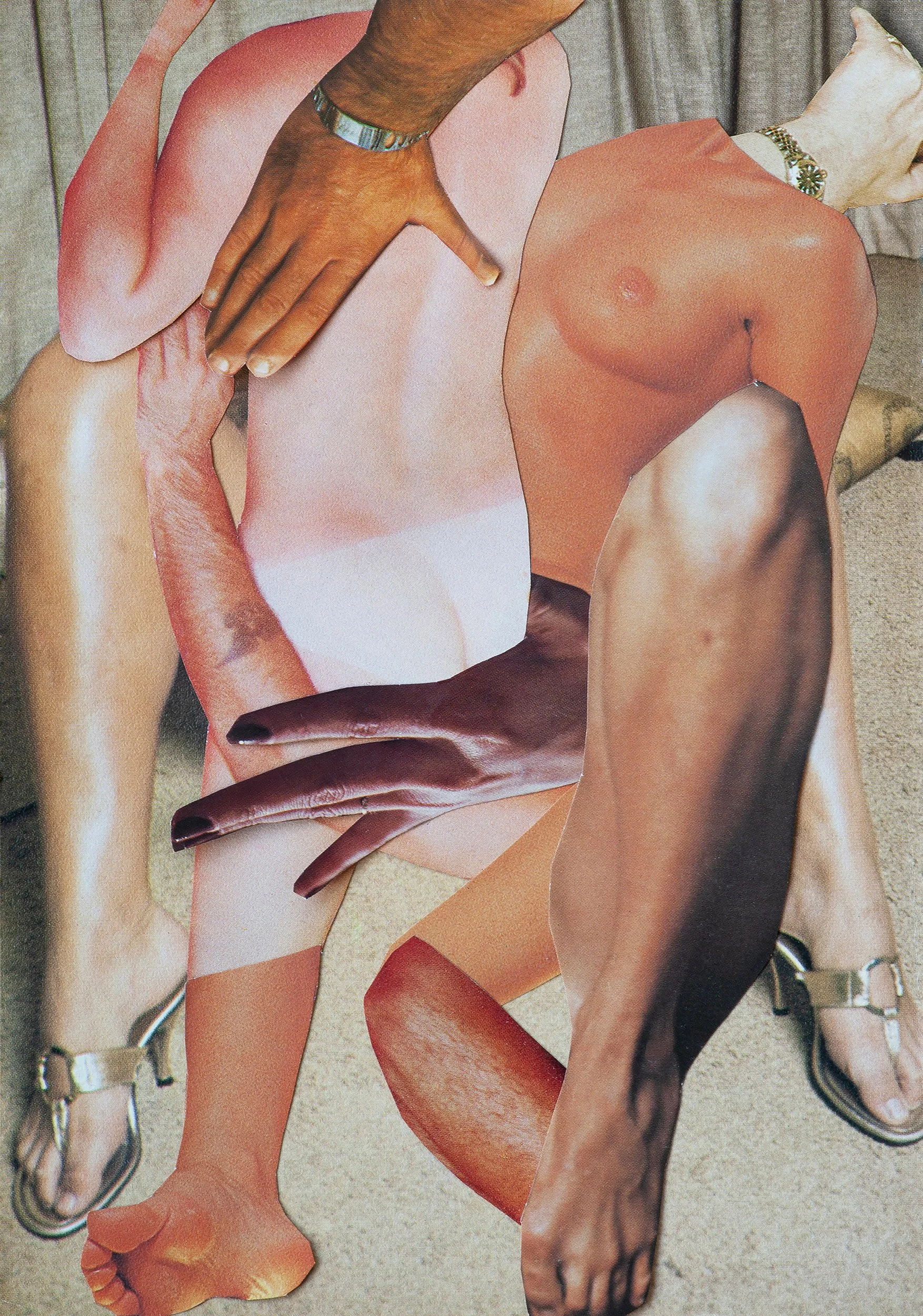
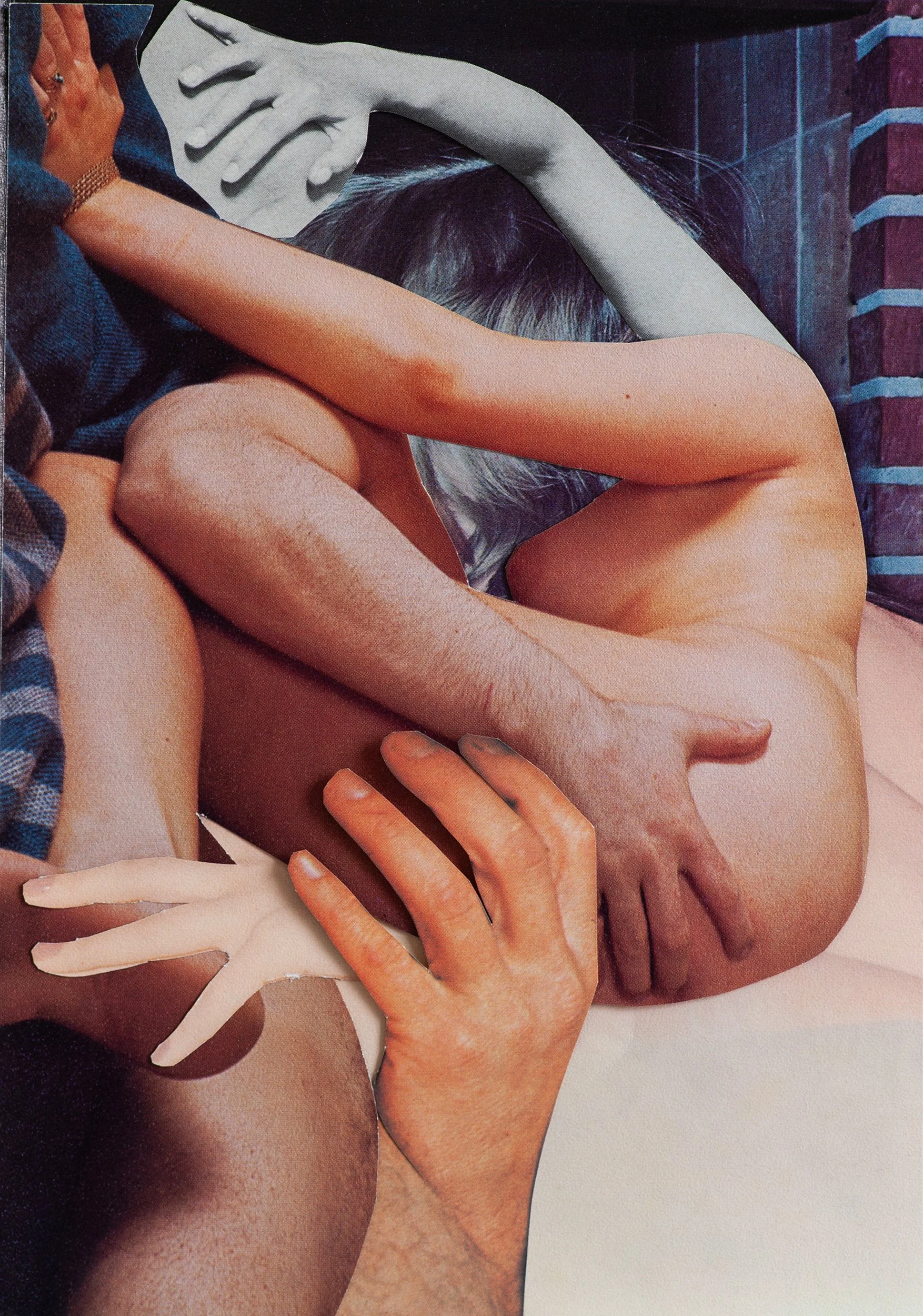
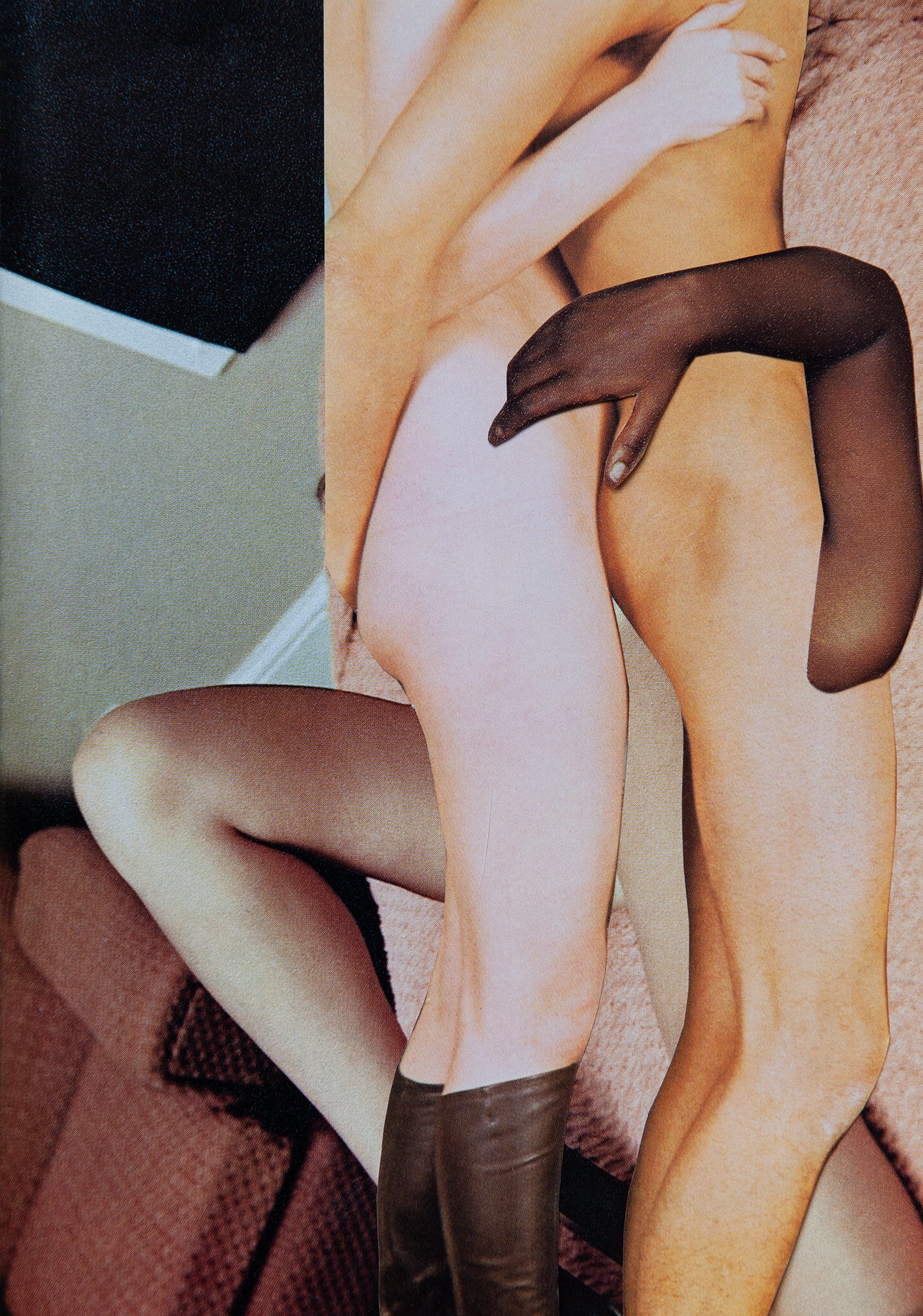
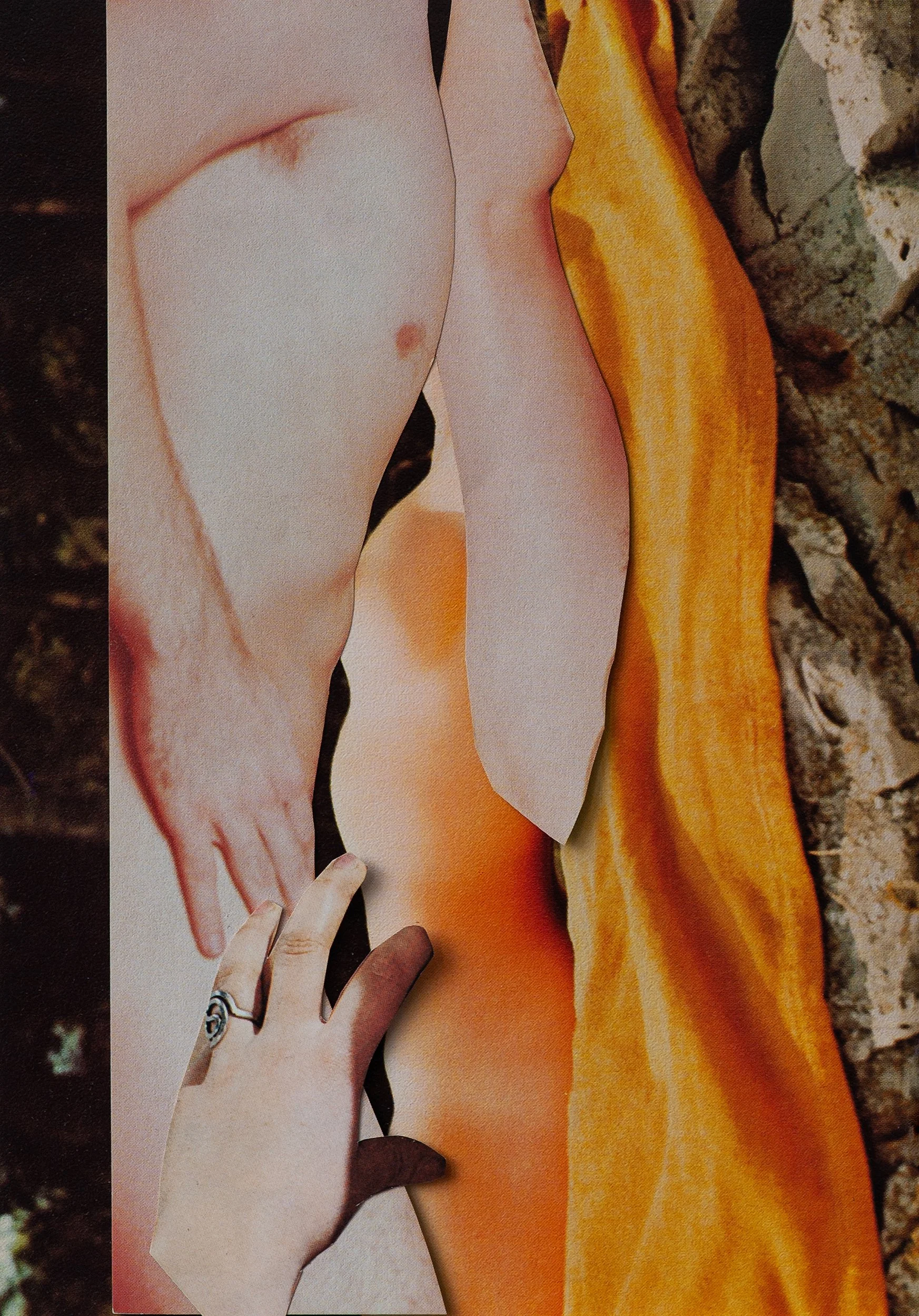
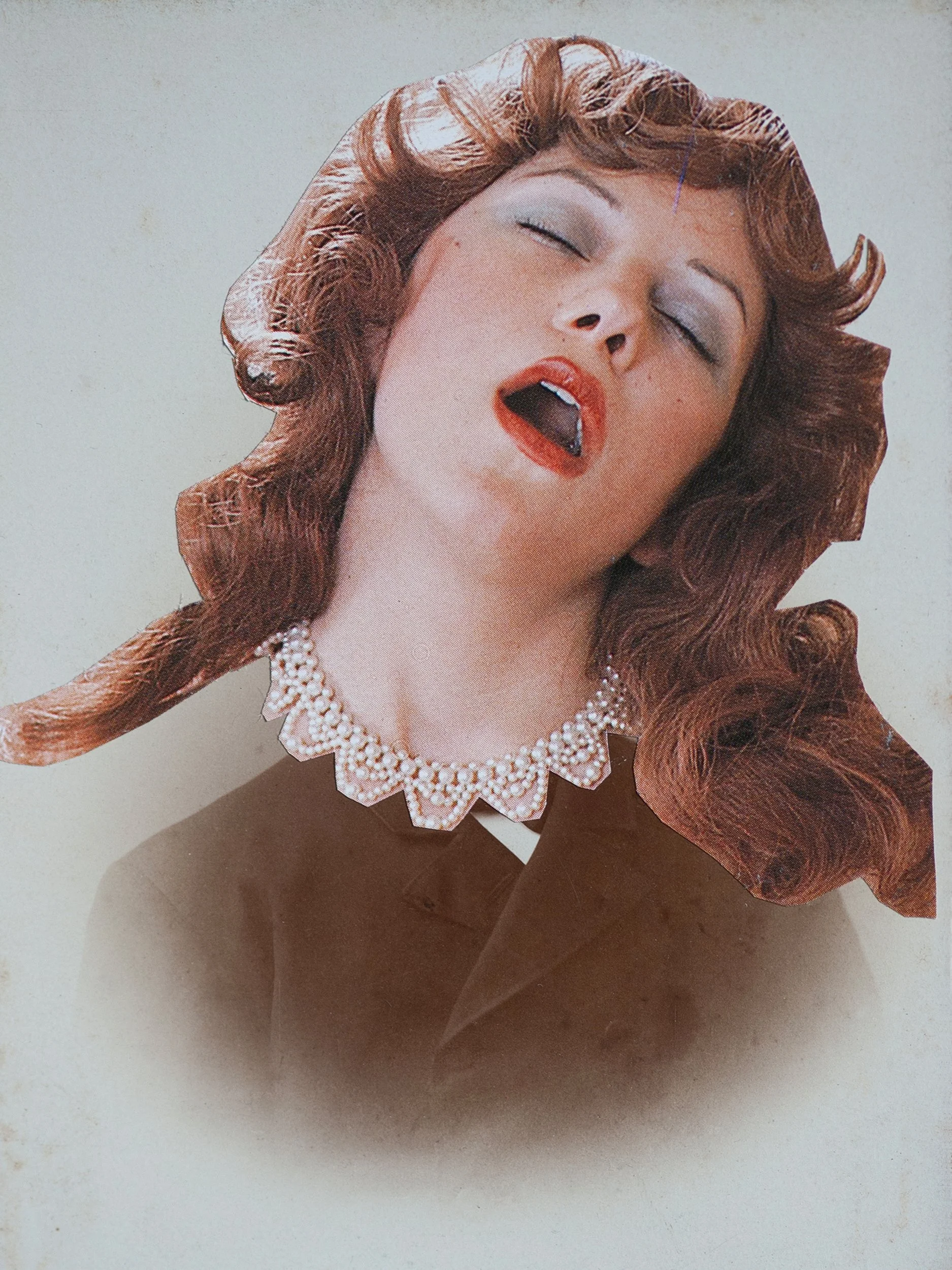
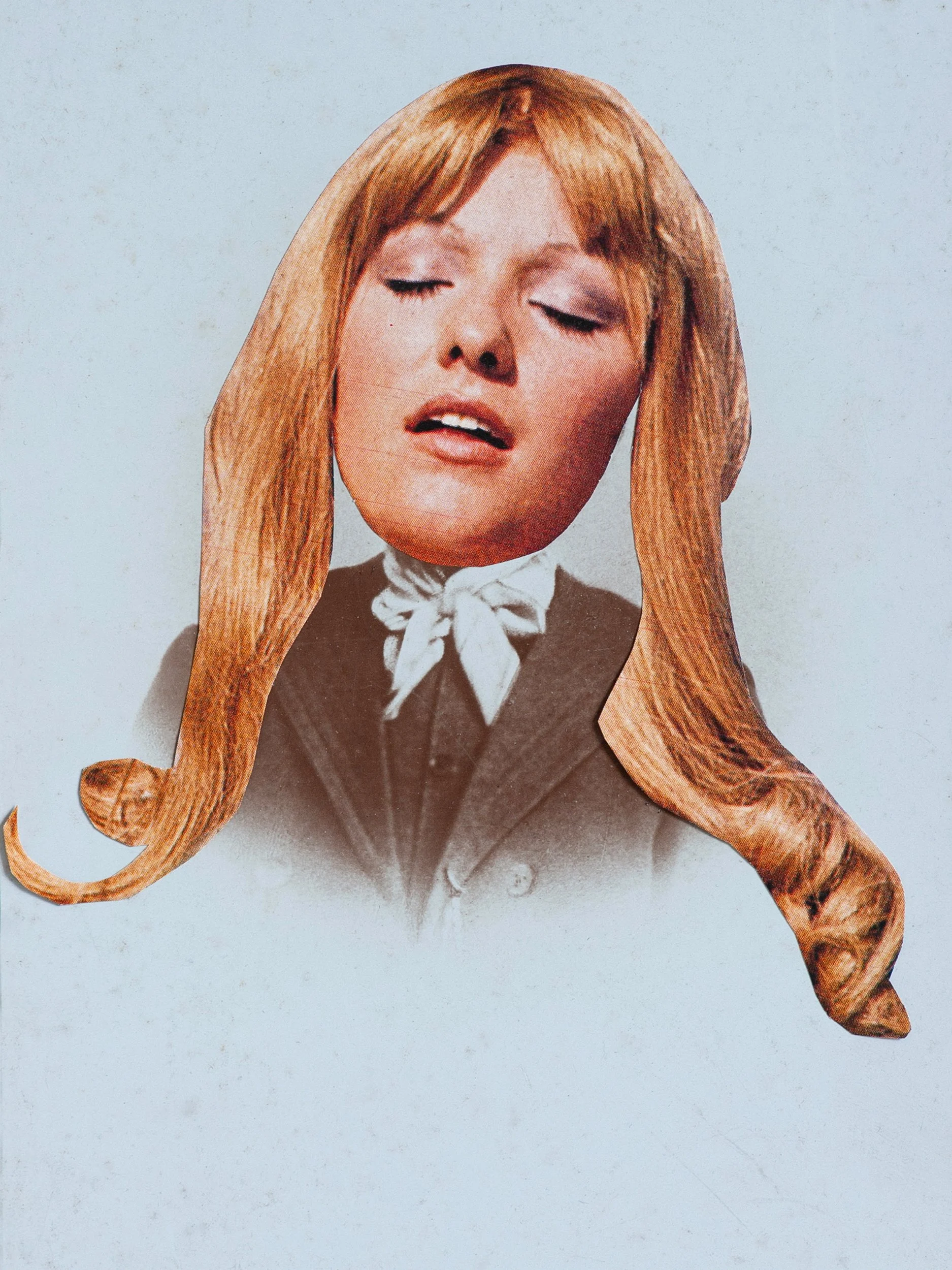
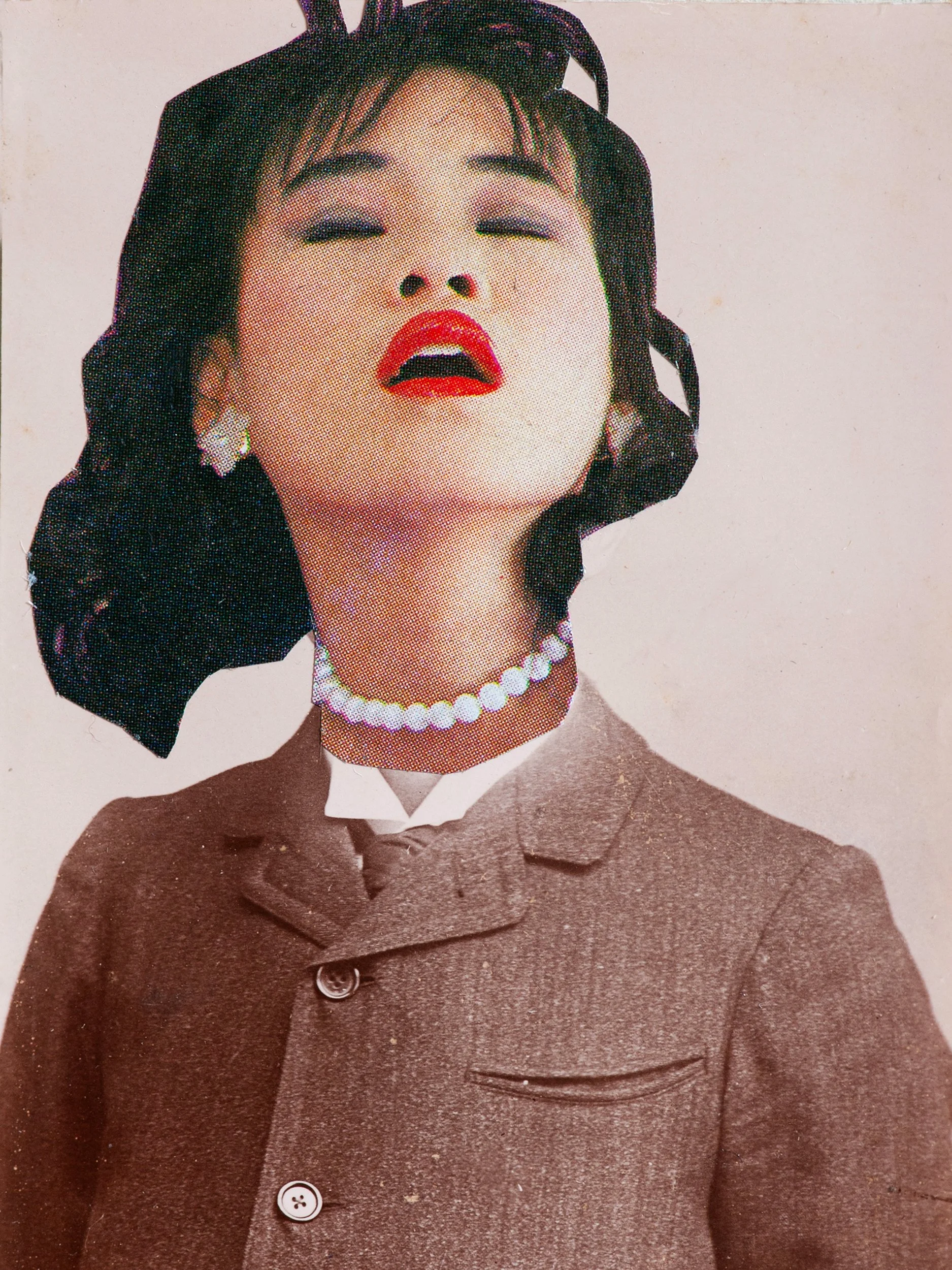
It’s not always clear what stories belong in the book of our identity. Some frameworks are hard to define and accept and we shouldn’t try to define and accept them all. Collage, due to its fragmented nature, is almost forced to explore narratives that contain multiplicity of meanings and intersectionalities. Consequently, it has always been an outlet for socio-political activists, especially feminists. Bonnita Postma challenges her viewer with an unapologetic rendition of pleasure, confronting the oppressive forces and stigmas that surround the expression of femininity and gender inequality. In her series Figures and Bodies, Postma depicts what appear to be female figures in intimate environments in the home. Some lay in bed, others sprawl on the carpet. While their silhouettes and body language appear to be inviting, they are nonetheless willfully distanced from the viewer through their absence of presence. By way of a lack of eye contact and identity recognition, they directly confront your assumptions about them.
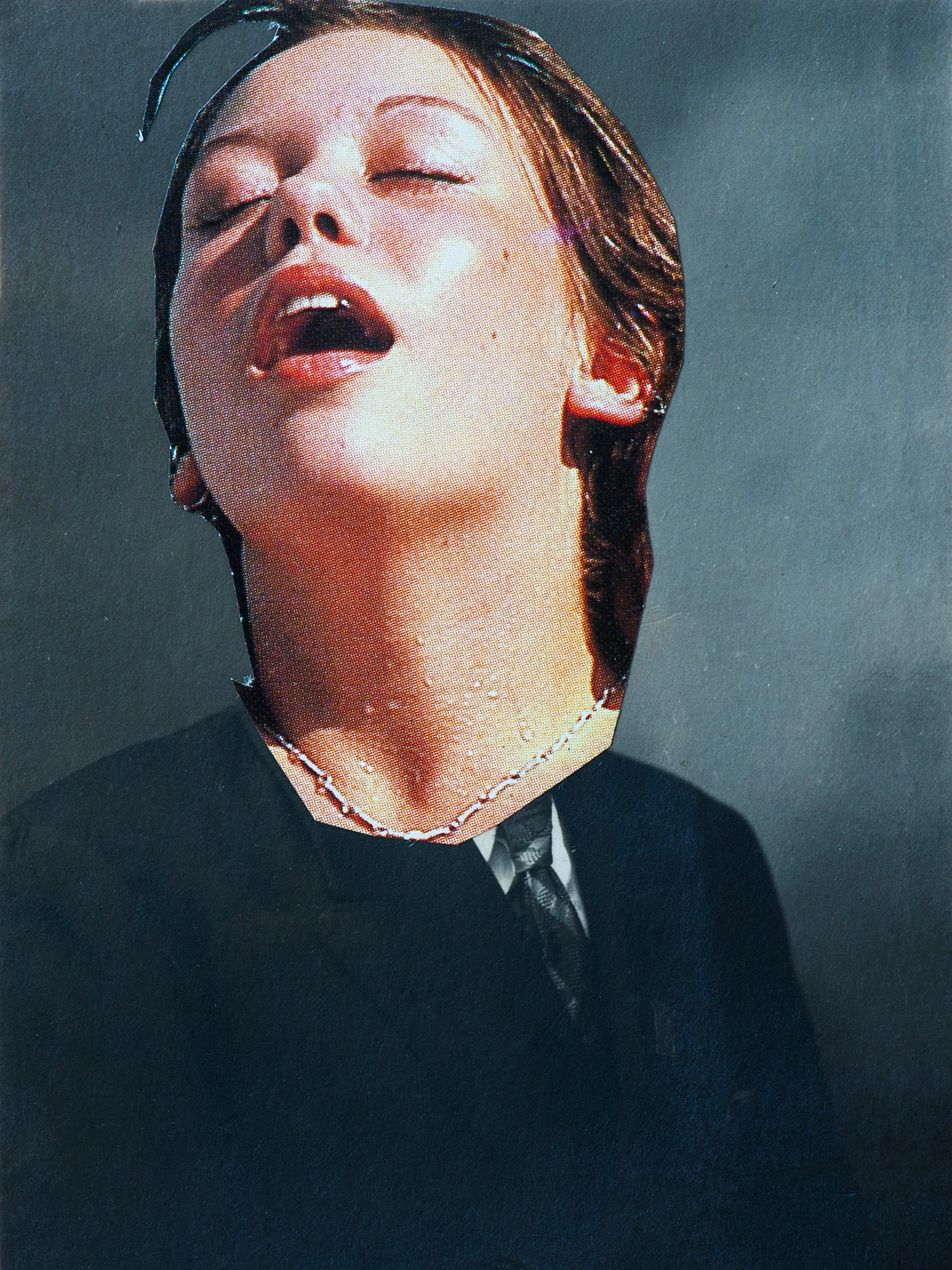
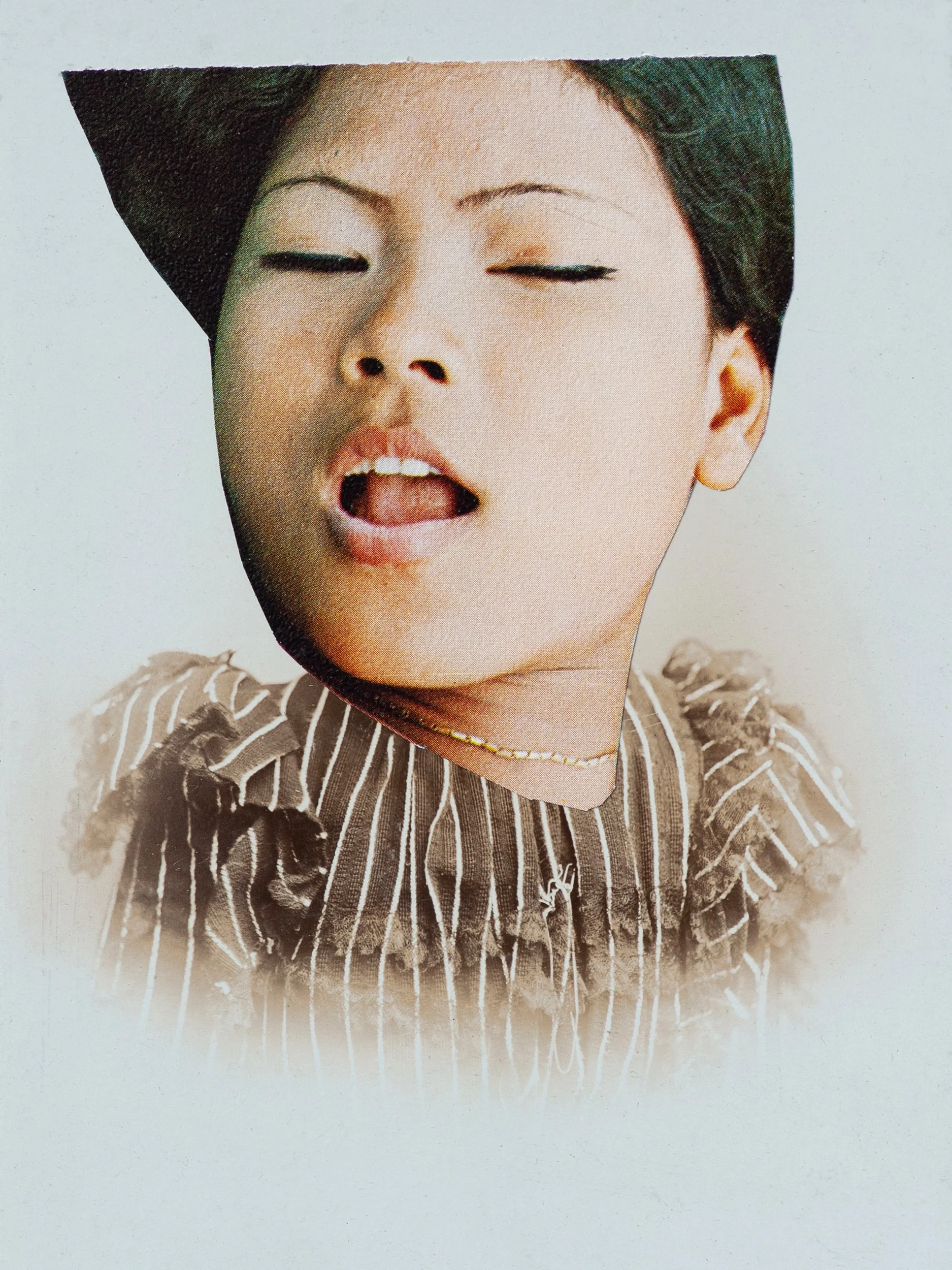
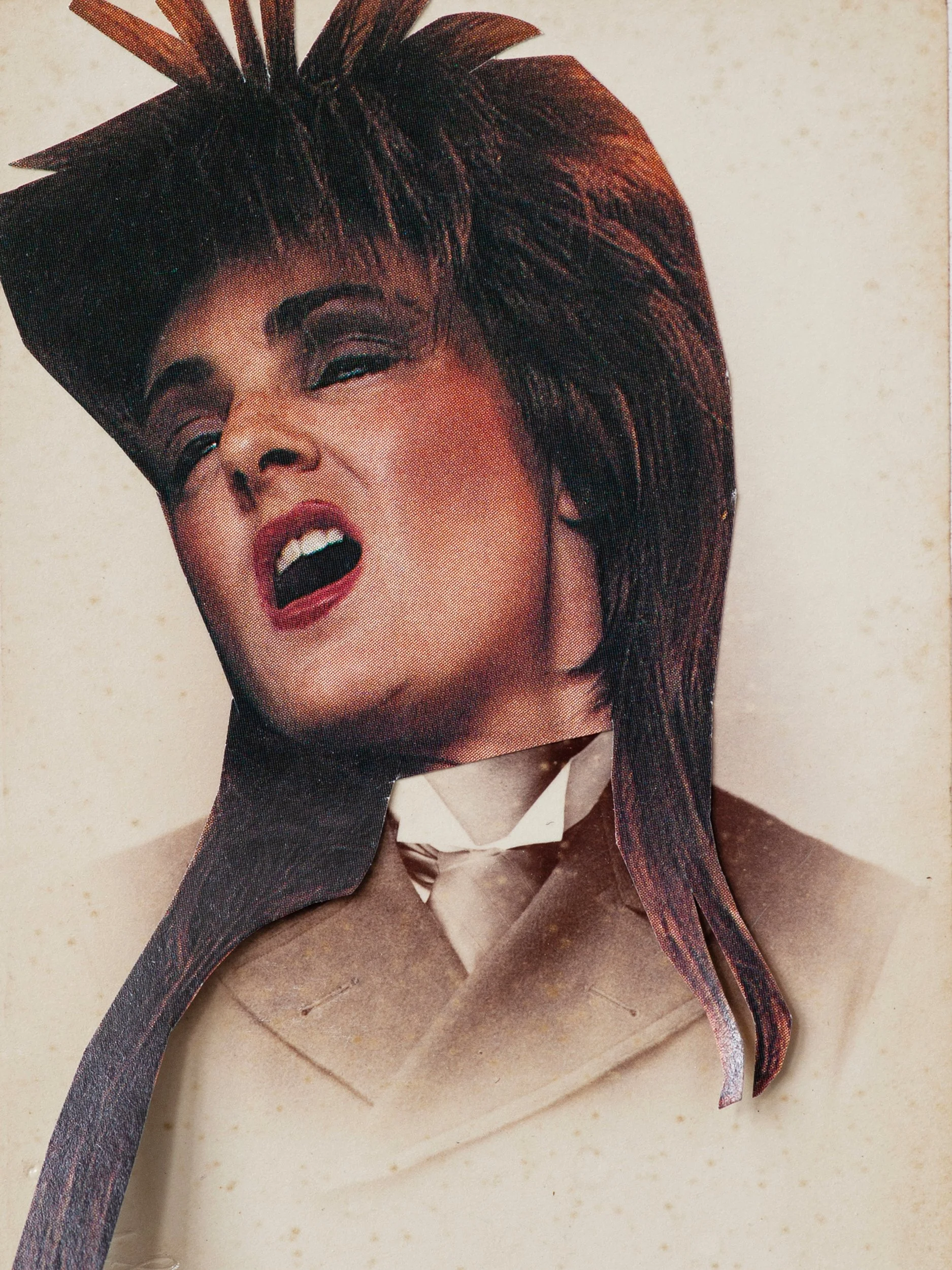
In Bodies, waves of pleasure intertwine as hands, legs, thighs, backs, chests and arms all become one. Infinite caresses echo again and again, leaving the viewer the chance to wander through Postmaʼs intimate roads. In her series Lacrimosa in Extasis––composed of a grid and a video, the viewer is faced directly with dozens of characters at the absolute climax of bliss. By juxtaposing faces of colorful and vibrant modernity with what seem to be 19th century portrait torsos, Postma creates bold contemporary portraits that embrace their diverse and odd nature. One after the other they come, steadfast and resolute, singing in ecstasy. Their closed or direct eye contact, a testament to their fearlessness.
Postma uses collage as a stratagem to confront the gazes that meet her subjects. Empowering them by opening the gates to pleasure, she reminds us how important it is to indulge unapologetically. For her it’s all about the unseen, the implied. For others it’s far more literal than that, though still nuanced and complex, of course.
(N.B. : The series Lacrimosa in extasi is accompanied by a video with all the portraits ‘singing’ Lacrimosa from Mozarts Requiem. https://youtu.be/rLwjlhPw3pY)
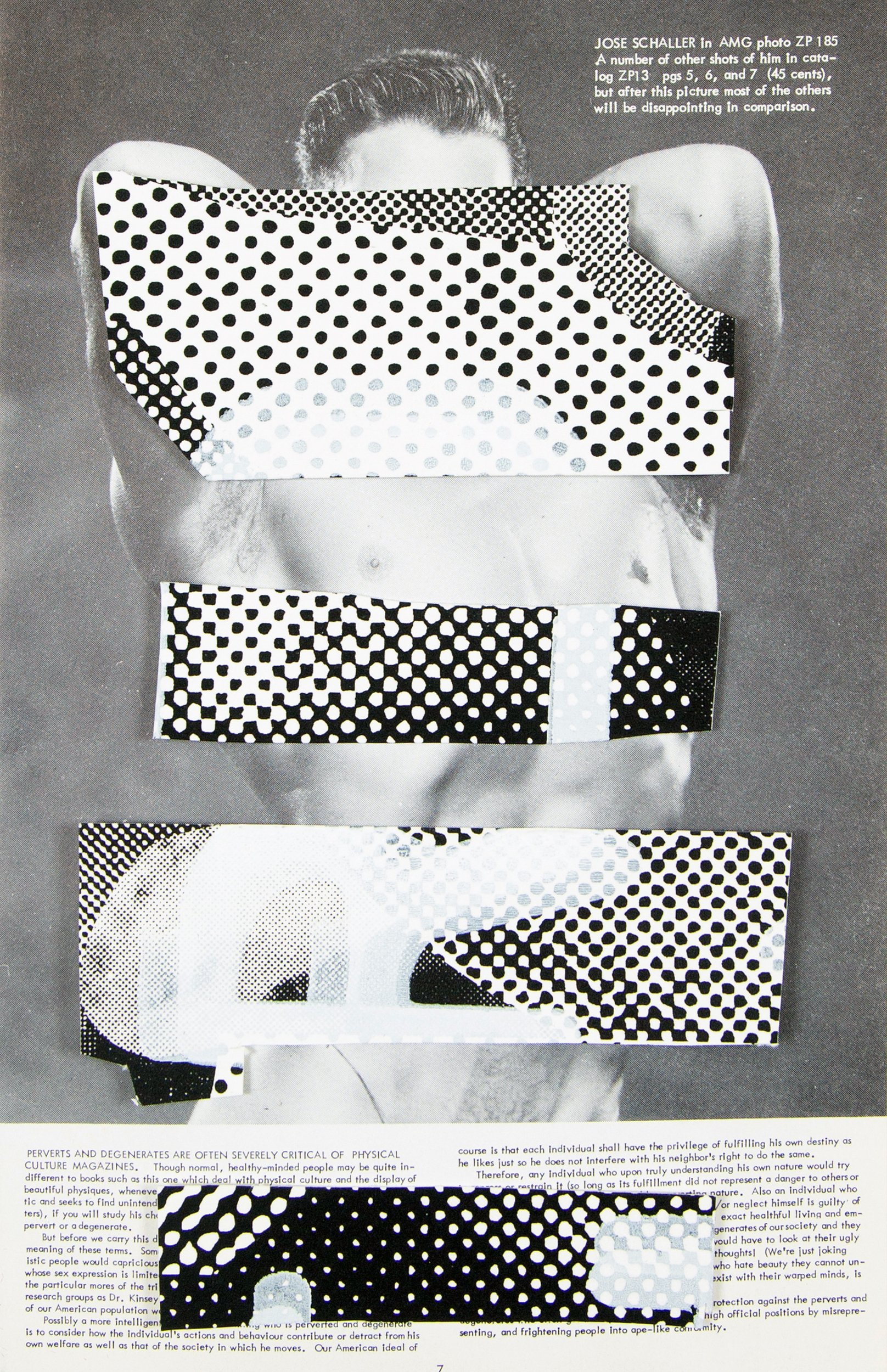
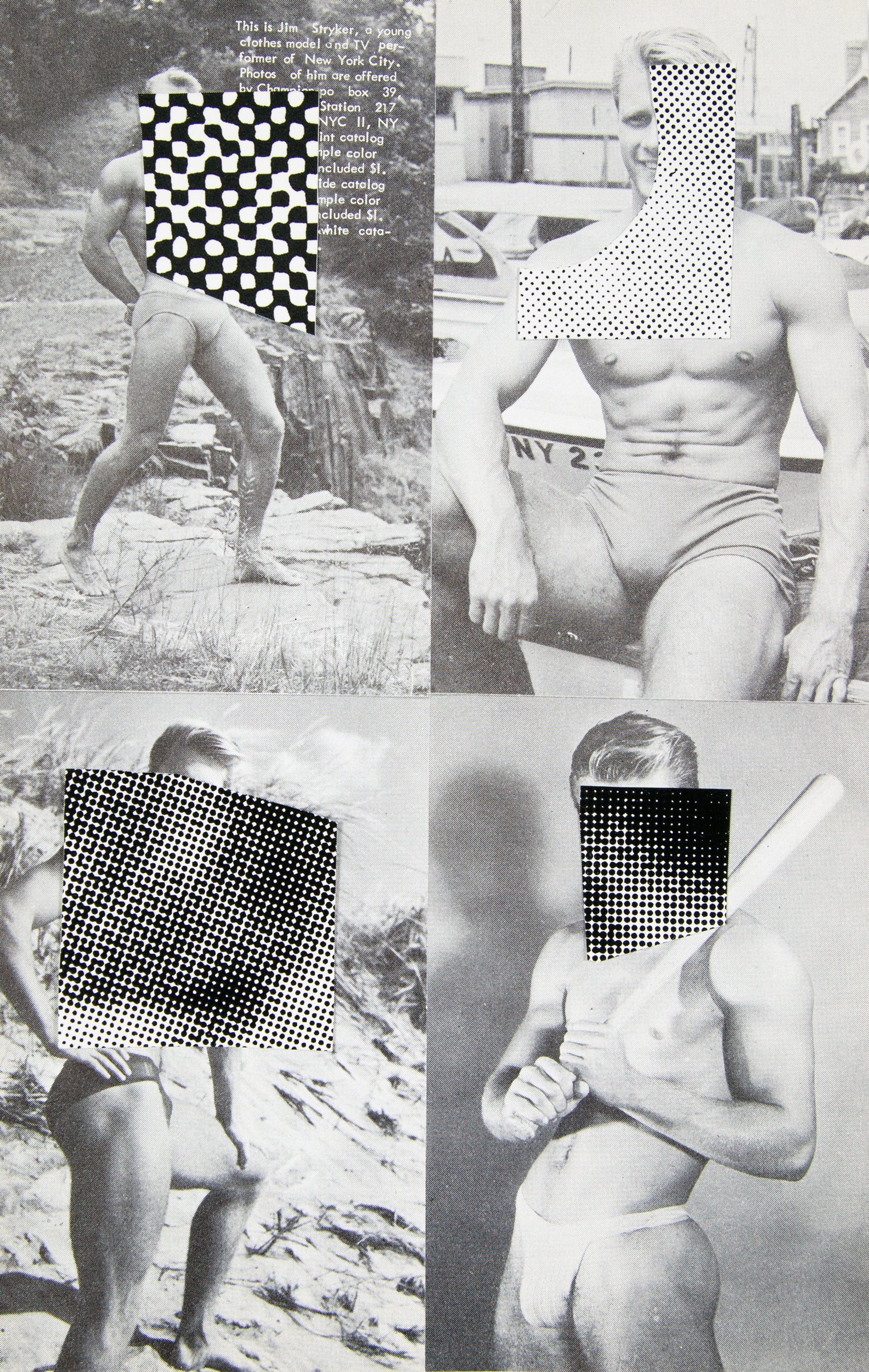
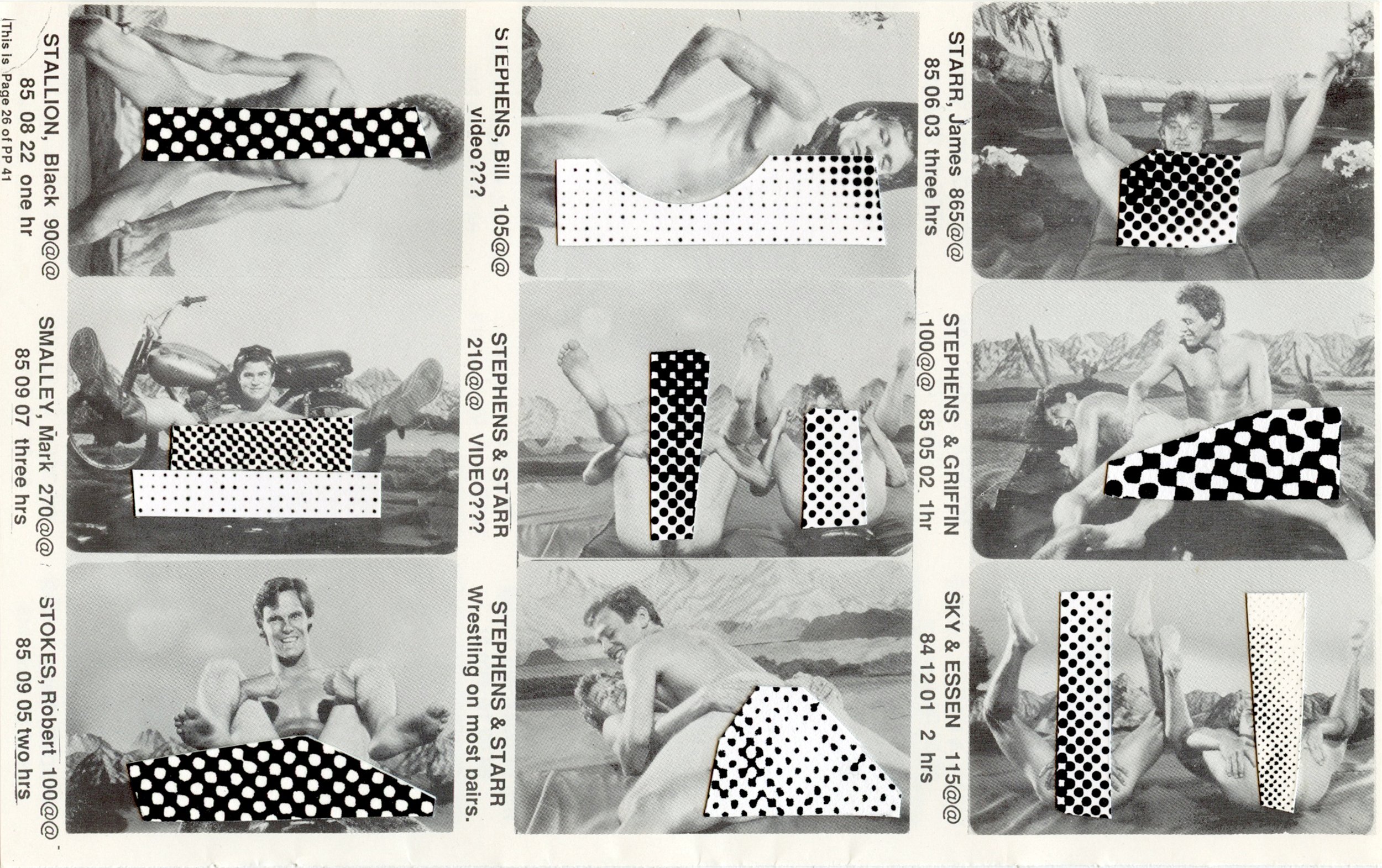
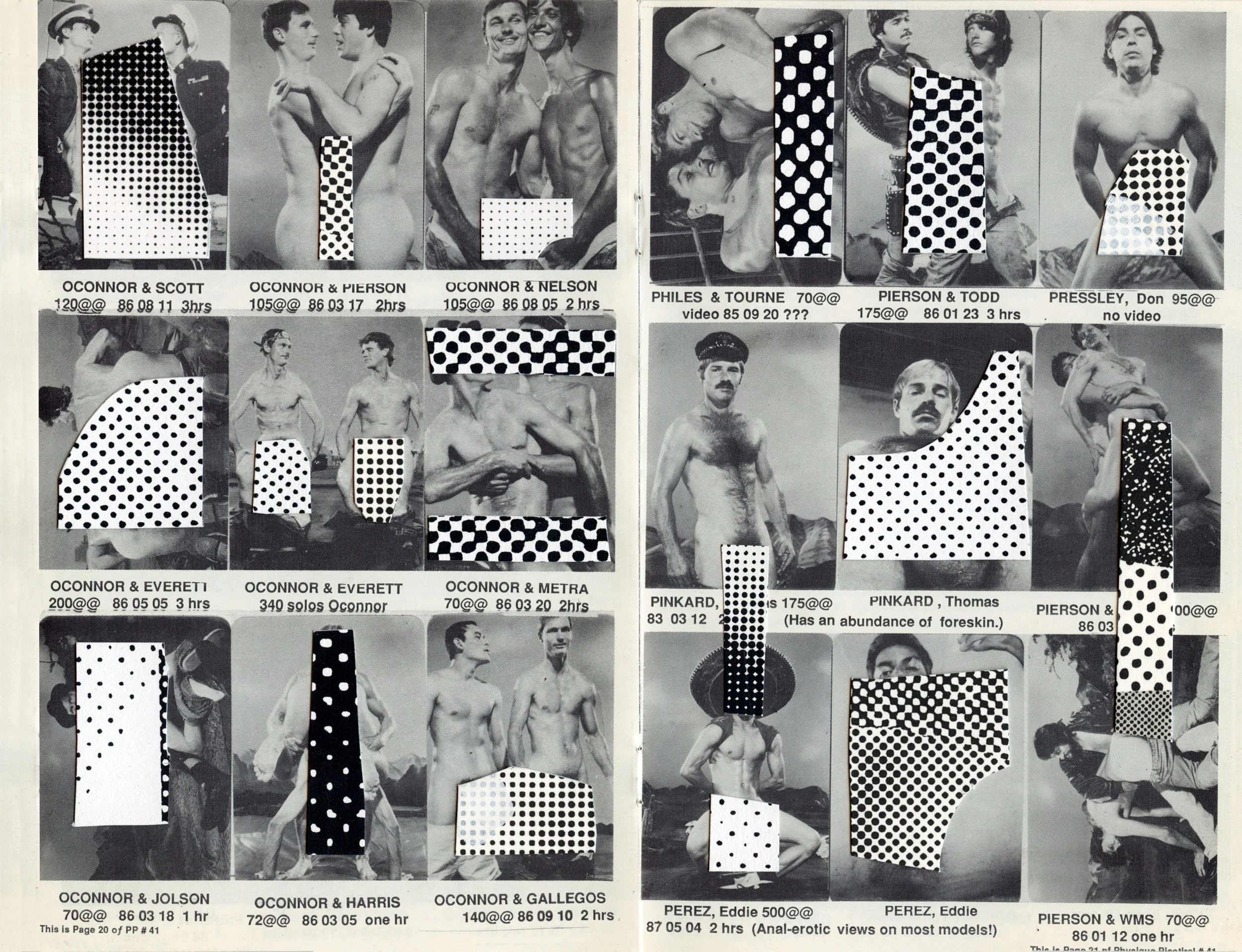
©rodrigo moreira
Rodrigo Moreira
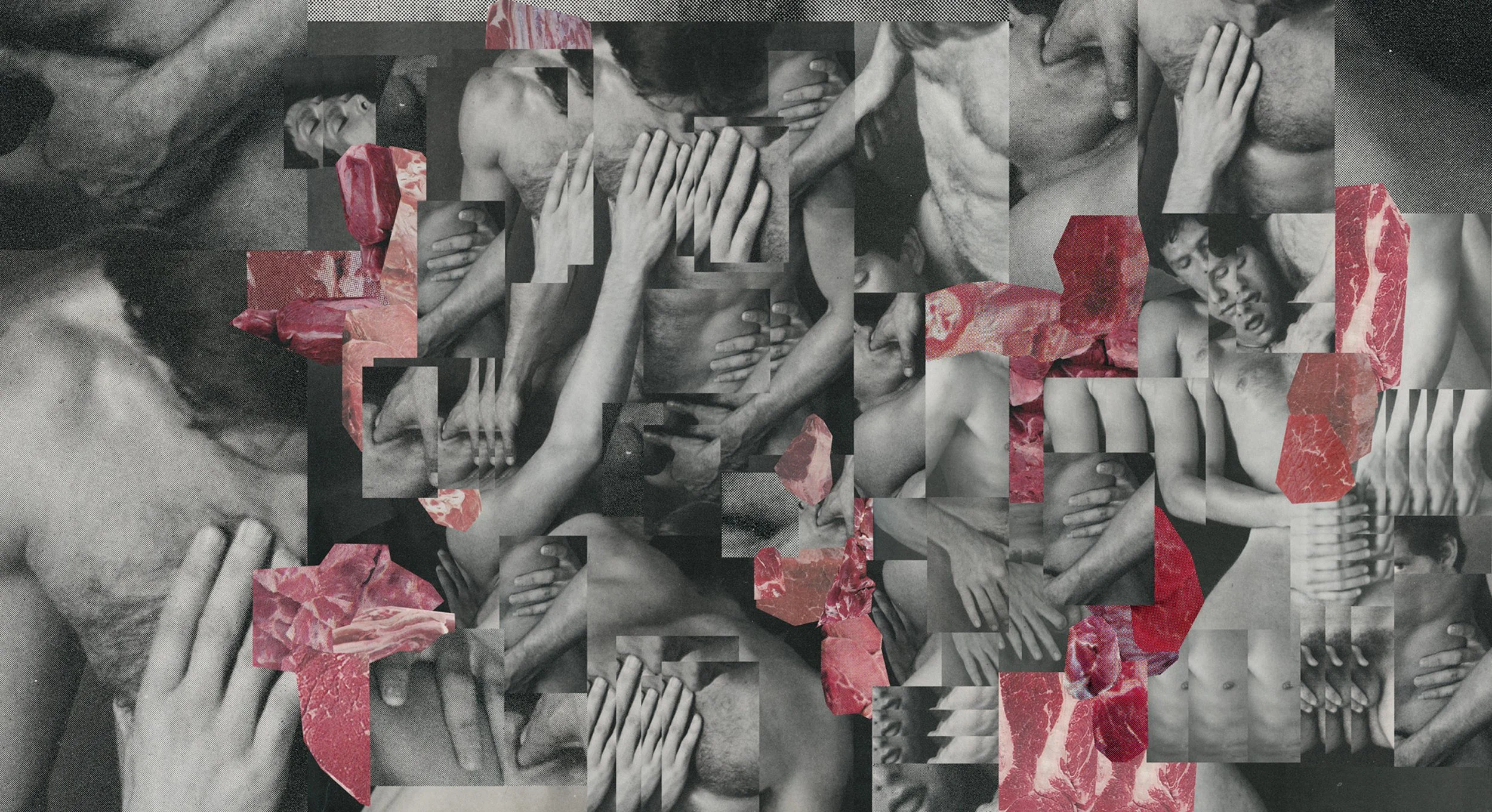
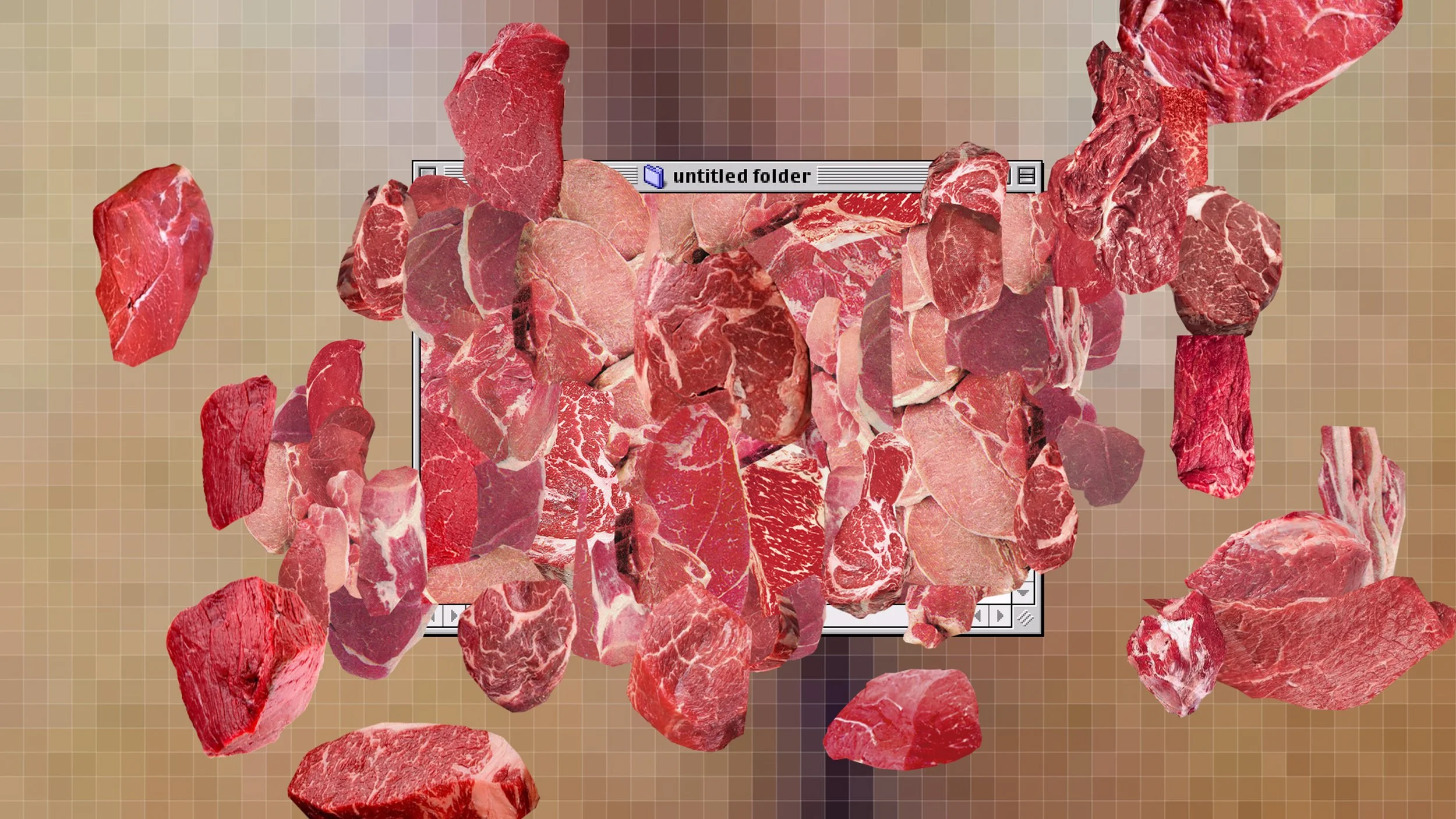
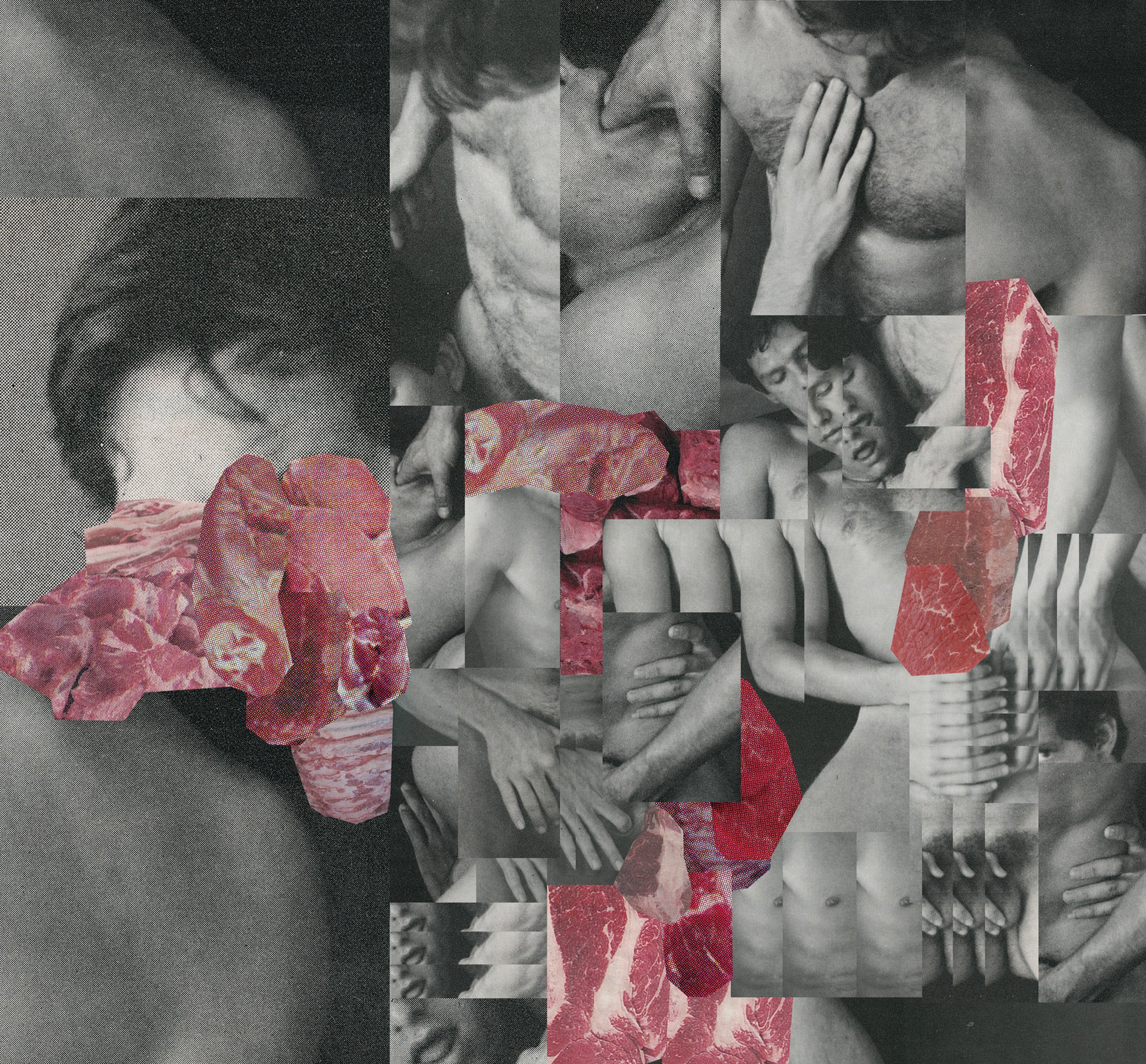
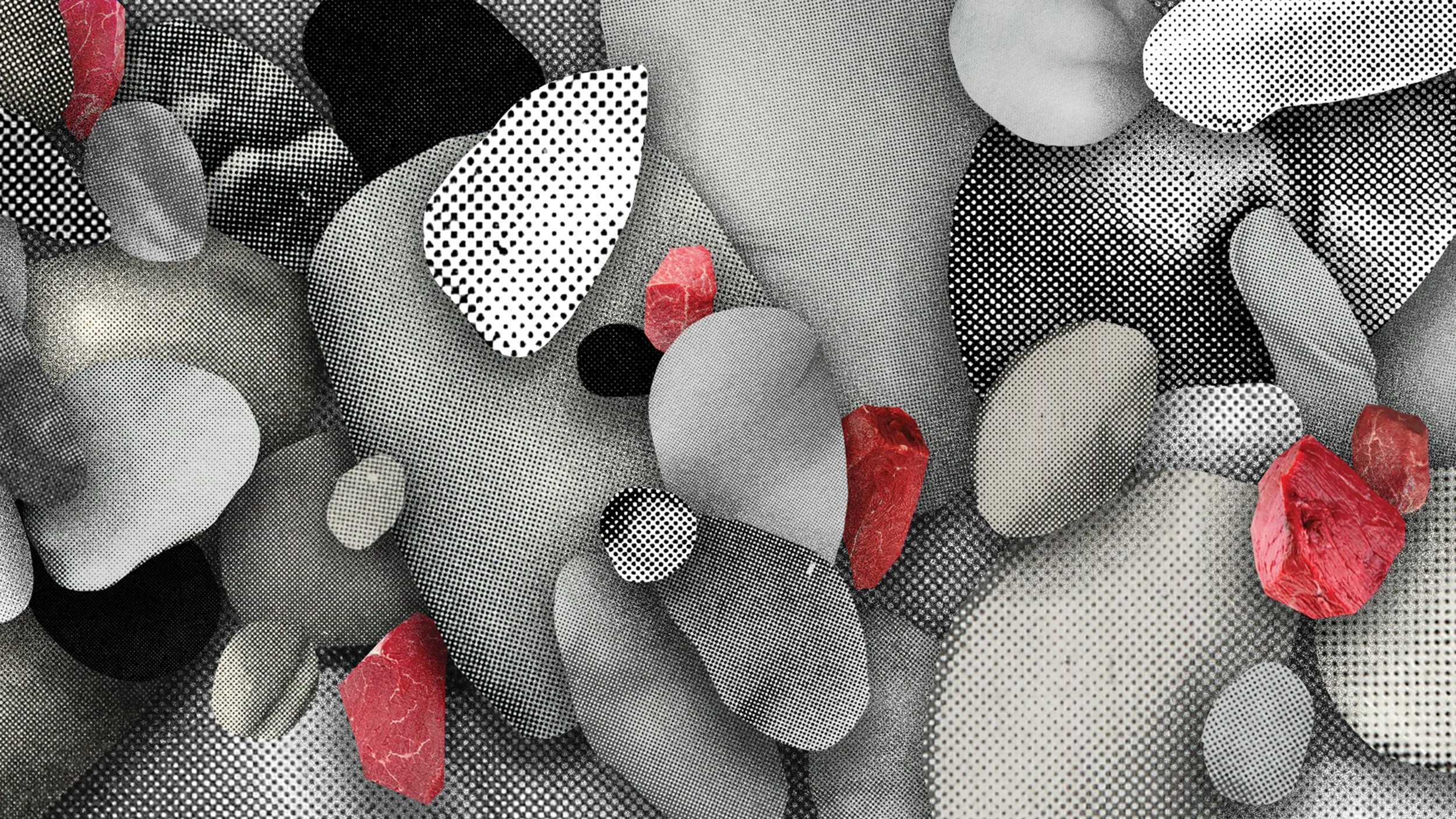
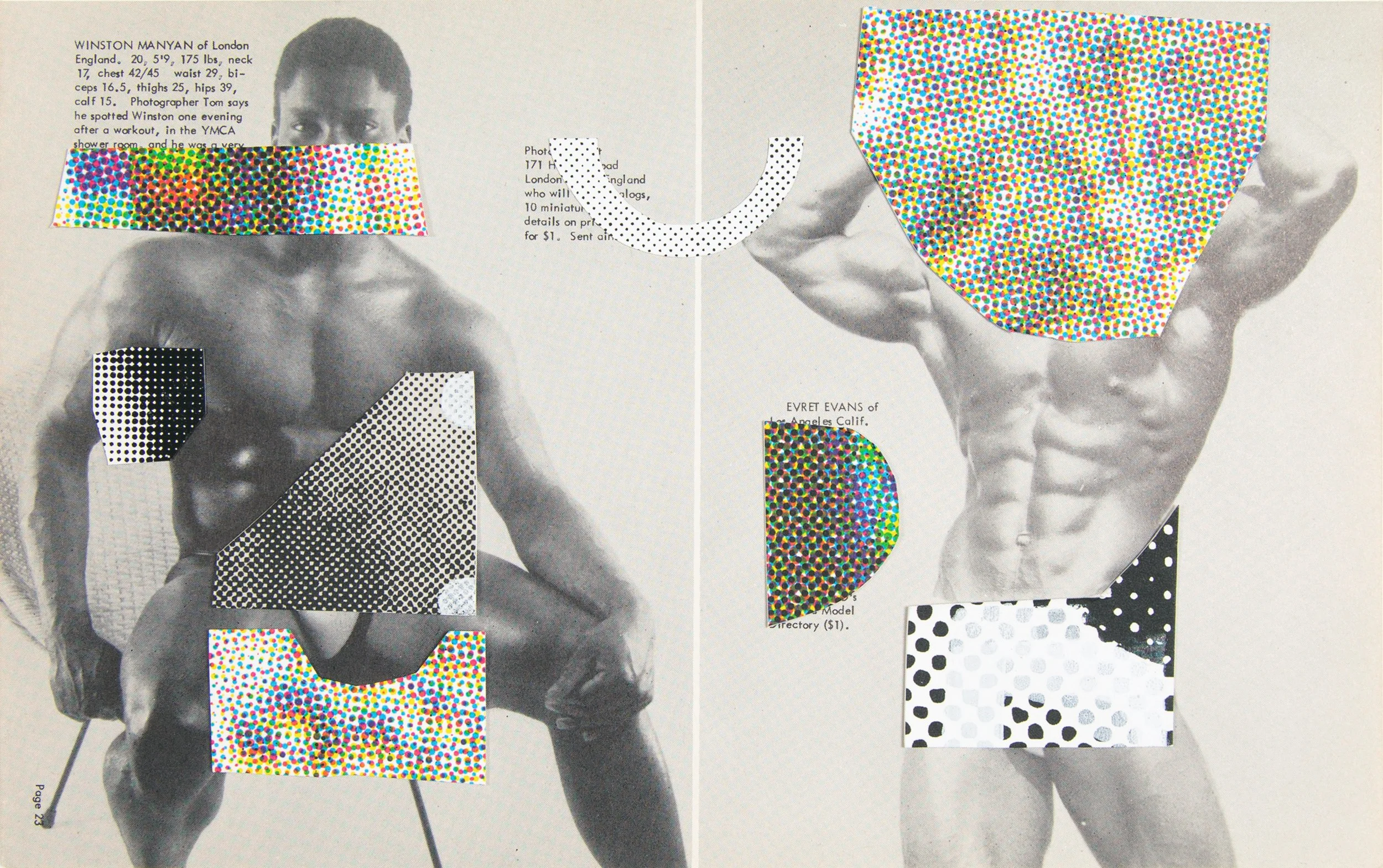
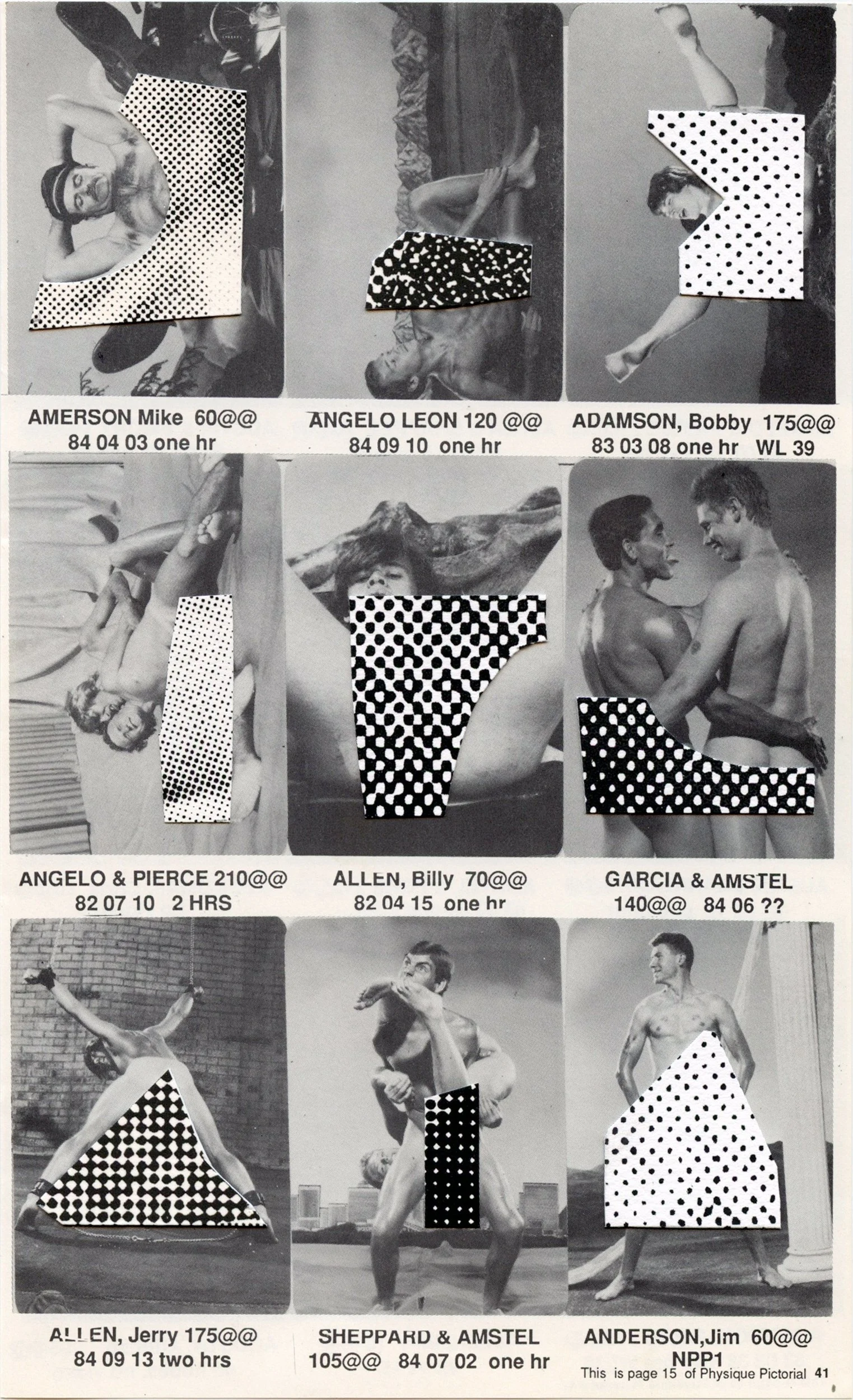
Raw meat. Crude desire. Working across silkscreen prints, video and digital collages, Rodrigo Moreira finds his identity hidden in the unyielding figures of male bodybuilders. Moreira at once reconciles his homosexuality through erotic motifs of sexual craving and acknowledges the rejection that accompany his migrant and homosexual existence. His work always seems to start conversations within the limbo of belonging. It appears that he is constantly battling the duality that is characteristic of pride. Bodies posing strong and dignified, yet still somehow censored and obscured. Perhaps itʼs the inevitable shame that is instilled into queerness.
His Body Meat collages mimic the fragmentation of a digital glitch. The jagged compositions serve as an embodiment of a complex sense of self, while the raw meat serves as a reminder that all bodies are equal, and all desires are human, maybe even animal. Drawing imagery of meat from supermarket advertisements and bodybuilding portraits from vintage catalogs, Moreira questions consumption and pleasure. What are we entitled to relish? Whose gaze are these “productsˮ intended to satisfy––and why are they for sale?
©harriet moutsopoulos aka lexicon love
Harriet Moutsopoulos aka Lexicon Love
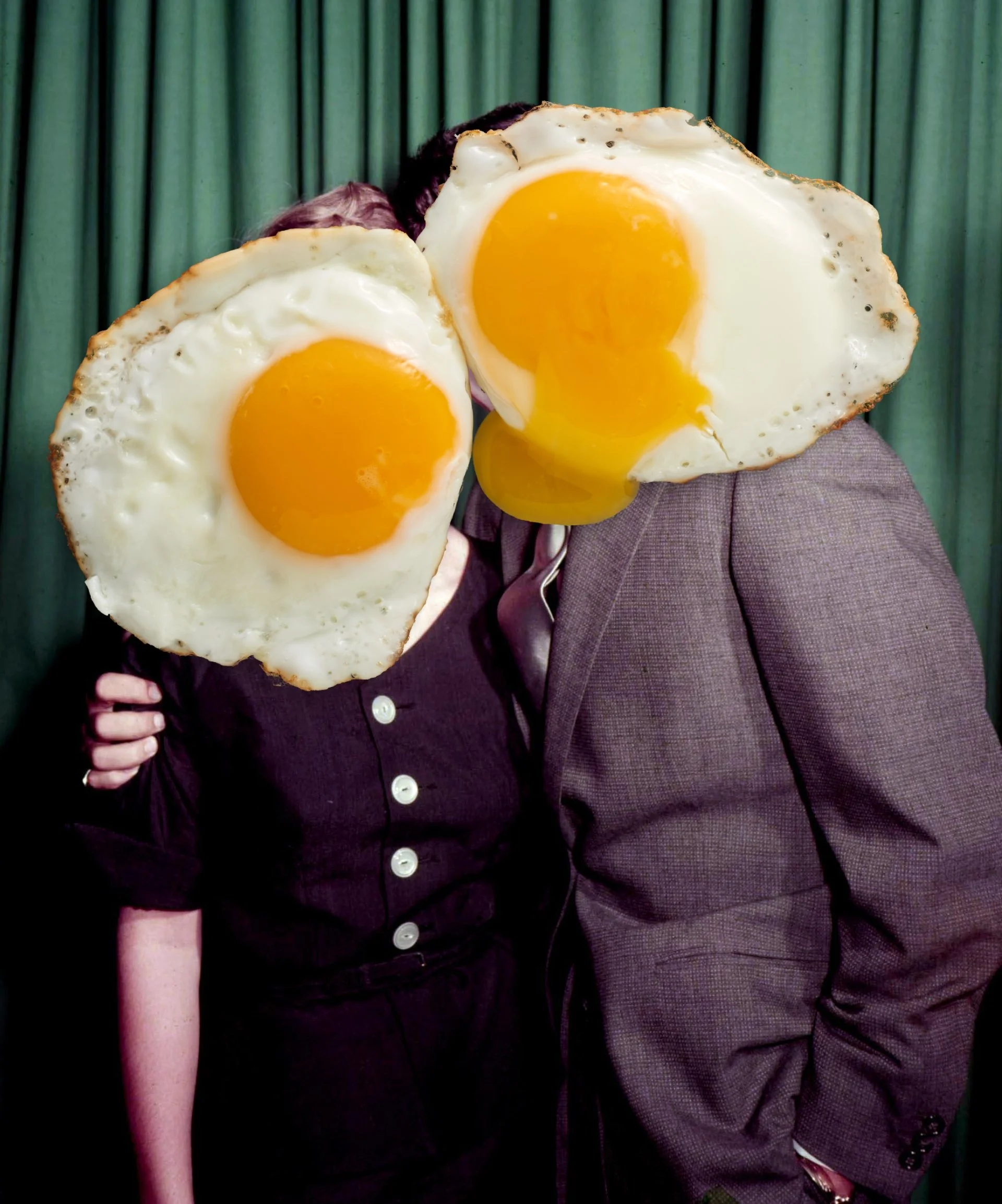
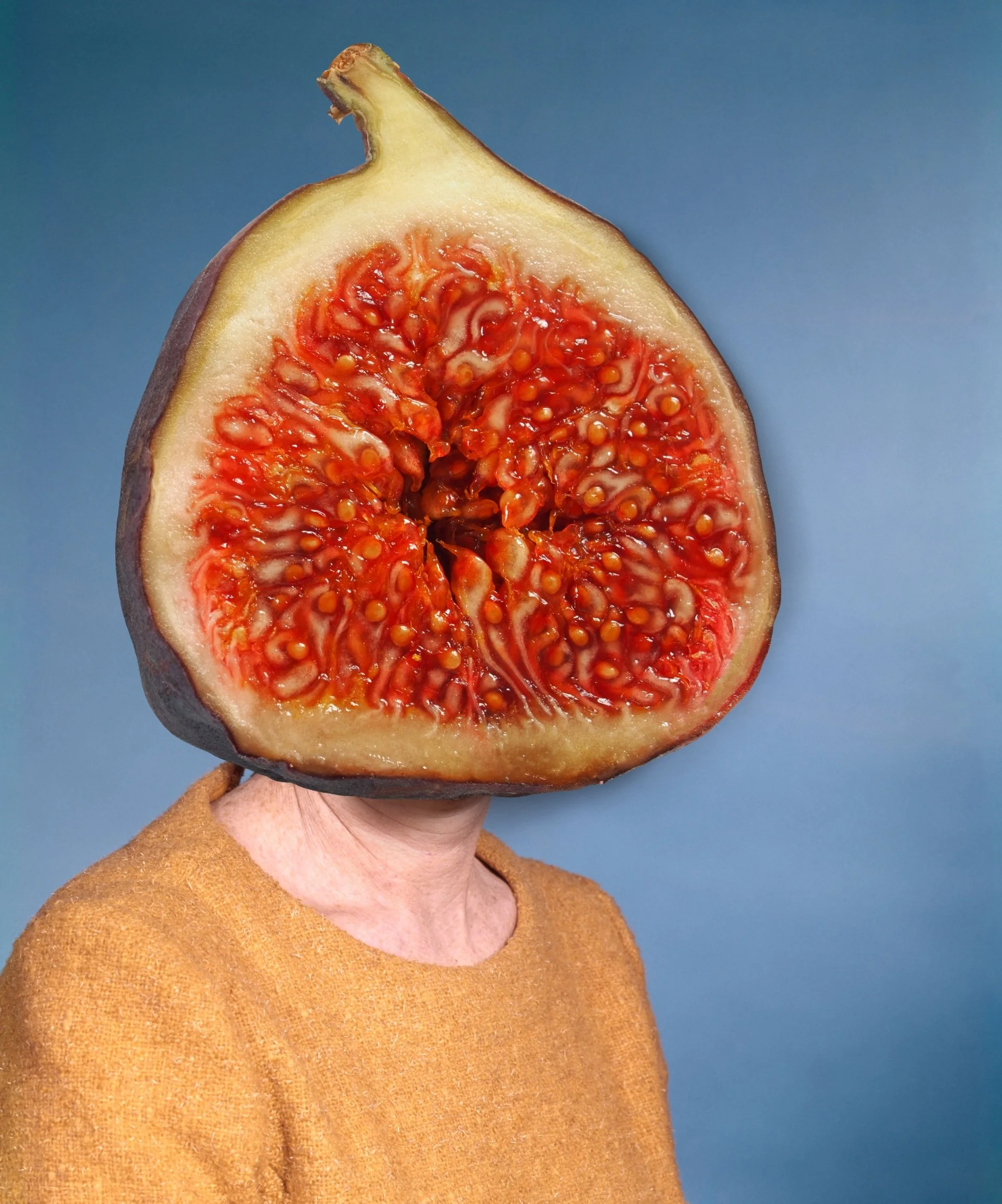
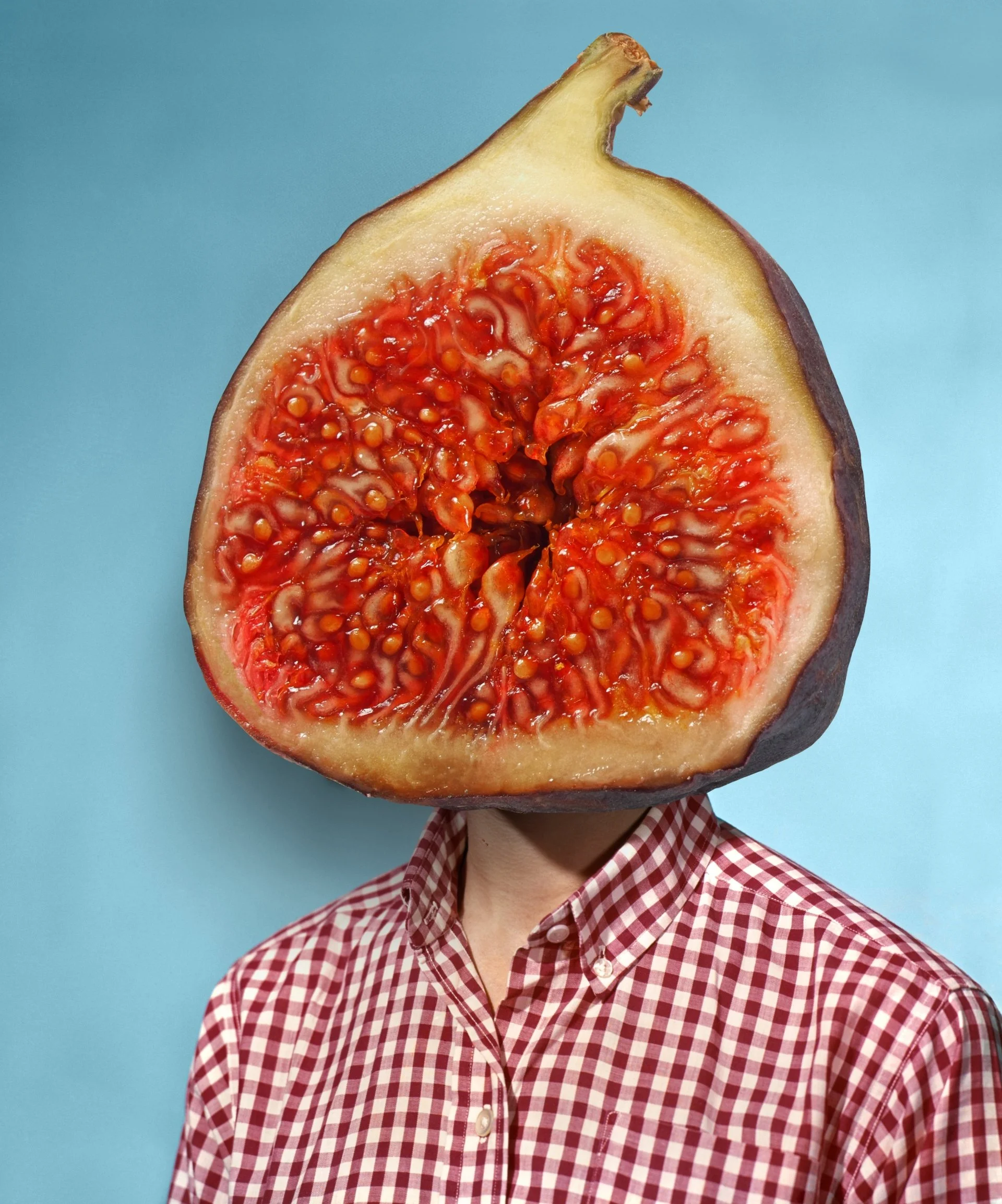
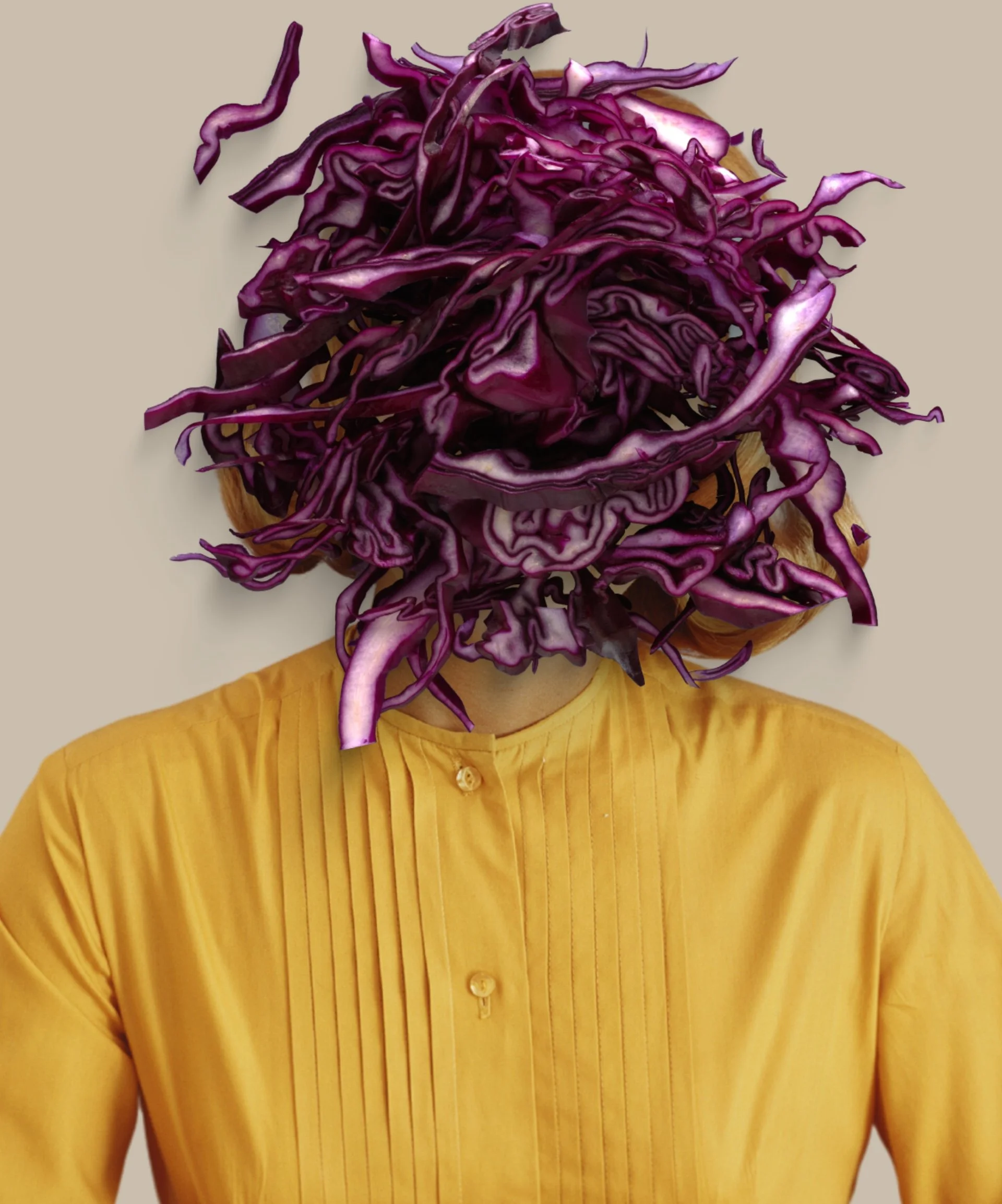
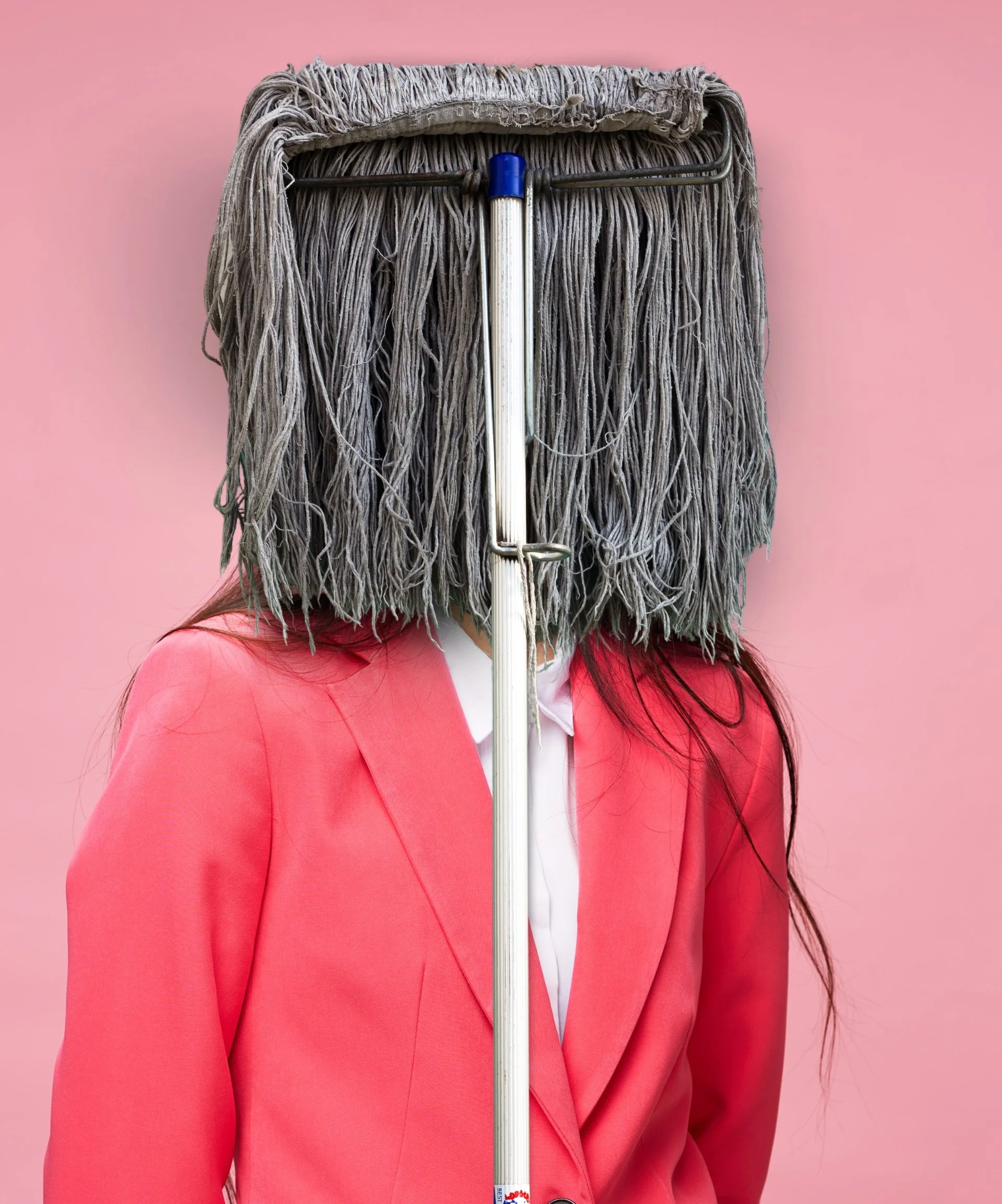
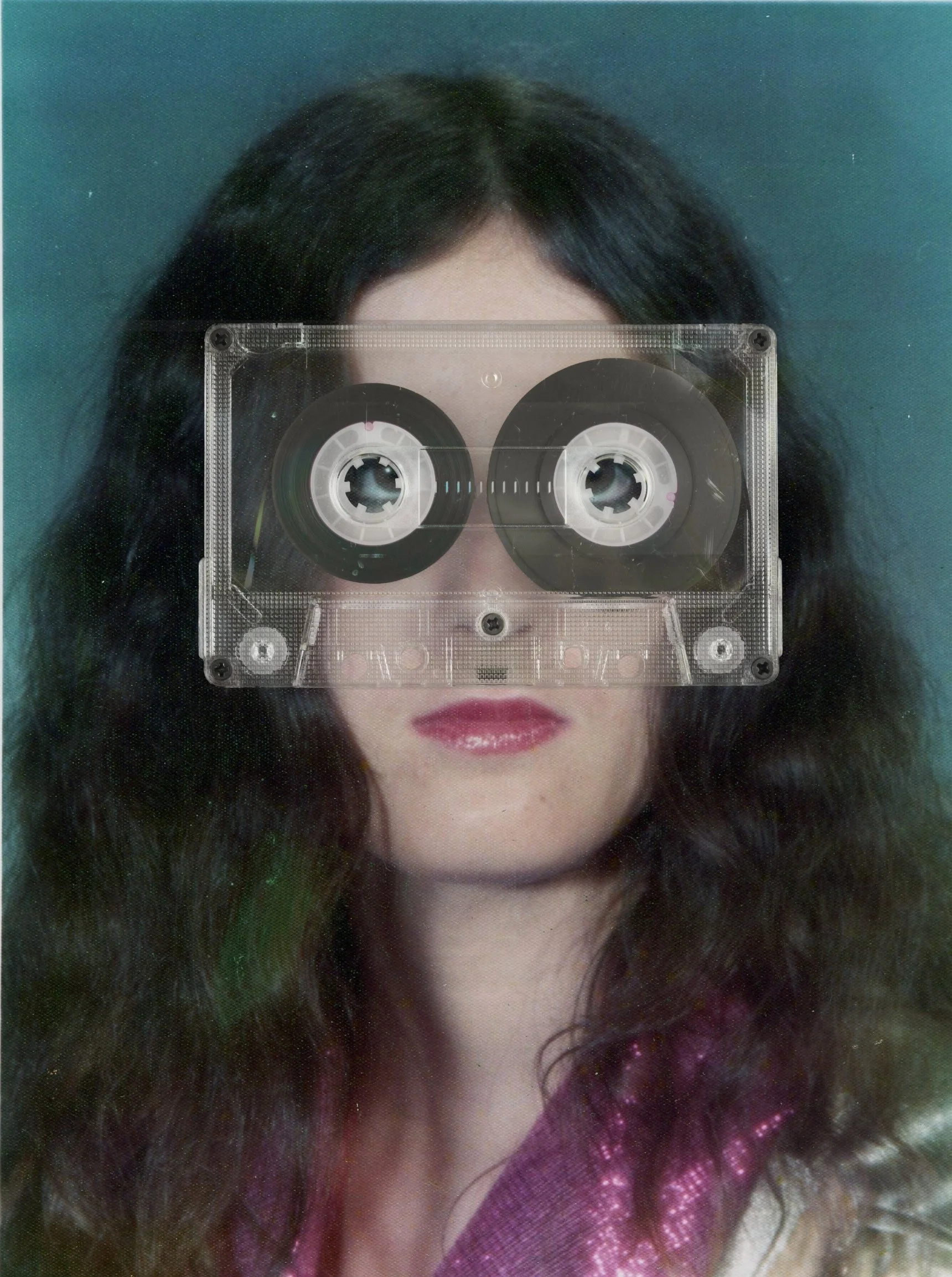
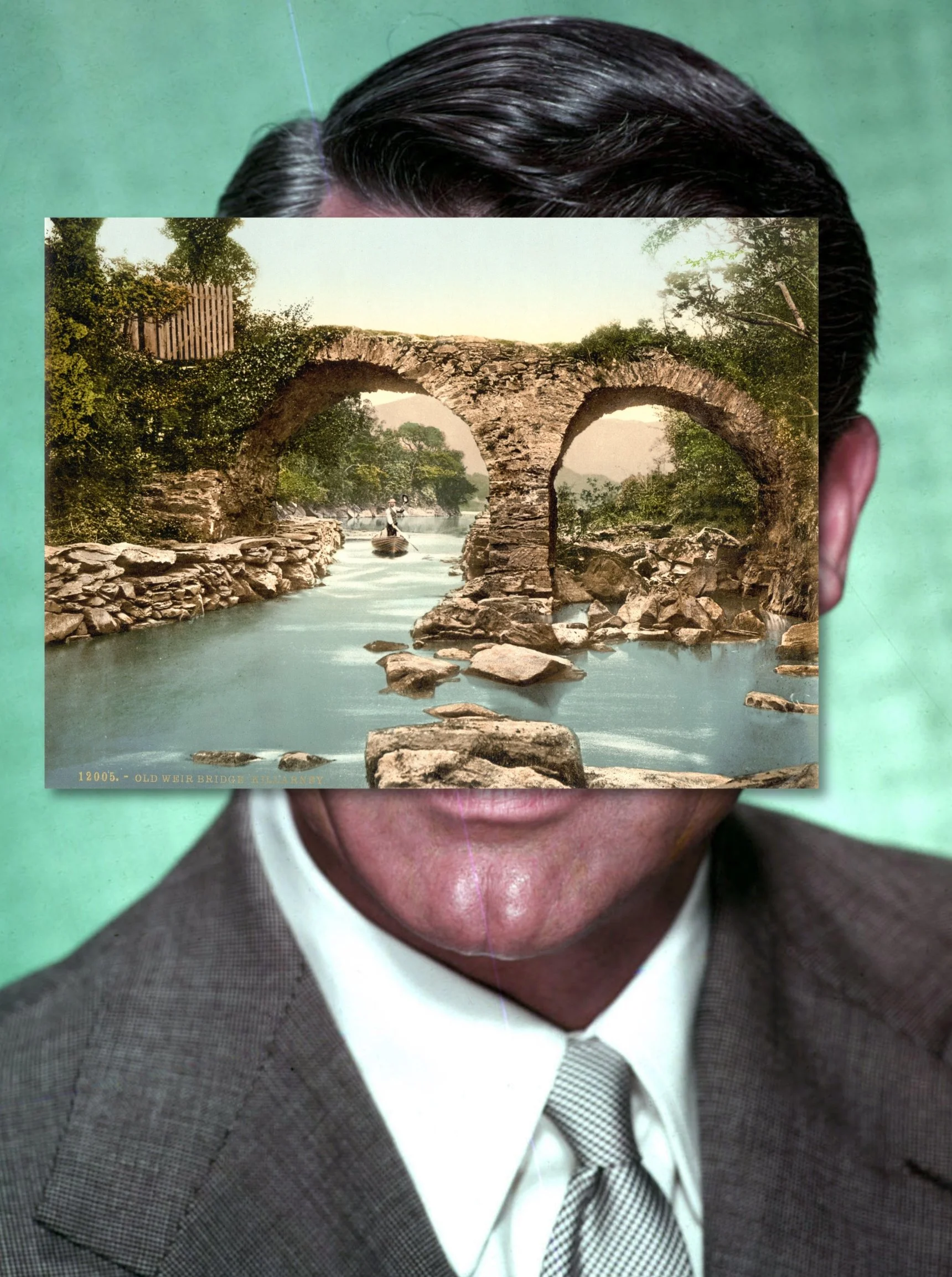
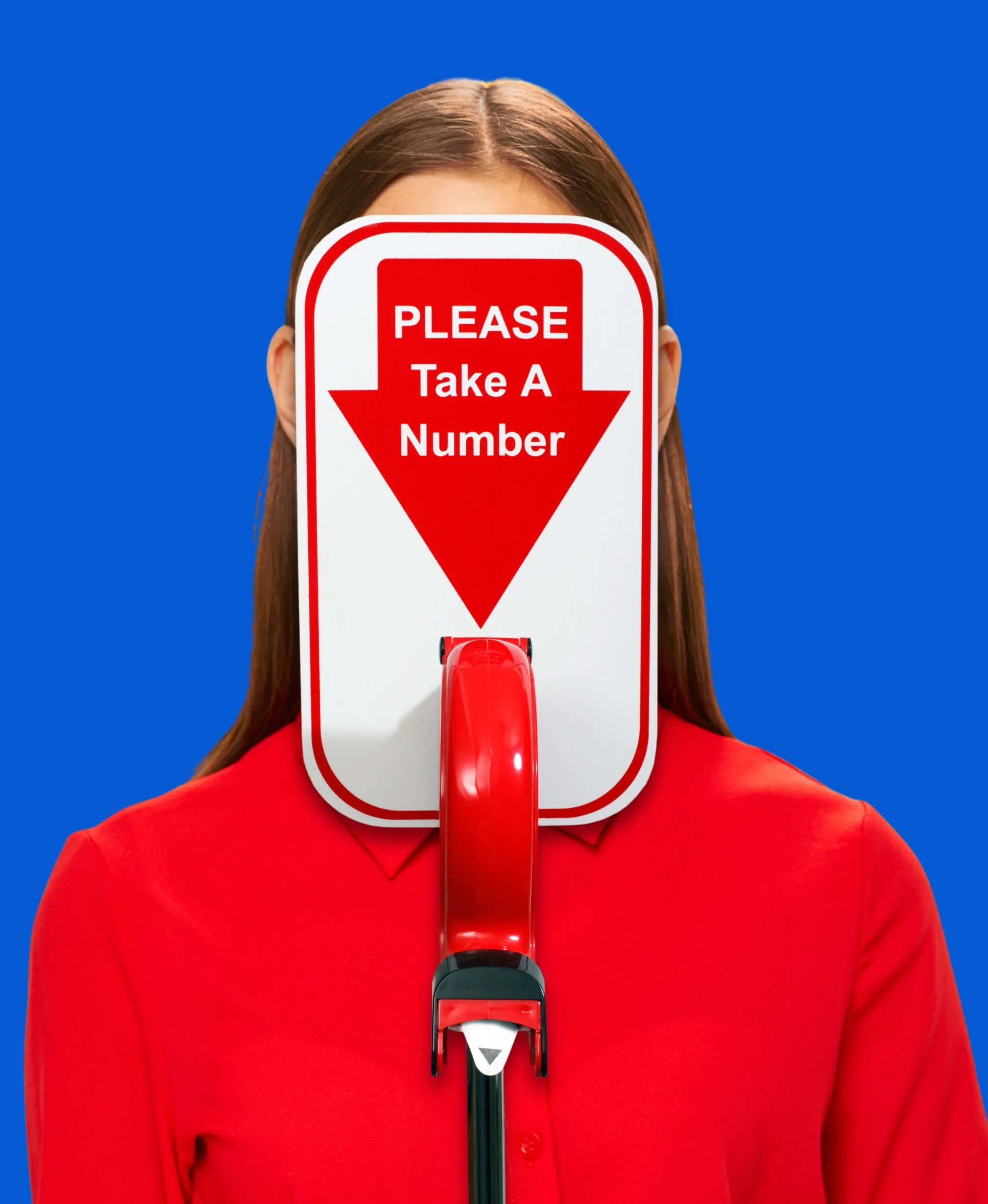
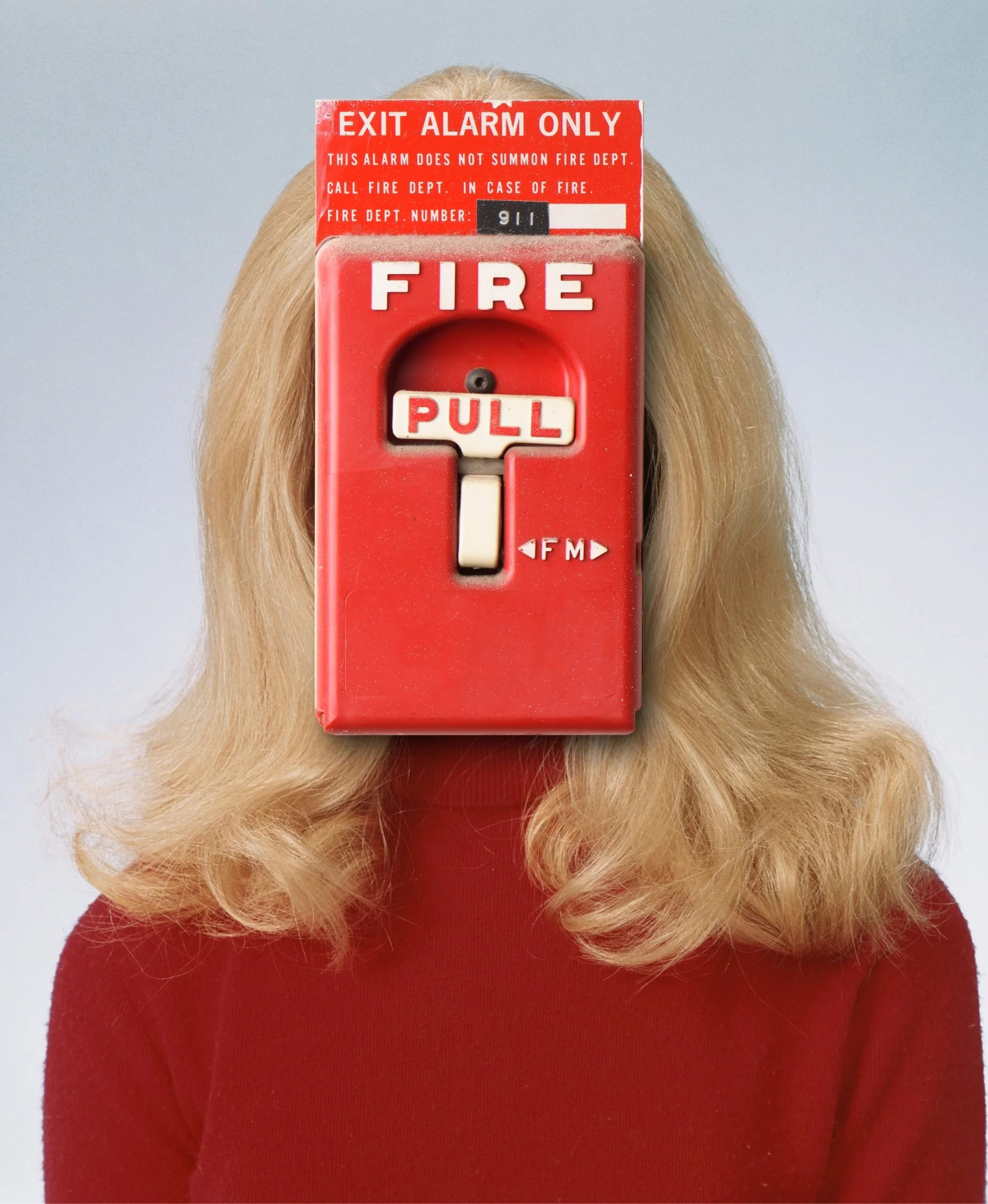
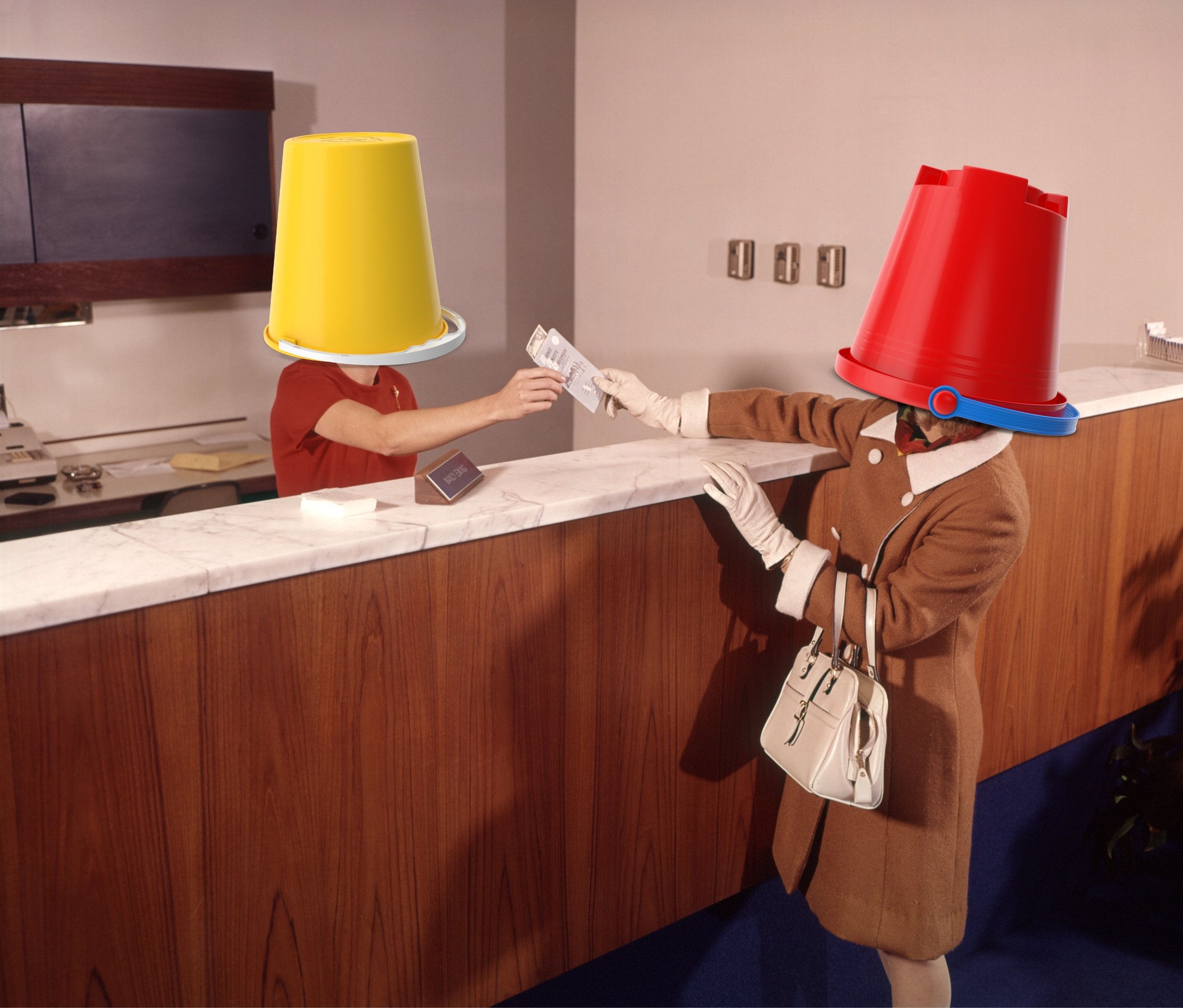
Whether it be raw meat or carefully cut-and-selected fruit and veggies, food is a universal language imbued with symbolism. Across borders and continents, artists rely on our appreciation for food as a way to engage us. Though it may appear light-hearted at first, there is always a deeper meaning that accompanies seductive platters. Harriet Moutsopoulos, a.k.a Lexicon Love, is a master at playful deception. Australian of Greek descent, Lexicon Love carries within her a quirky relationship with food, as it is a big part of her culture. Although sometimes subject to cultural culinary policing regarding the “properˮ way of eating or cooking, food is ultimately a way to express love. Naturally, in her universe itʼs not unusual for two fried eggs to be in love, or for red cabbage to double as hair and makeup.
For Moutsopoulos, humor and tragedy are almost inseparable, needing each other to survive. Drawing inspiration from the Surrealists, Moustopoulos creates clever portraits that can be both mischievous and unnerving. Her aim is clear: to recontextualize beauty and challenge our understanding of what is and should be considered appealing. She does not intend to determine what constitutes something as beautiful, rather she wishes for her viewer to make their own connections and question their assumptions.
©agnes eperjesy
Agnes Eperjesy
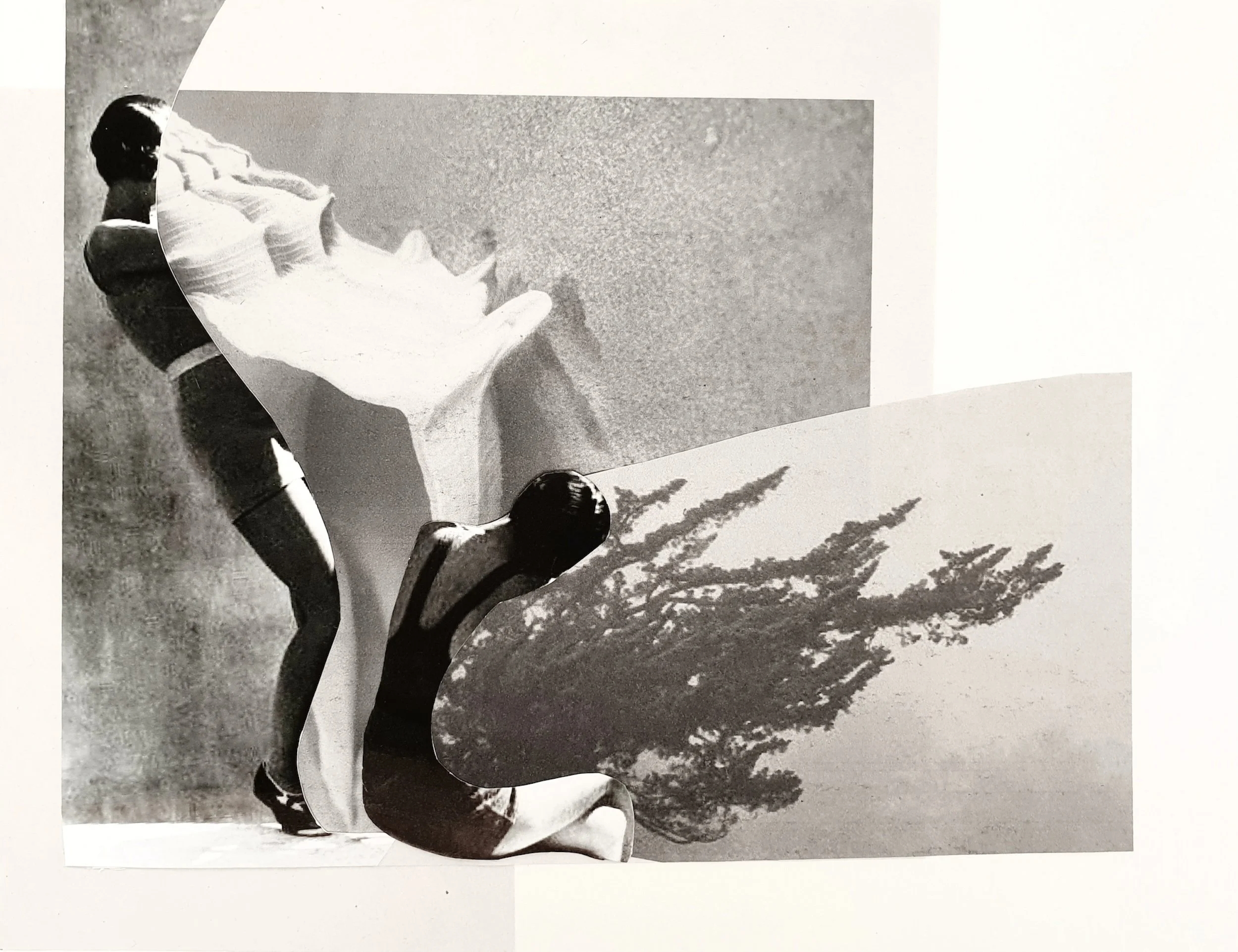
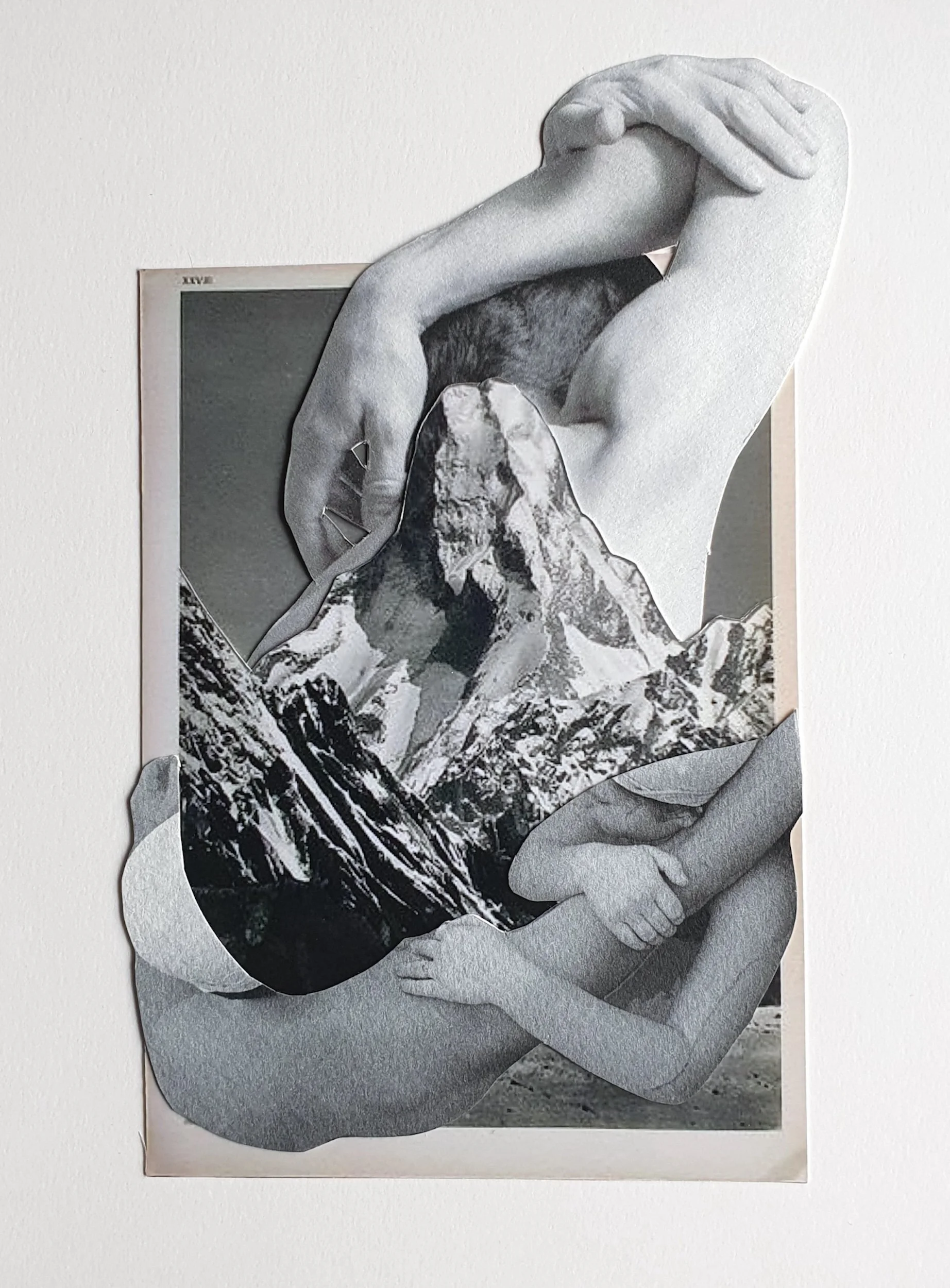
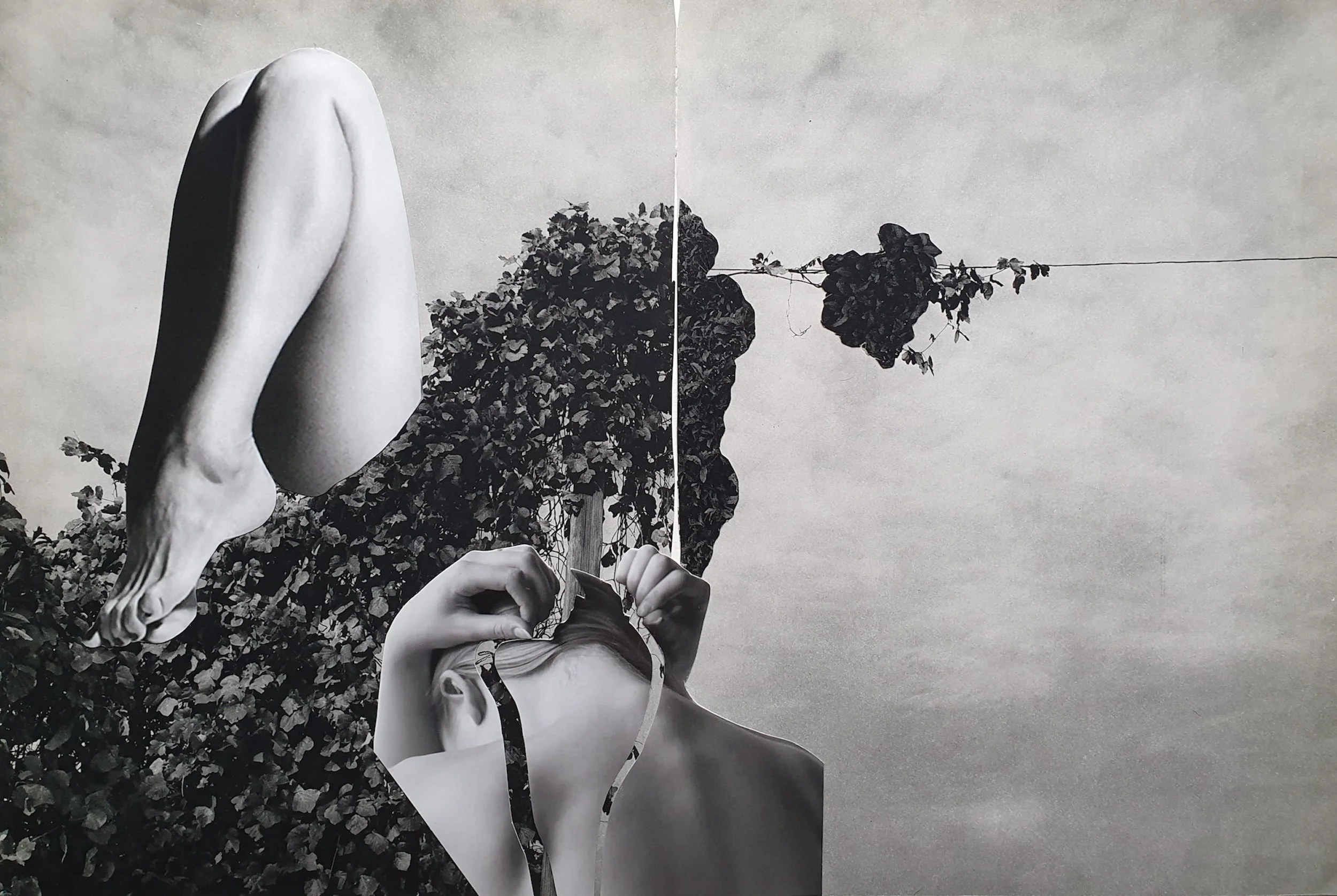
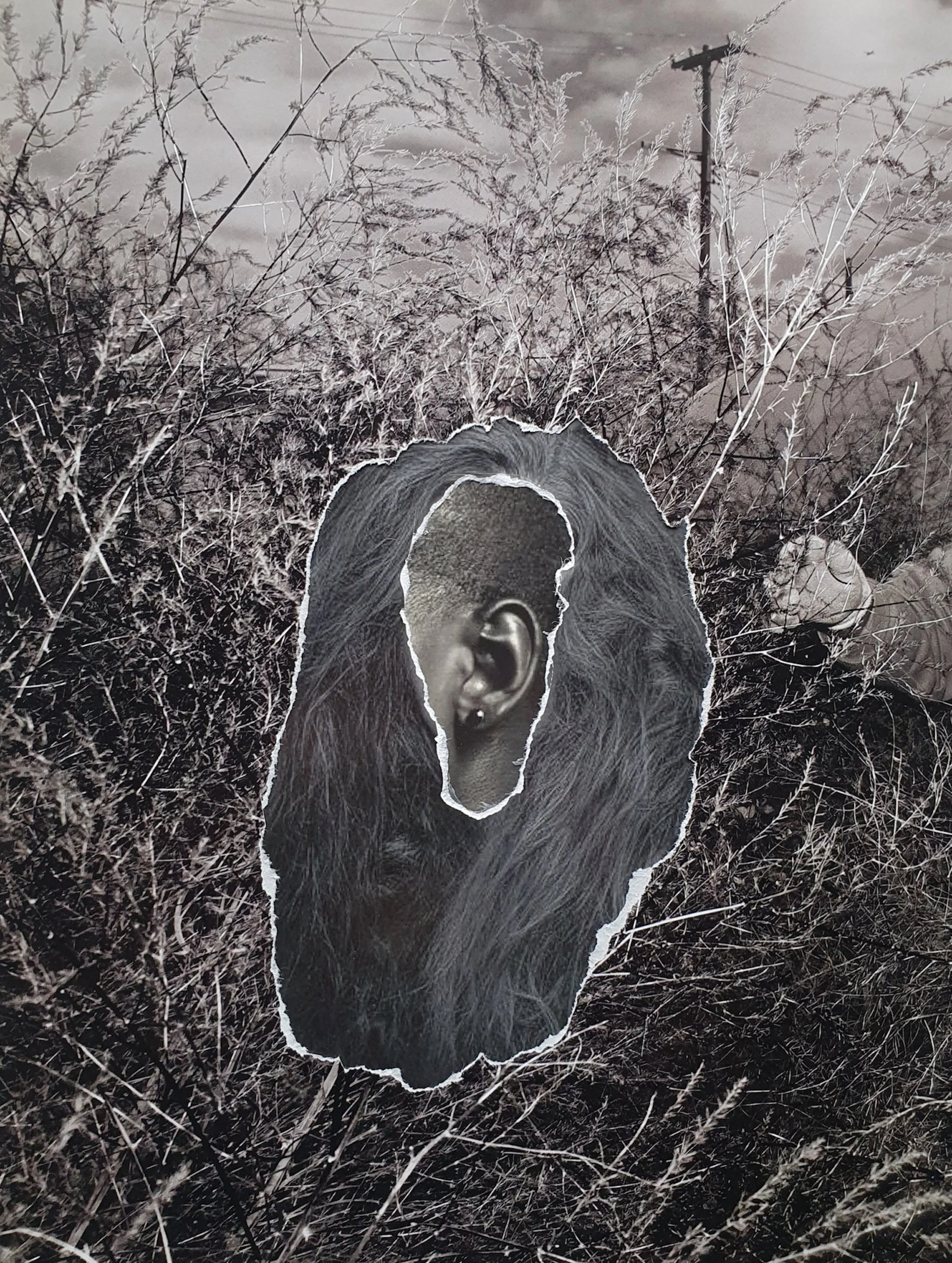
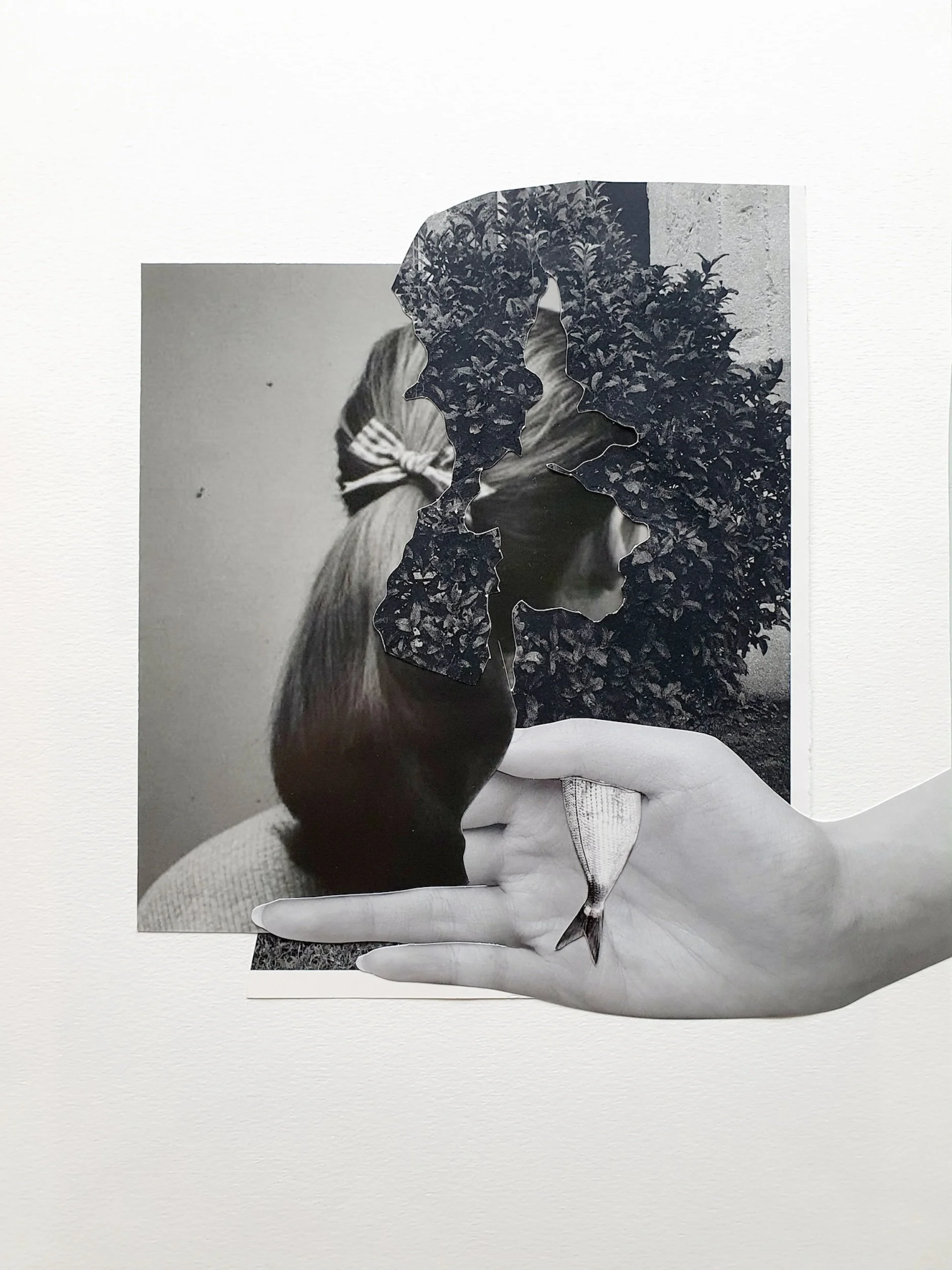
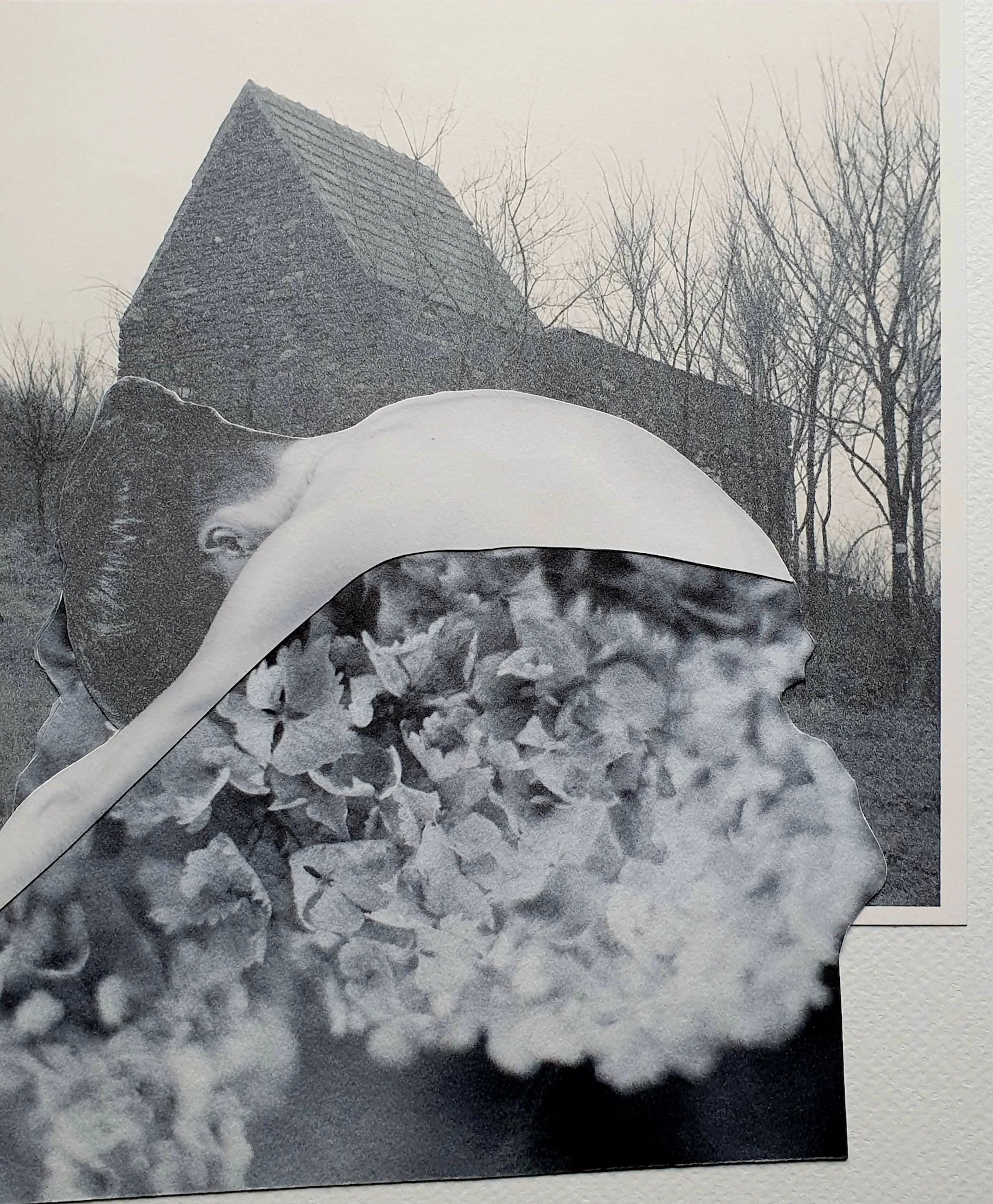
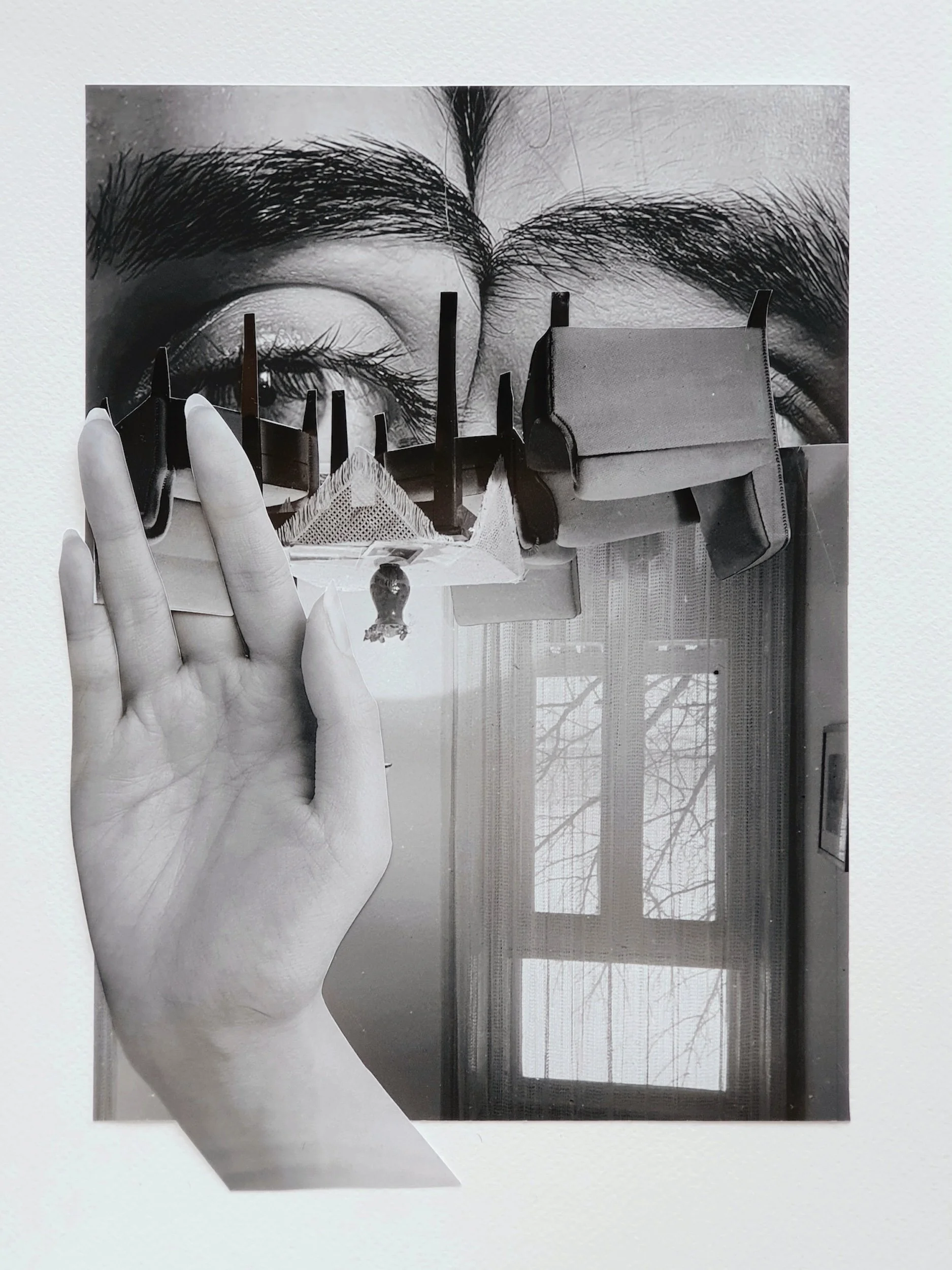
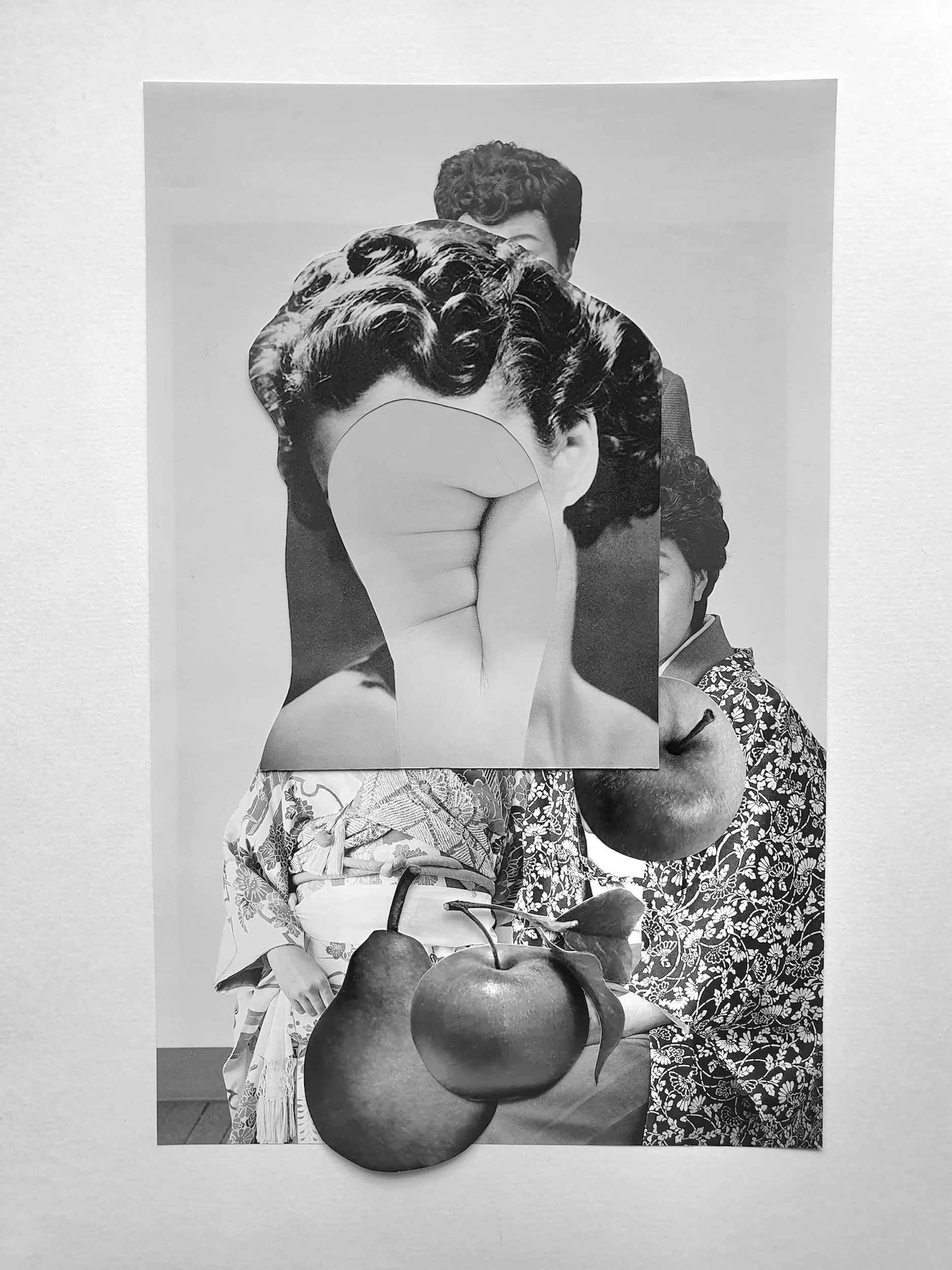
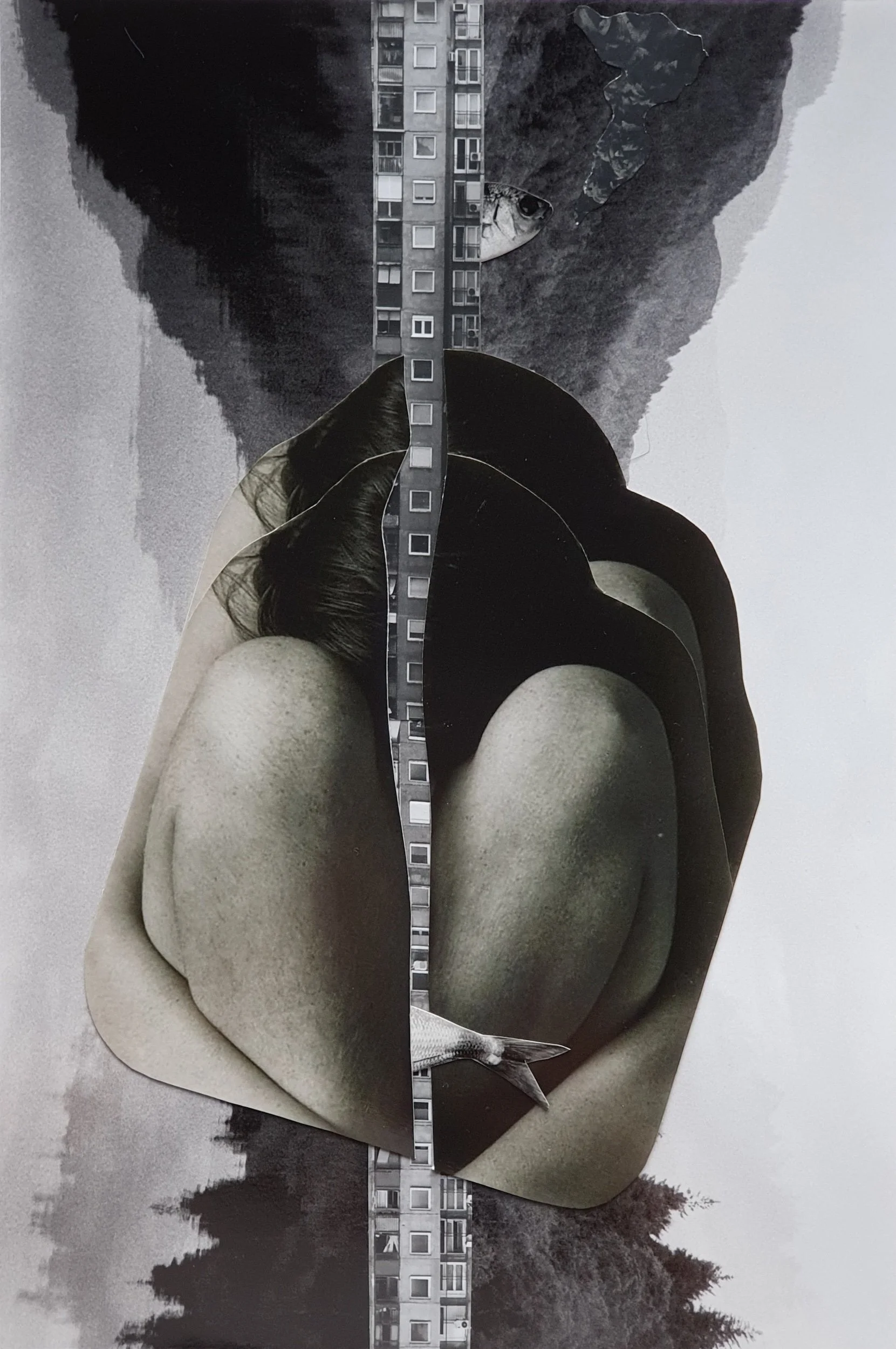
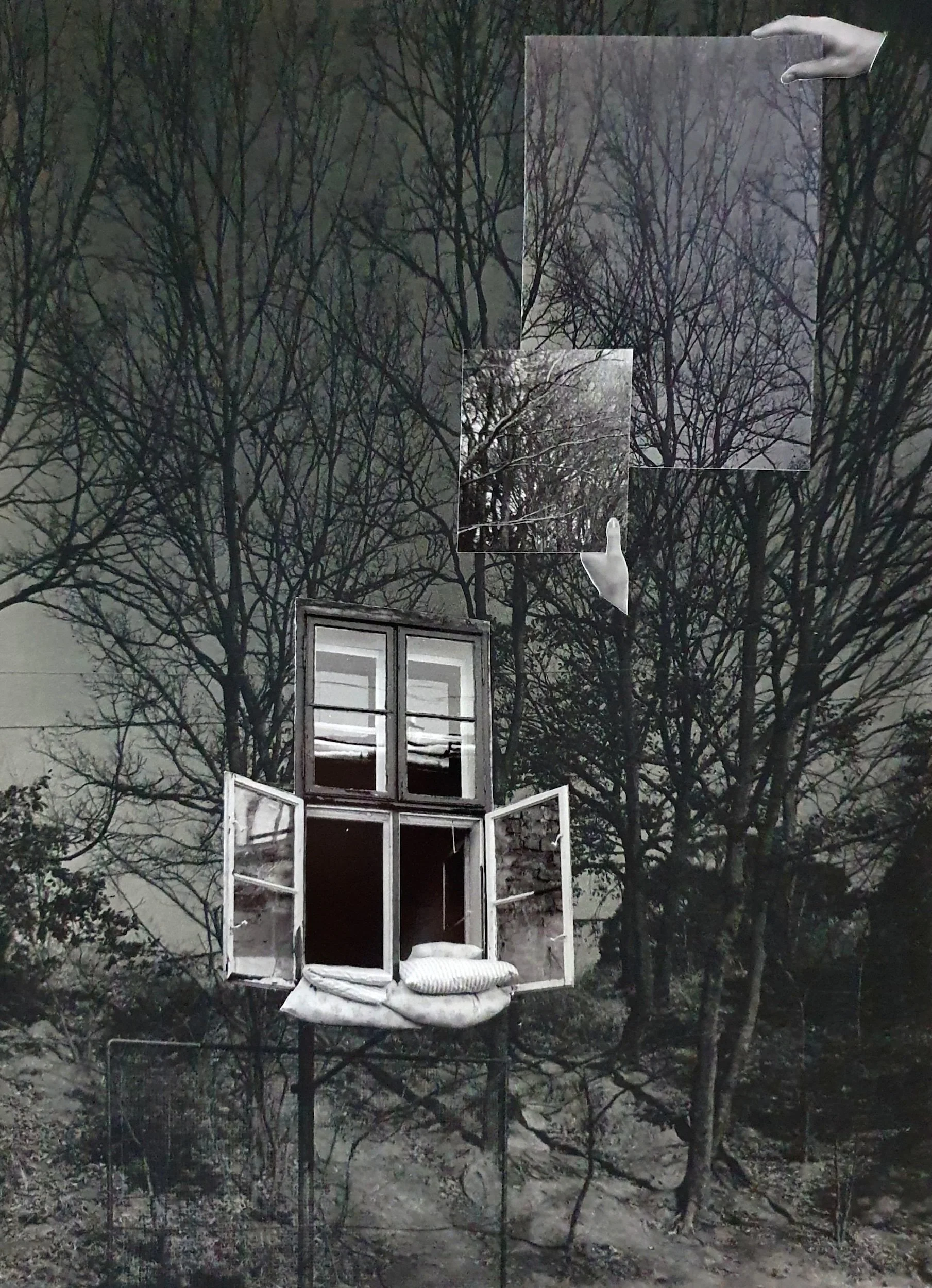
Also inspired by Surrealism, Agnes Eperjesyʼs logic-defying compositions are born through the layering of landscapes, human figures and domestic interiors. She redefines the confines of the human body to explore her understanding of being and existence. In her series The Topography of Self, Eperjesyʼs intricate universes invite the viewer to look closer, rewarding their efforts with distorted perspectives, altered proportions and hidden messages like severed hands or fish. In these universes, skin meets sky as seamlessly as bodies merge with mountains. With this body of work, the artist aims to instill in the viewer a sense of empathy and understanding for the complexity of the human experience by inviting them to find a deeper awareness within themselves.
Eperjesyʼs collages depict what she calls the inner landscapes, and they are an attempt to get to know someone beneath the surface of what’s visible. Using humor, irony and unexpected clever punches, she dissects the human experience and transforms the mundane into a translation of emotional typographies. Eperjesy imagines a world where instead of asking “where are you from”, we ask “what has left an impression on youˮ. These questions don’t reduce our understanding of ourselves to simply a country or a coordinate. Rather, they invite us on a journey of introspection, where we can observe and listen to the visual ripples of our past.
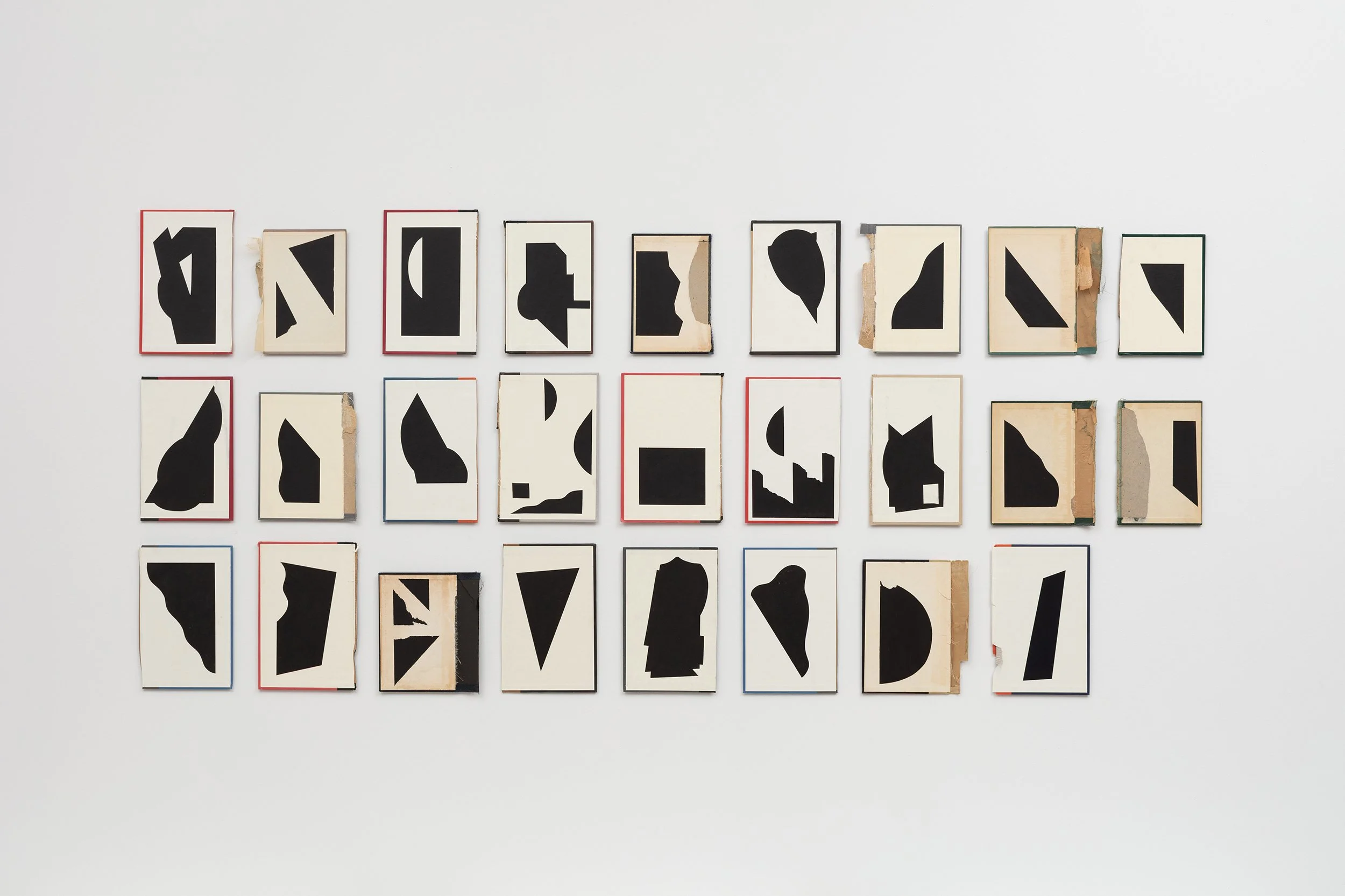
©mario zoots
Mario Zoots
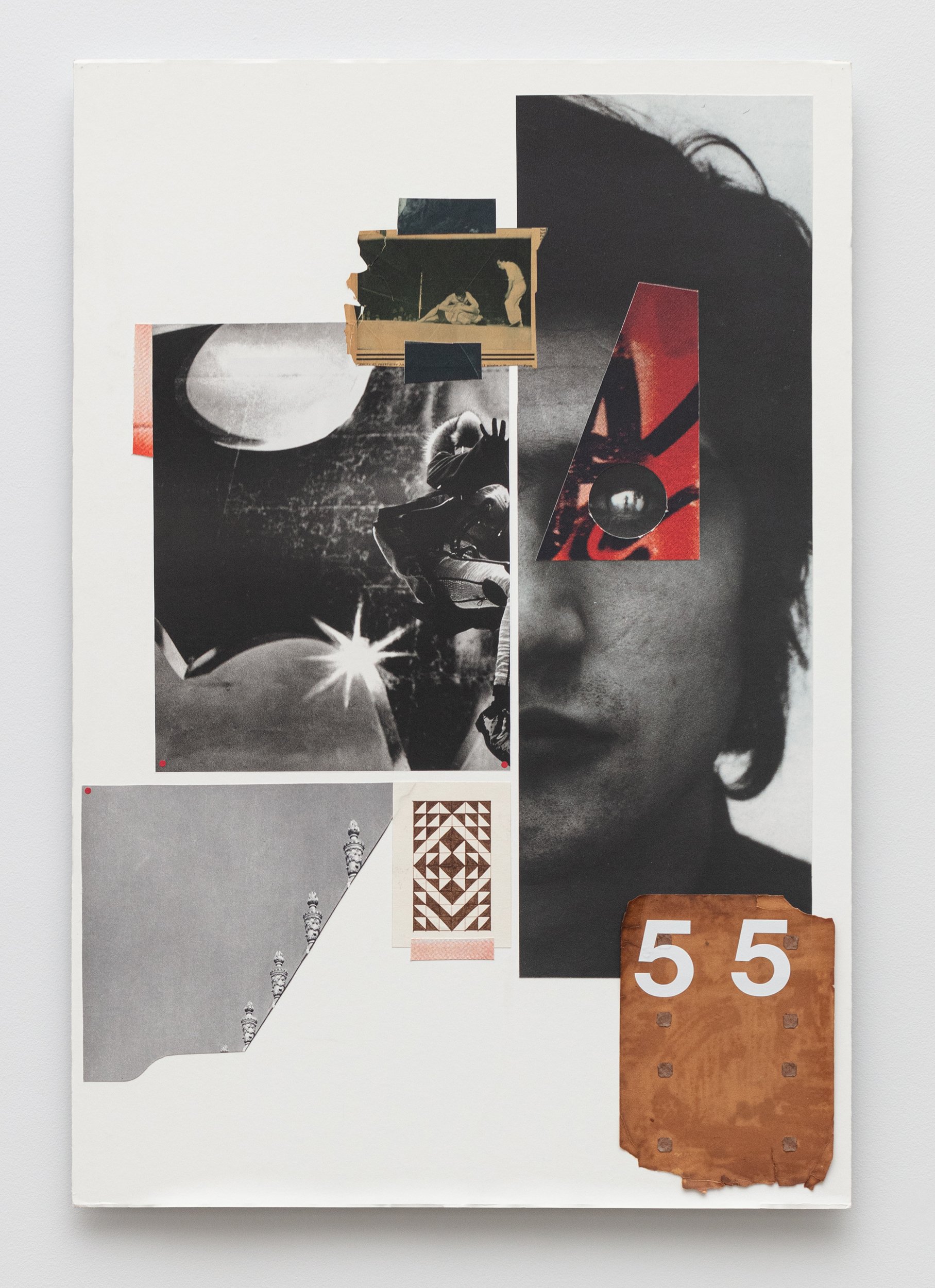
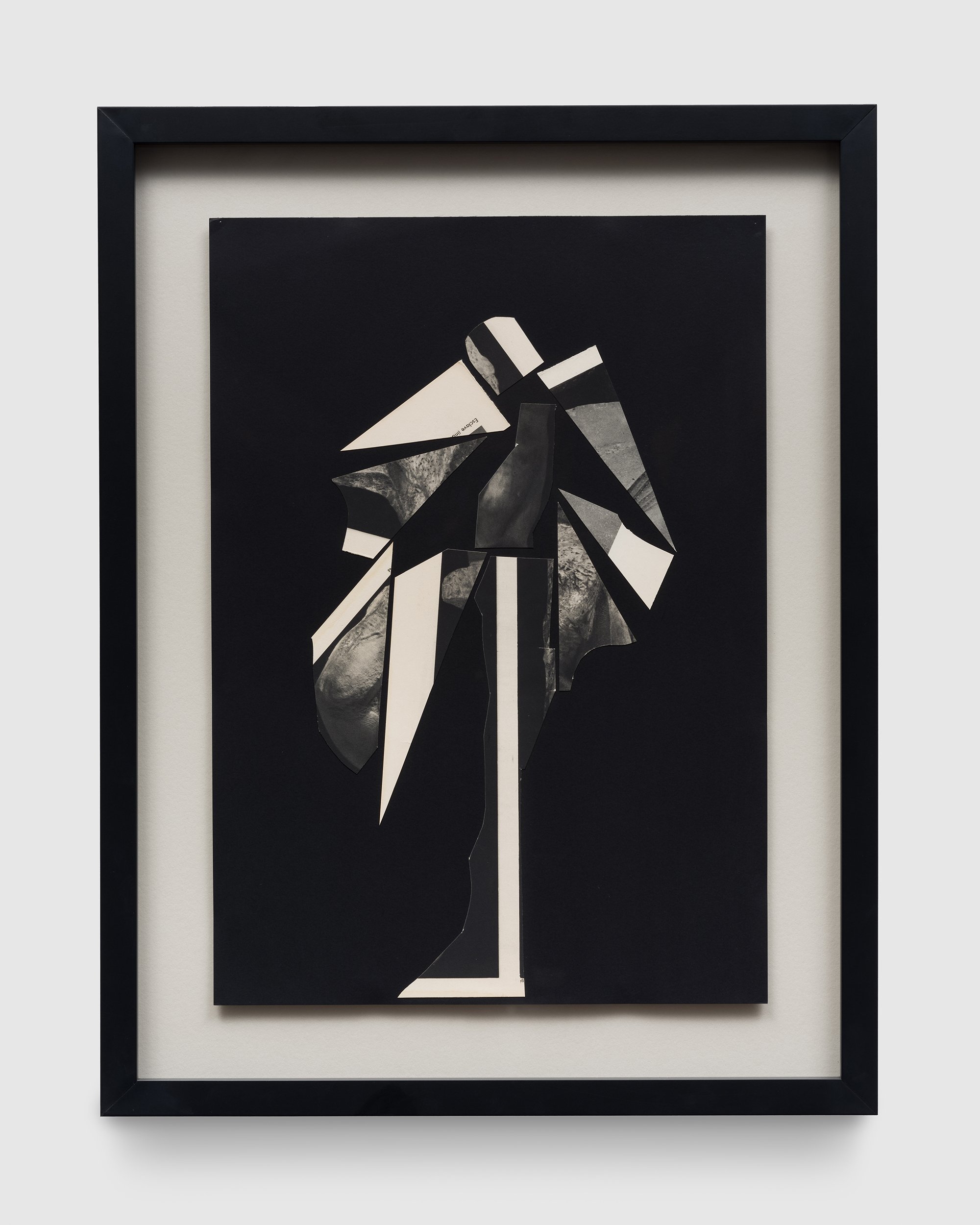
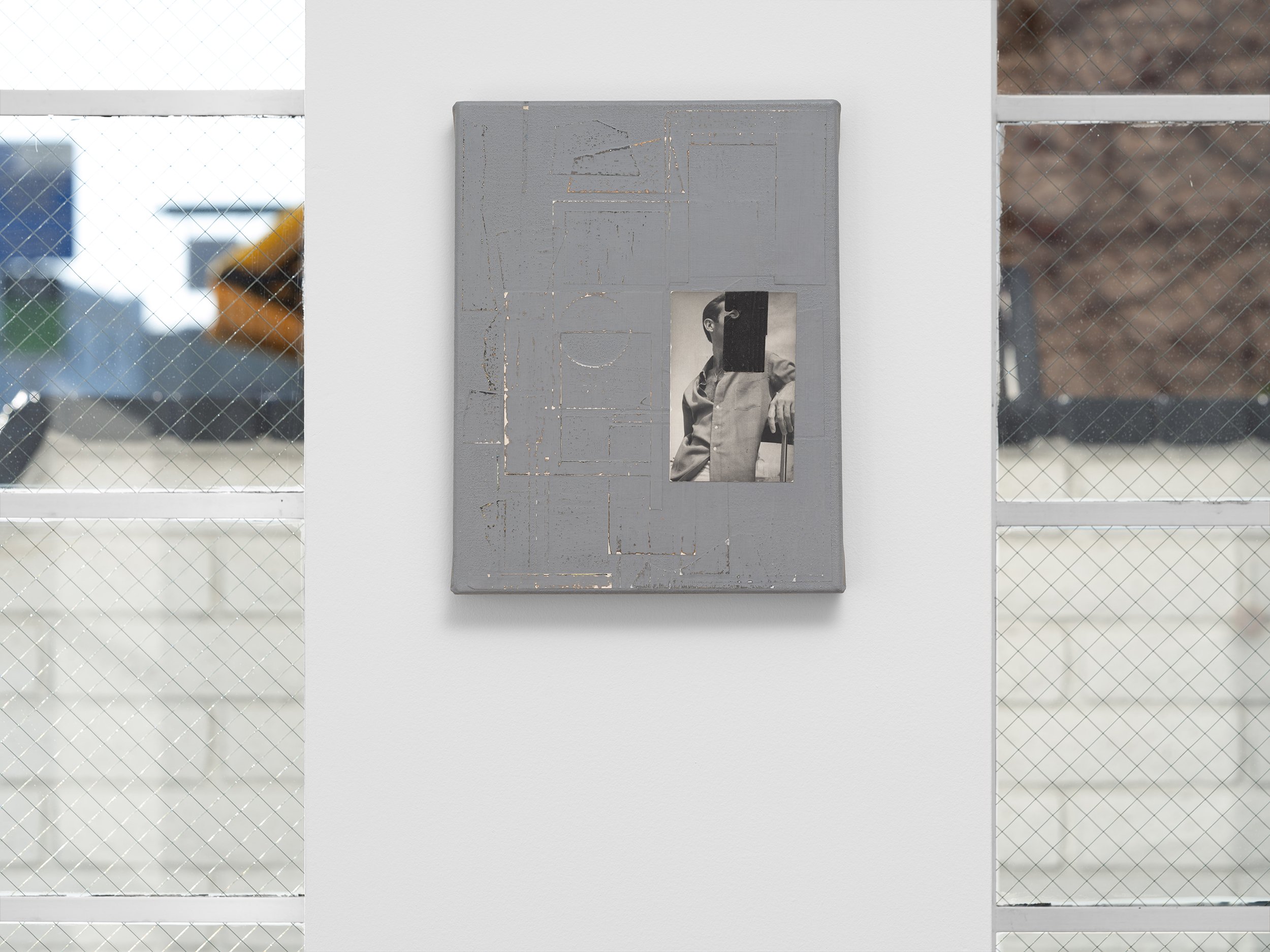
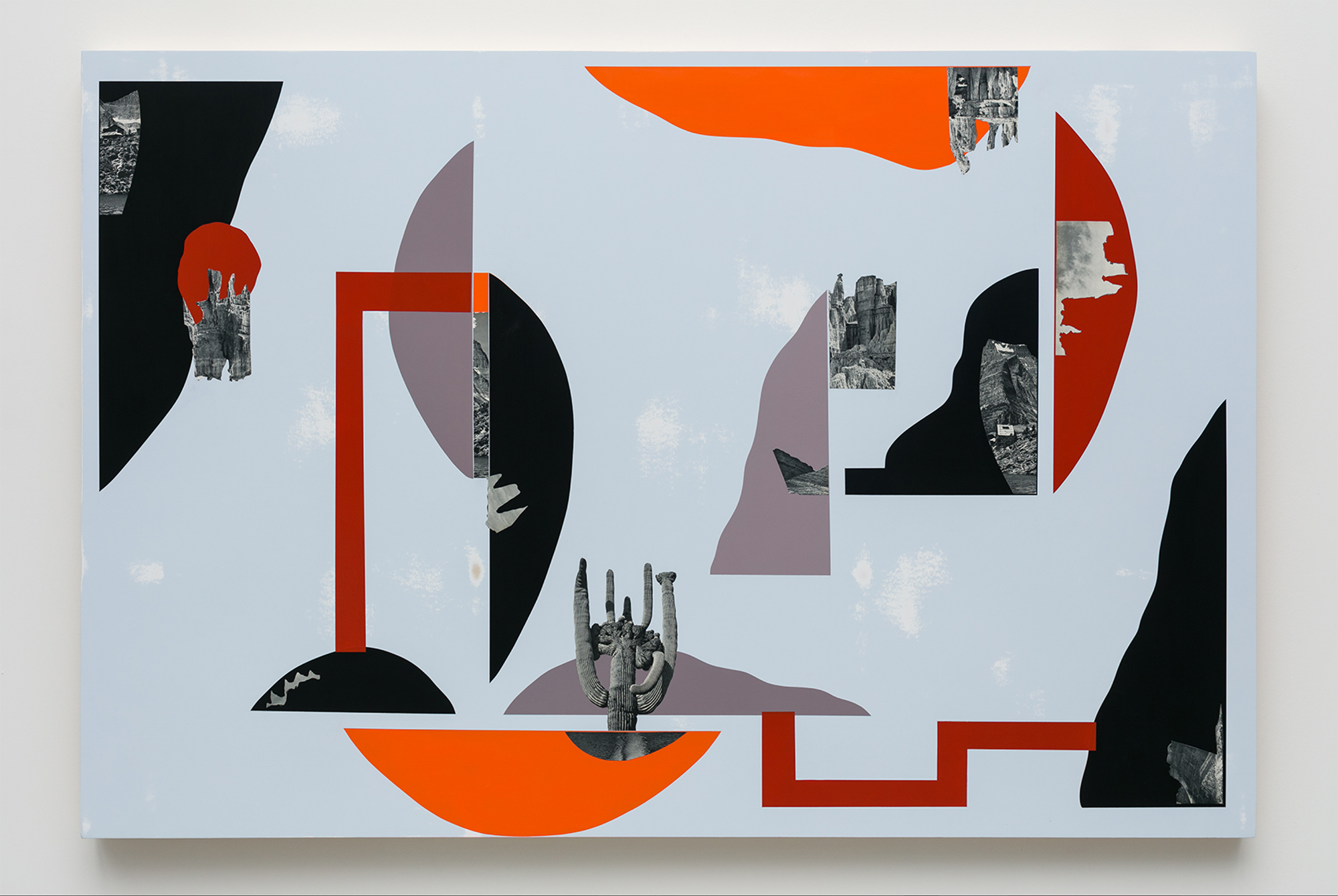
Mario Zoots is a visual architect or constructor of sorts. Much like the landscapes of the urban city, Zoots’ collages are intricate and layered, mixing perspectives, scale and textures to reflect the complexity that lies within his inner and outer terrain. Similar to Eperjesyʼs constructed environments, Zoots appropriates the familiar built structures that surround him to create artworks that evoke nostalgia and often, confusion. Relying on chance, Zoots credits his subconscious as a main author in his works.
The works often result in subverted or avoidant gazes and sharp geometrical edges. Playing with grayscale to create contrast and cohesion, Zoots has coined a palette of his own. Primary colors with an earthy tone replicate those found in the urban environments he engages with. Mimicking faded facades and Brutalist shapes, Zoots builds a realm where logic does not prevail. In this way, he becomes a builder and a deconstructor, deconstructing and reconstructing his understanding of a diverse milieu.
These artists are a reminder that our plane of existence is far from linear, it's infinitely intricate. War, innocence, family, food, migration, sexuality, identity are some of the many facets within the kaleidoscope of reality. Whole yet severed into pieces, collage reshapes and redefines meanings without reservations. To master it, or even begin to comprehend it, we must understand the essential balance between context and chance.
Some metaphors, like those in the work of Toeba, De Dier and Jiwarangsan are derived from a concrete historical lens, while those of Zoots, Moustopoulos, Eperjesy, Postma and Moreira are far more abstract. As mediums continue to evolve and expand, the possibilities of what may arise from their deconstruction are nothing short of exciting. By assembling meanings and questioning planes, artists have and will continue to construct fragmented truths in an attempt to define the world around them.
About the author:
Alex Mendi is a multidisciplinary artist born and raised in Guatemala City, Guatemala, and currently based in Savannah, Georgia. Working across photography, screen printing, video, collage, writing, and - most recently - curation, Mendi explores the depths of the subconscious and its influence on our perception of reality. Drawing inspiration from the strange spectacle of the urban landscape and the absurdity of human behavior, her work abstracts the visible world to materialize the intangible.
Mendi founded Camaleón, a multidisciplinary gallery and cultural venue dedicated to experimentation. Through in-house curations and collaborative programming, Camaleón serves as a fertile ground for unconventional artistic growth and exchange.
artist info
Giana De Dier - Panama
Website
Instagram
Agnes Eperjesy - Hungary
Website
Instagram
Prapat Jiwarangsan - Thailand
Website
Instagram
Rodrigo Moreira - Brazil
Website
Instagram
Harriet Moutsopoulos aka Lexicon Love - Australia
Website
Instagram
Bonnita Postma - Netherlands
Instagram